Audio & Headphones

9 Best Wired Headphones of 2026: That Actually Last Beyond the Hype

Which wired headphones deliver studio-grade durability and sound without falling apart in months — for professionals, gamers, and casual listeners.

Most wired headphones under $50 sound decent initially but develop cracked headbands, dead drivers, or flaking earpads within months. The studio staples above $80 avoid these problems through replaceable parts and more robust materials — a trade-off that pays off over years of use.

Yet even premium models have hidden trade-offs. Open-back designs leak sound in both directions, making them unsuitable for shared spaces. High-impedance headphones require a dedicated amplifier to sound their best. And a tight clamp can cause discomfort during long sessions.

This guide focuses on the key decision points — closed vs. open, impedance, comfort, and durability — to help you pick the wired headphone that actually fits your listening habits and environment. No filler, just the factors that determine long-term satisfaction.

1

Sony MDR7506

Top Pick
Sony MDR7506

Studio, gaming, music

Our Score 9.4/10
Check Price

Worth Noting

  • Earpads may require replacement after a year or two of regular use
  • Clamping force can feel tight for larger heads during prolonged sessions
Design
Closed-back
Comfort
Lightweight, soft earpads
Impedance
63Ω
Sound Signature
Neutral, detailed

The MDR7506 presents a neutral frequency response from deep bass to high treble, with no coloration that would mislead critical listening. Transient attacks are crisp, and stereo imaging remains stable across volume levels. The closed-back design blocks ambient noise effectively, making it easier to pick out detail in busy environments. Bass is present but not exaggerated, mids are articulate, and treble extends smoothly without harshness, reducing listener fatigue over long sessions.

Comfort holds up over long shifts thanks to the low weight — around 230 grams — and generously padded earpads. The coiled cable extends to nearly 10 feet, giving enough slack for desk use without tangling. The metal headband and plastic yokes feel solid, though the earpads are a consumable item. Earpads may flake after a year or two of regular use; replacements are inexpensive and tool-free. Some users prefer velour pads for breathability. Clamping pressure is moderate; larger heads may find it snug after a few hours, but the frame can be gently stretched if needed.

This headphone suits studio engineers, podcasters, and content creators who need closed-back isolation and accurate monitoring. For podcasting, the sealed cups prevent microphone bleed and reduce background hum. Gamers benefit from the closed-back design — it keeps game audio private and minimizes distractions. The flat response means no boosted bass to mask subtle cues, making it suitable for competitive play where positional audio clarity matters. If you prefer boosted lows or a V-shaped sound signature, look elsewhere; the MDR7506 is intentionally flat.

Despite its mid-range price, the MDR7506 offers build quality that outlasts many budget alternatives. The metal yoke and reinforced hinges are rare in this price bracket, contributing to a sense of solidity that cheaper headphones lack. The included 3.5 mm to ¼-inch adapter adds versatility. The non-detachable cable is a trade-off for durability — the strain relief at both ends is well-engineered, and failures at the jack are uncommon. With minimal upkeep, these headphones can remain functional for a decade.

Tip: Replace earpads every year or two to maintain comfort and sound isolation — third-party options are easy to install.

Bottom line: For accurate monitoring and long-term build, the MDR7506 remains the reference closed-back headphone in its price range.

2

Sennheiser HD 599 SE

Sennheiser HD 599 SE

Home, gaming

Our Score 9.2/10
Check Price

Worth Noting

  • Plastic build feels less premium than the price suggests
  • Headband joints may crack under heavy stress in some cases
Design
Open-back
Comfort
Plush velour, lightweight
Impedance
50Ω
Sound Signature
Natural, balanced

The Sennheiser HD 599 SE delivers a spacious, natural soundstage that places instruments and vocals in a wide, airy space — a characteristic usually reserved for pricier open-back models. With a 50Ω impedance, it runs comfortably from phone headphone jacks and laptop outputs, eliminating the need for a dedicated amplifier.

Ideal for home listeners who prioritize immersive sound over isolation — the open-back design requires a quiet, private space where sound leakage isn't an issue. The plush velour earpads and lightweight frame support long sessions without fatigue.

The HD 599 SE's balanced audio leans slightly warm, making it well-suited for acoustic, classical, and vocal-heavy genres. It also represents a strong value entry point for audiophile-quality open-back sound under $250.

Tip: If you need isolation for shared spaces, consider the closed-back Sony MDR7506 instead.

Bottom line: For quiet home use, the HD 599 SE delivers a spacious soundstage and comfortable fit at a reasonable price — a strong entry point into open-back listening.

3

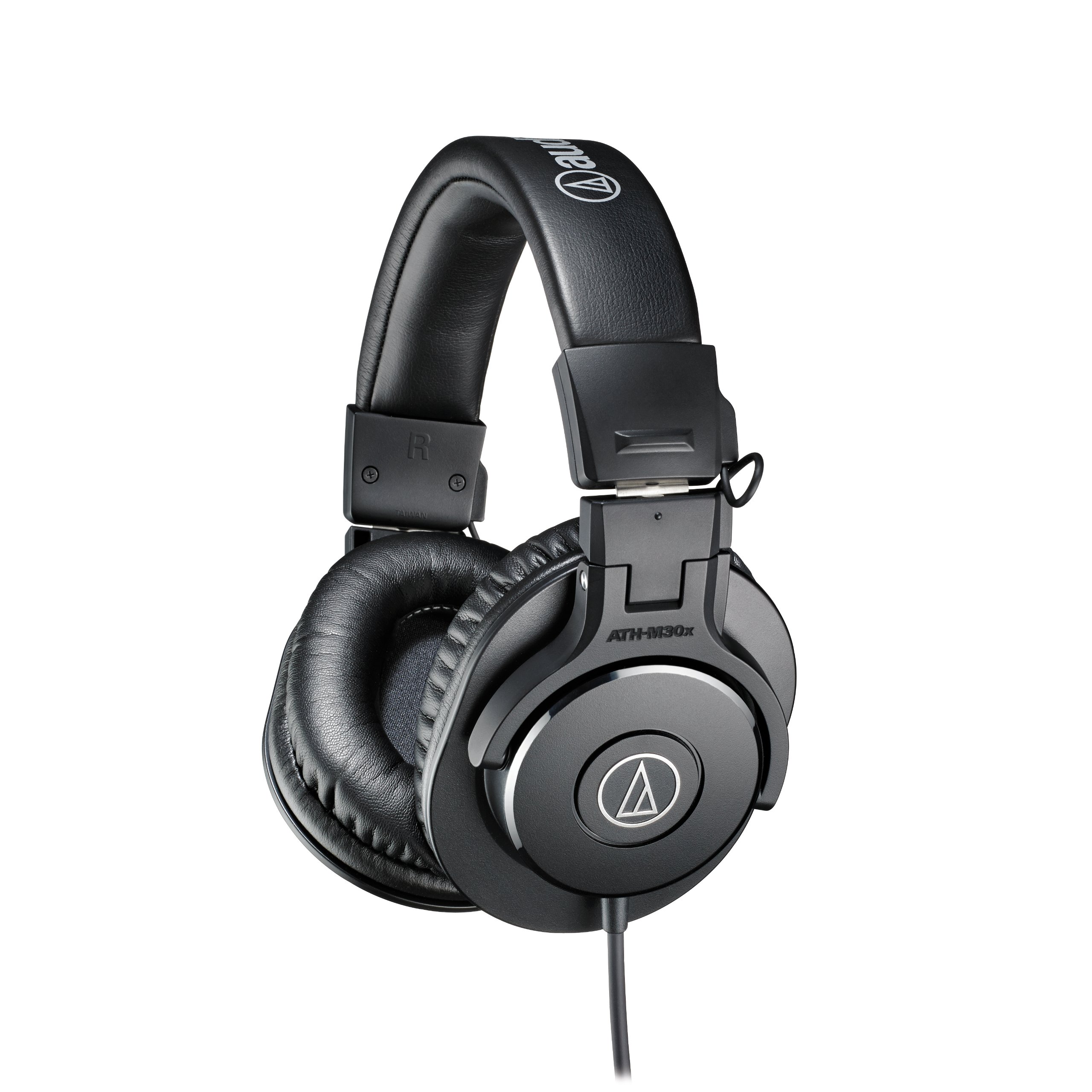
ATH-M30x

ATH-M30x

Studio, gaming

Our Score 9.2/10
Check Price

Worth Noting

  • Clamping force may feel tight on larger heads, limiting long-wear comfort
  • Earcup material can crack over time, especially in varied climates
Design
Closed-back
Comfort
Plush earpads, moderate clamp
Impedance
38Ω
Sound Signature
Balanced, clean

The ATH-M30x improves on Audio-Technica's entry-level closed-back design with a sturdier build and a detachable single-sided cable, reducing replacement cost if the cable wears.

Sound is clean and balanced with good mid-range detail, suitable for studio monitoring and gaming positional audio. Passive isolation blocks background noise without electronics, keeping focus on the mix.

Best for home studio users or gamers who need a closed-back monitor for accurate sound and isolation without disturbing others. The clamping force is on the tighter side — larger heads may feel pressure after an hour, and the earcup material can develop cracks over time, so this suits shorter sessions or smaller head sizes.

Tip: If you have a larger head, try stretching the headband gently over a stack of books for a few days to reduce clamping pressure.

Bottom line: For buyers who want a closed-back monitor with a detachable cable and balanced sound at a mid-range price — and whose head size fits the tighter clamp — the ATH-M30x is a step up from the M20x without the premium of the top pick.

4

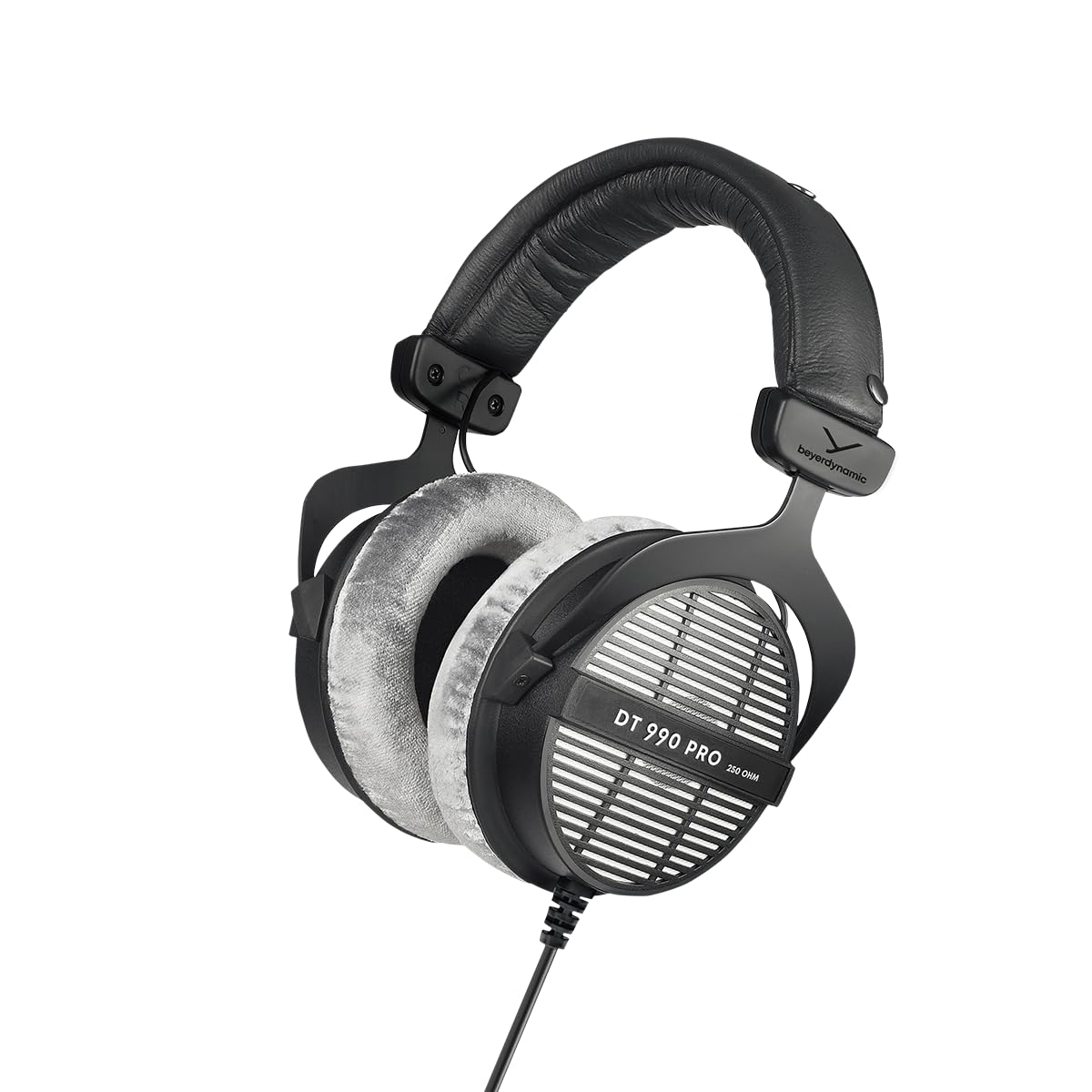
DT 990 Pro 250Ω

DT 990 Pro 250Ω

Audiophile, mixing

Our Score 9.2/10
Check Price

Worth Noting

  • Open-back design leaks sound both ways, not suitable for shared or quiet environments
  • Some units may develop driver rattle or failure within a few months
  • Requires a dedicated headphone amplifier for proper volume; direct connection to phones or laptops yields low volume and thin sound
Design
Open-back
Comfort
Velour earpads, comfortable
Impedance
250Ω
Sound Signature
Lively, detailed

The DT 990 Pro delivers a wide, open soundstage with punchy bass and sparkling treble, making music feel energetic and immersive. Its open-back design sacrifices isolation for spatial realism, ideal for quiet home listening.

This headphone is suited for audiophiles and mixing engineers who already own a headphone amplifier to drive its 250-ohm impedance. Some units may exhibit driver rattle or failure within months – verifying the return policy is a sensible precaution. For those who need noise isolation or plan to use headphones on the go, a closed-back alternative like the top pick is a more practical choice.

The velour earpads and headband provide lasting comfort for extended listening sessions, and the replaceable parts help extend the headphone's service life.

Tip: Pair with a headphone amplifier rated for at least 250 ohms to achieve optimal volume and tonal balance.

Bottom line: For home listeners with a quality amplifier, the DT 990 Pro offers an engaging and spacious sound that few closed-back headphones can match – those without an amp should consider the top pick.

5

Apple EarPods USB-C

Apple EarPods USB-C

iPhone, calls

Our Score 9.2/10
Check Price

Worth Noting

  • Fit can be inconsistent depending on ear shape
  • Cable wear near the connector and earbud stems has been noted over time.
Design
In-ear, open
Comfort
One-size, lightweight
Impedance
Sound Signature
Clear, balanced

Apple EarPods with USB-C deliver clear, balanced audio and a built-in remote for volume and call control at an entry-level price, making them a practical choice for everyday listening and phone calls on modern iPhones. Unlike over-ear studio monitors built for critical listening, these earbuds prioritize convenience and affordability over isolation or soundstage.

For iPhone users needing a simple wired backup without Bluetooth pairing, the EarPods fit that role. The USB-C plug works with recent iPhone models and many Android devices. However, the rigid plastic shape means fit depends heavily on ear anatomy — some find them comfortable, others experience them falling out during movement. Cable durability is average, with wear concentrated near the jack and earbud stems.

Tip: Store the earbuds in a small case or use a cable clip to reduce strain on the cable near the plug and earbuds.

Bottom line: A capable backup earbud for iPhone users on a tight budget, provided the fit works and you accept average build longevity.

6

ATH-M20x

ATH-M20x

Budget studio

Our Score 9.2/10
Check Price

Worth Noting

  • Earcup cushions can crack and become uncomfortable within months
  • High clamping force may cause ear pain after extended wear
Design
Closed-back
Comfort
High clamp, small pads
Impedance
47Ω
Sound Signature
Crisp, clear

The ATH-M20x delivers clear, detailed audio and blocks out ambient noise effectively — impressive for an entry-level price. However, the high clamping force can cause ear pain during extended wear, and the earcup cushion material may crack over time. These compromises place it below the M30x in comfort and build, making it suitable only for the tightest budgets and short listening sessions. It is a reasonable starting point for beginners in music production or students who need a closed-back monitor for occasional use, not for all-day wear.

Bottom line: Best for budget-conscious beginners who need a basic studio monitor for short sessions and can tolerate potential fit issues.

7

Sennheiser HD 600

Sennheiser HD 600

Critical listening

Our Score 9.4/10
Check Price

Worth Noting

  • Requires a high-quality amplifier; low-power sources produce insufficient volume
  • Cable connection at the earpiece can be fragile with repeated handling
Design
Open-back
Comfort
Very comfortable
Impedance
300Ω
Sound Signature
Reference neutral

The HD 600's open-back design reveals micro-detail and a natural soundstage that few headphones match. Its 300Ω impedance demands a powerful amplifier — a phone or laptop will not deliver adequate volume. The detachable cable's connection point has been noted as fragile over time. This is a tool for serious home listening, not portable or casual use.

Bottom line: For the serious audiophile who already owns a dedicated headphone amplifier and values absolute neutrality over portability, the HD 600 remains a benchmark reference tool.

8

OneOdio Pro-10

OneOdio Pro-10

Budget DJ

Our Score 8.8/10
Check Price

Worth Noting

  • For listeners with larger heads, the ear cups can feel tight and clamp pressure may become uncomfortable
  • The plastic hinge assembly may develop looseness or structural issues over time, especially with frequent transport
Design
Closed-back
Comfort
Padded, tight for large
Impedance
32Ω
Sound Signature
Powerful bass, clear highs

The OneOdio Pro-10 delivers powerful, bass-forward sound and comfortable padding at an entry-level price, making it a functional option for occasional monitoring. The 50mm drivers provide clear highs and punchy lows, and the detachable cable with both 3.5mm and 6.35mm plugs adds connectivity flexibility. However, its build and fit are best suited for light, intermittent use — it works as a low-cost backup rather than a daily tool.

Bottom line: Best as a low-cost backup headphone for occasional monitoring where longevity is not a priority.

9

Sony MDR-ZX110

Sony MDR-ZX110

Kids, occasional

Our Score 9.0/10
Check Price

Worth Noting

  • Plastic headband and hinge construction can crack with regular handling
  • Active noise cancellation claim is misleading; headphones provide only passive isolation
Design
On-ear, closed-back
Comfort
Lightweight, short wear
Impedance
24Ω
Sound Signature
Balanced, budget

At under $10, these Sony on-ear headphones deliver surprisingly clear sound and a lightweight fit that works for short sessions. But the build uses thin plastic joints — the headband and hinges can crack after modest use. The marketing mentions active noise cancellation, but what you get is passive isolation typical of closed-back on-ears. This pair fits best as an emergency spare or for a child who might lose them, not as a daily driver for music or gaming where durability matters.

Bottom line: Best suited as a disposable backup or for a child who needs a cheap pair for occasional use, not for anyone needing durable daily headphones.

How to Choose

Sound Signature

Neutral headphones present audio with minimal coloration, making them ideal for mixing and critical listening. Bass-heavy or V-shaped signatures add excitement for pop, EDM, and gaming but can mask detail in recordings. Your choice depends on whether you need accuracy or fun.

For studio work, a neutral signature is non-negotiable. For casual listening, a touch of bass boost often feels more engaging. Listen to a few tracks with your preferred genre before committing.

Open-Back vs Closed-Back

Open-back headphones have vented ear cups that allow air to pass through, creating a wide, natural soundstage. The trade-off is no noise isolation — sound leaks out and ambient noise leaks in. They're ideal for quiet home use but frustrate in shared spaces.

Closed-back designs seal the ear, providing passive isolation and preventing sound from escaping. They work well in offices, dorms, and during commutes. The downside is a smaller soundstage and potential pressure build-up over long sessions.

Impedance

Impedance (measured in ohms) dictates how much power a headphone needs to reach a given volume. Low-impedance models (16–32Ω) work with phones, laptops, and basic audio interfaces. High-impedance models (250–300Ω) require a dedicated headphone amplifier to avoid quiet, thin sound.

Don't assume higher impedance means better sound — it simply means different power requirements. If you plan to plug into a phone or laptop, stick with 50Ω or lower unless you're willing to buy an amp.

Comfort and Fit

Head size and ear shape heavily influence comfort, especially over extended sessions. Clamping force, earpad material (velour vs. leather), and weight all play a role. Velour pads breathe better but wear out faster; leather seals better but can get warm.

Before buying, check reviews for fit notes — some models are notorious for being too tight for large heads or too loose for small ones. If possible, try a demo unit or buy from a retailer with a good return policy.

Build Durability

The most common failure points in wired headphones are the headband hinges, cable connections, and earpad cushions. Models with replaceable pads and detachable cables last significantly longer than those with fixed components. Plastic hinges are more prone to cracking than metal ones.

Budget headphones often sacrifice build quality to hit low price points. If you plan to use your headphones daily, spending more on a model with a solid track record (and parts you can replace) saves money over time.

Frequently Asked Questions