Car & GPS

13 Best Emergency Hand Crank Radio 2026: Reliable Charging and Weather Resistance

Find the emergency radio that genuinely charges your phone, picks up NOAA alerts, and withstands rain without inflated claims.

Many emergency radios promise phone charging and solar panels, but real-world performance often falls short. A radio that can't charge a modern phone or features a decorative solar panel is little help when the power goes out.

The difference comes down to actual battery capacity, water resistance, and hand crank efficiency. Radios with high-density batteries, sealed electronics, and reinforced generators consistently outperform those with inflated specs.

Whether you need a grab-and-go unit for hurricane season, a budget backup for your car, or a digital tuner with shortwave, this guide points to the models that deliver on their intended use without the marketing hype.

1

Mesqool 12000mAh Emergency Radio

Top Pick
Mesqool 12000mAh Emergency Radio

Emergency prep, camping

Our Score 9.4/10
Check Price

Worth Noting

  • In a power outage when you need to find a weather station quickly, the analog tuning dial requires careful adjustment
  • The recessed antenna tab may need a paperclip or small tool to pull out, which is frustrating in low-light conditions
Lighting
2-mode LED + reading lamp
Battery Capacity
12000mAh
Charging Methods
Solar, crank, USB, AAA
Tuning Interface
Analog dial

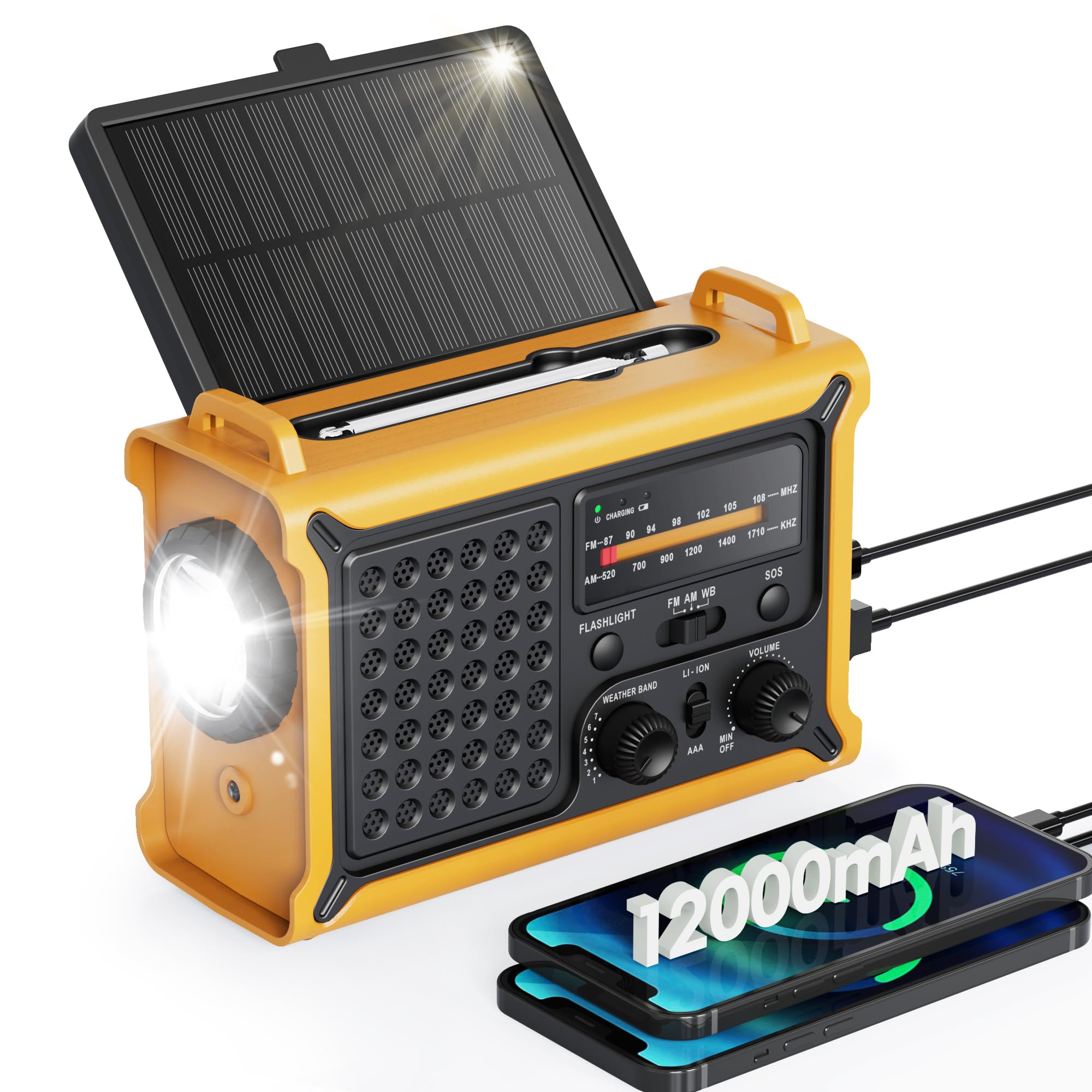
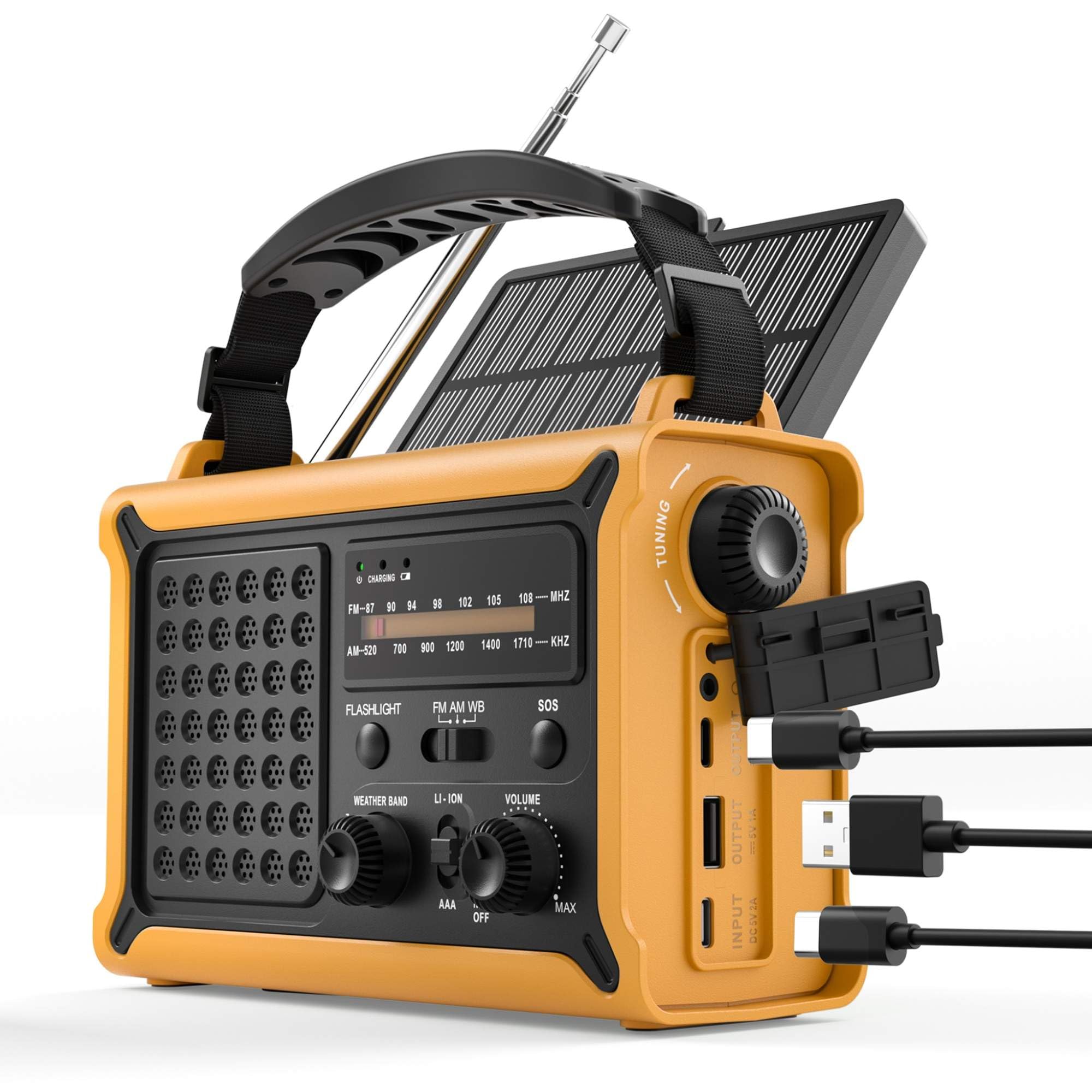
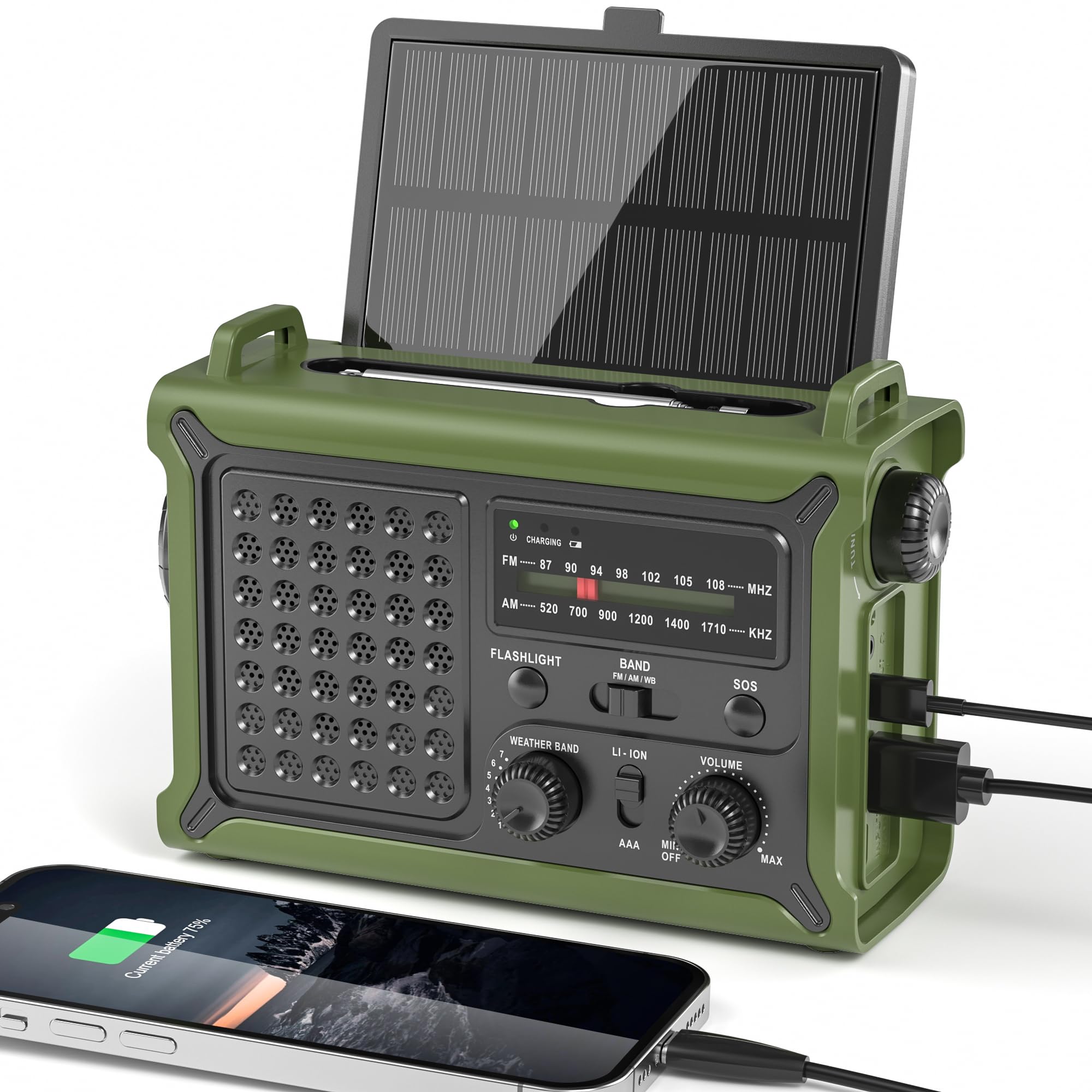
The Mesqool emergency radio packs a 12000mAh lithium battery that can recharge a phone three to four times, and the hand crank generator pumps power into it noticeably faster than most competitors. The 8500mm² monocrystalline solar panel actually contributes meaningful charge in direct sunlight, and the IPX6 rating means rain or splashes won't stop it. A 3-year warranty covers the unit, which is longer than typical for this category.

Owners report the battery holds charge well during storage and delivers days of intermittent radio use without needing a crank. The dual-LED system – a focused flashlight plus a wider reading lamp – can be dimmed, which conserves battery when you only need a little light. The speaker is clear at moderate volume, and the AM/FM/NOAA reception is strong in most areas, with the included telescoping antenna making a difference for fringe signals.

This radio is built for households in hurricane or storm zones who want a single ‘grab and go’ box for emergencies, as well as campers who need a reliable long-weekend power source. It is not ideal for ultralight backpackers – at 1.59 lbs it is heavier than a pocket radio – and those who prefer digital tuning with preset stations will find the analog dial imprecise. The antenna retrieval tab sits recessed and may require a small tool to pull out, a minor annoyance when fumbling in the dark.

Tip: Keep a small toothpick or keychain tool attached to the radio for easy antenna deployment.

Bottom line: For households wanting a durable, high-capacity emergency radio with real water resistance and a warranty that backs it up, this delivers without the puffery common to the category.
2

Emgykit Pocket Radio

Emgykit Pocket Radio

Ultra budget

Our Score 9.2/10
Check Price

Worth Noting

  • Extremely small size makes controls cramped
  • Build feels cheap and delicate
Lighting
3 LED flashlight
Battery Capacity
2000mAh
Charging Methods
Solar, crank, USB
Tuning Interface
Analog dial

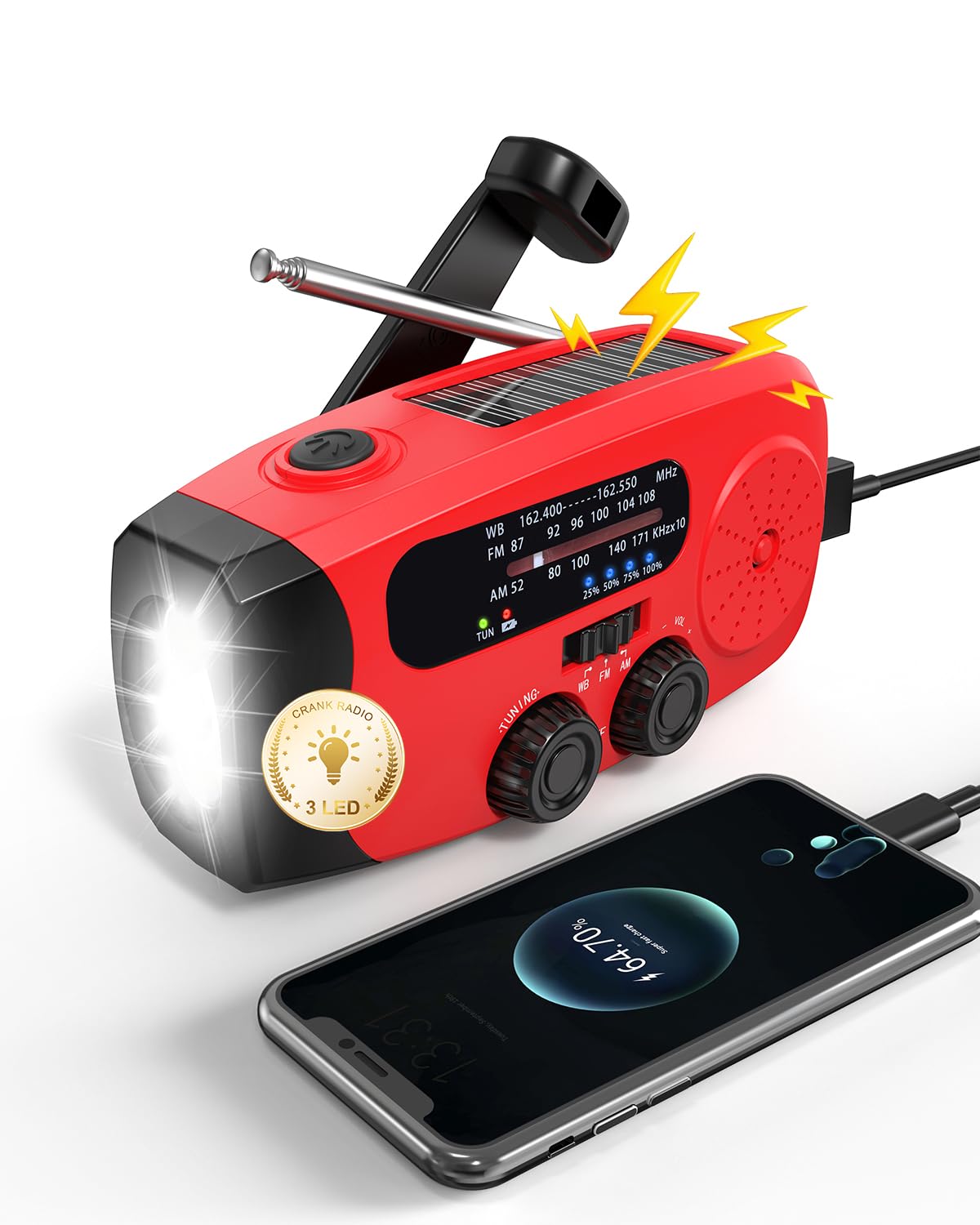
At under $16, the Emgykit Pocket Radio delivers AM/FM/NOAA weather alerts plus a 140-lumen flashlight in a package small enough to stash in a glove compartment or bug-out bag. Unlike the even cheaper disposable models, its 2000mAh battery holds a charge reasonably well and the hand crank actually spins a generator that works. The solar panel is present but too small to be a primary power source.

This radio is for the prepper who wants to equip multiple emergency kits without spending much per unit. The tradeoff is that the controls are cramped and the plastic body feels delicate — not something you'd want to handle roughly. If you have large hands or need to charge your phone, look at the top pick instead. The small size also makes it easy to lose or misplace.

In use, the flashlight provides adequate light for moving around a darkened house, and the radio picks up local AM/FM and NOAA stations clearly. The SOS alarm is loud enough to be heard a few rooms away.

Tip: Store it with the crank extended or use a lanyard to avoid losing it – its small size makes it easy to misplace.

Bottom line: If you need an affordable, no-frills emergency radio to toss in every bag and car, the Emgykit does the job. Just don't expect ruggedness or phone charging.

3

Raynic 5000mAh Digital Radio

Raynic 5000mAh Digital Radio

Digital tuning, SW

Our Score 9.0/10
Check Price

Worth Noting

  • In areas with weak signals, reception can be static-heavy compared to analog competitors.
  • Battery may self-discharge within a week when not in use, requiring regular top-ups.
Lighting
Flashlight + reading lamp
Battery Capacity
5000mAh
Charging Methods
Solar, crank, USB, AAA
Tuning Interface
Digital LCD

The Raynic Emergency Radio stands out with its large HD LCD display and digital tuning, making station selection straightforward. It covers AM, FM, shortwave, and NOAA with auto-scan and the ability to save presets.

Emergency features include a loud SOS siren, a bright flashlight, and automatic NOAA alert scanning that triggers on severe weather warnings. The headphone jack allows private listening, and the 5000mAh battery can charge a phone in a pinch.

This radio suits users who want digital tuning convenience and shortwave reception in their emergency kit. However, the digital receiver is less sensitive than analog models – reception may be poor in fringe or mountainous areas. The battery also self-discharges faster when stored, so it needs periodic recharging rather than sitting unused for months.

Tip: Recharge the battery every few weeks during storage to ensure it holds charge when needed.

Bottom line: The Raynic is a good fit if you want digital tuning and shortwave, but plan for weaker reception in fringe areas and more frequent battery maintenance.

4

Vokida Survival Kit Radio

Vokida Survival Kit Radio

Survival kit

Our Score 9.2/10
Check Price

Worth Noting

  • Included thermal blankets and bracelet are basic quality
  • Battery may not hold a charge as long as expected between uses; periodic recharging is recommended.
Lighting
Flashlight + reading lamp
Battery Capacity
10000mAh
Charging Methods
Solar, crank, USB
Tuning Interface
Analog dial

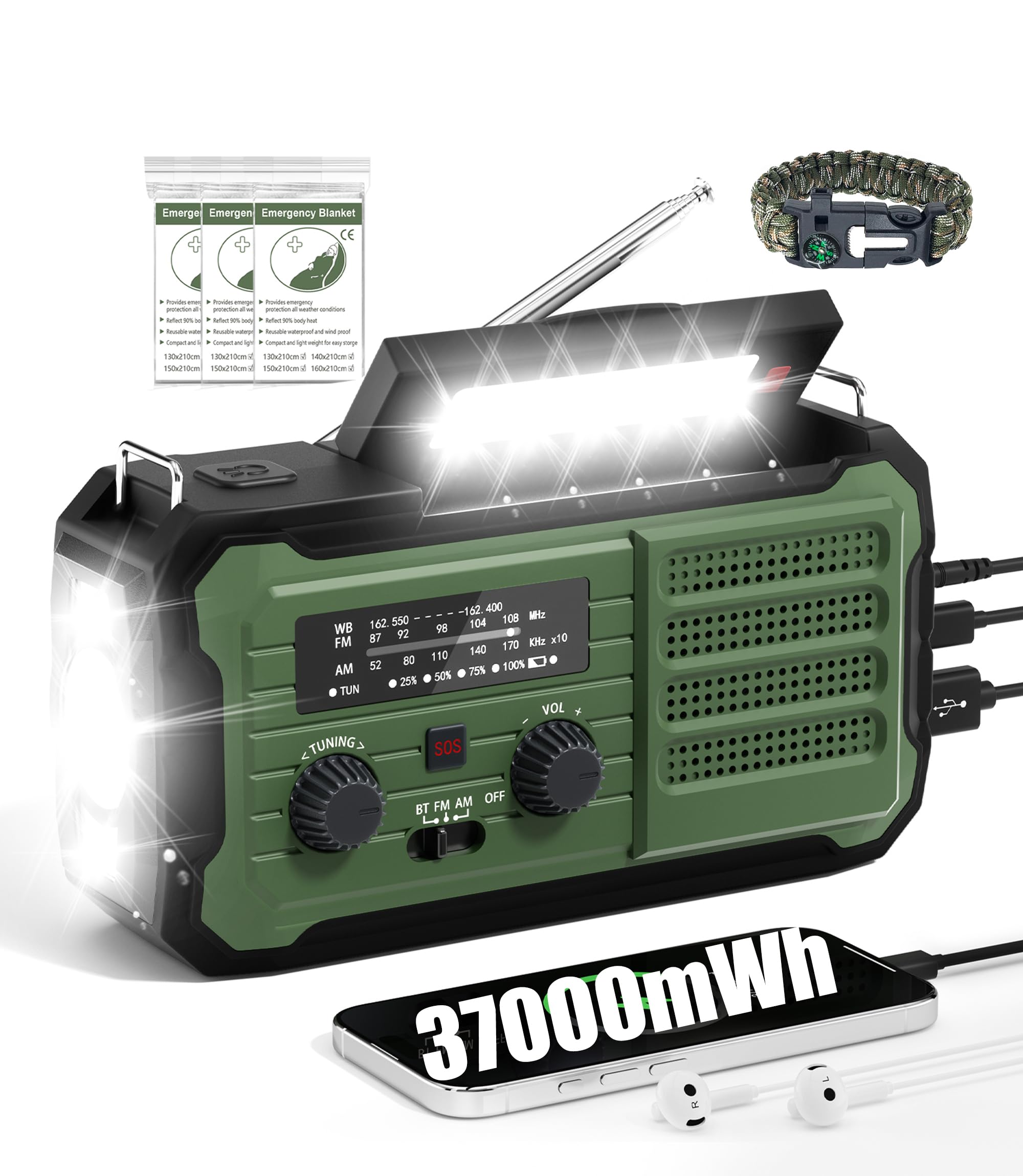
Unlike standalone emergency radios, the Vokida arrives with three thermal blankets and a paracord survival bracelet (compass, whistle, fire starter) in the box. That makes it a one-stop purchase for someone building their first go-bag, without needing to source extras separately. The radio itself delivers clear AM/FM/NOAA reception and enough volume for indoor or camp use, and the 10000mAh battery can top off a phone in a pinch — but the solar panel and hand crank are slow, as expected at this price tier.

This kit suits gift buyers or new preppers who want a complete emergency package in a single box. The included accessories are functional but basic — the blankets are thin and the bracelet components are plastic — so they work for short-term use but won't replace dedicated gear for extended situations. The radio's battery can lose charge more quickly than higher-end models, especially if left uncharged for months, so periodic testing is worthwhile.

Compact dimensions let it slide into a backpack or glovebox, and the built-in flashlight and SOS siren add utility for power outages or roadside emergencies. For the price, it's hard to beat the package value — just understand that the extras and battery performance trade some durability for affordability.

Tip: Test the battery every few months and keep it topped up to ensure it's ready when needed.

Bottom line: The Vokida is a practical all-in-one for anyone building their first emergency kit or looking for a thoughtful gift — just keep expectations realistic for the battery longevity and accessory quality.

5

Midland ER310 Premium

Midland ER310 Premium

NOAA auto-alert

Our Score 9.2/10
Check Price

Worth Noting

  • Battery charging can be inconsistent
  • No water resistance
Lighting
130 lumens CREE LED
Battery Capacity
2600mAh + 6xAA
Charging Methods
Crank, AC/DC, USB
Tuning Interface
Analog dial

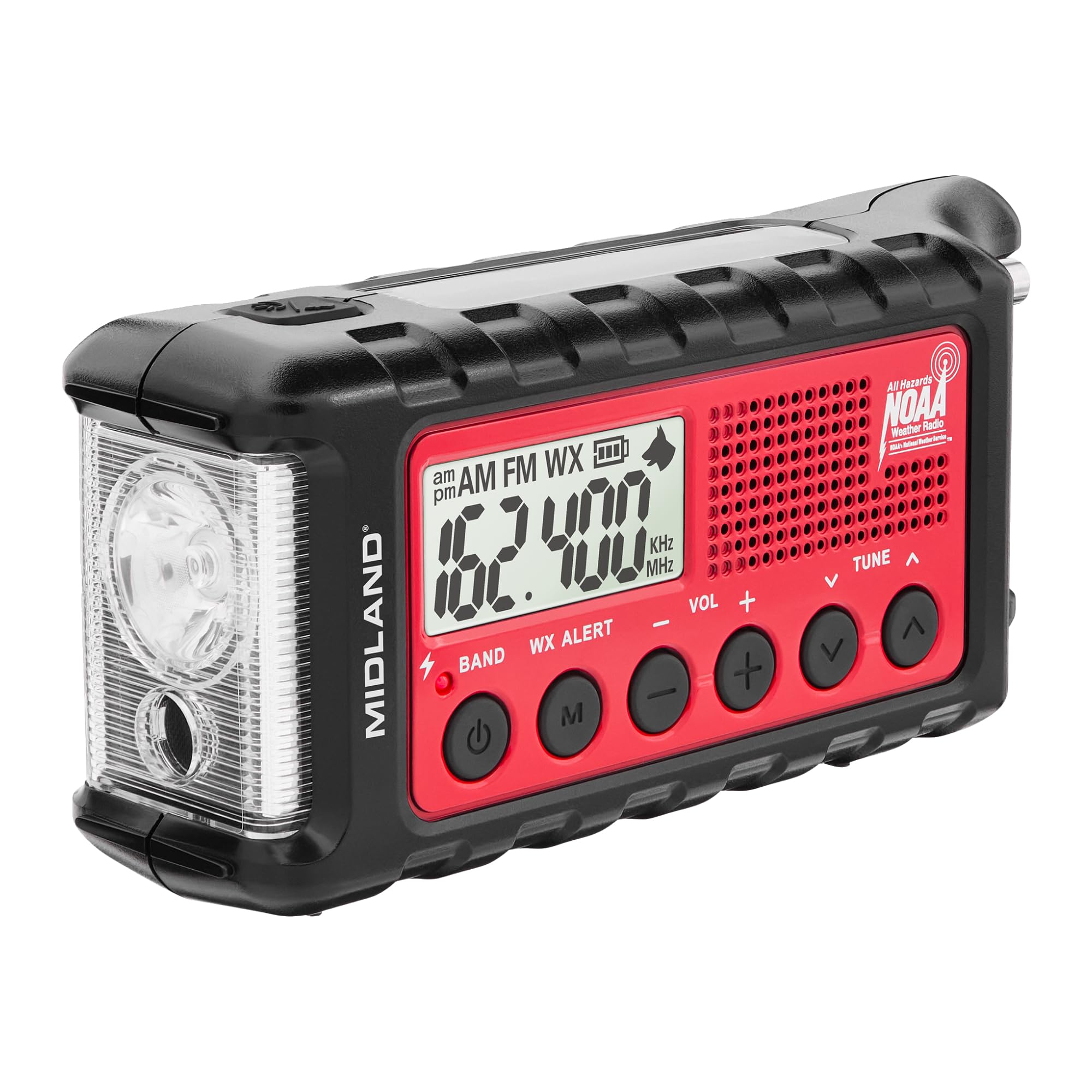
The Midland ER310 locks onto NOAA weather channels automatically and sounds an alert when watches or warnings are issued – no manual scanning needed. The 130-lumen CREE LED flashlight throws a strong beam, and the integrated ultrasonic dog whistle adds a unique layer for search scenarios. Build quality feels solid, with intuitive controls that don't require a manual to operate.

This radio suits households that keep an emergency kit indoors and want the reassurance of unattended weather monitoring. The ultrasonic whistle is a practical bonus for dog owners who may need to signal during an evacuation. However, the internal battery can be inconsistent – some units may not hold a charge after storage – and there is no water resistance, so it must stay dry. The top pick in this category offers IPX6 protection and a more reliable battery, making the Midland better as a secondary or dedicated indoor unit.

Tip: Test the internal battery immediately and re-check every few months; the hand crank provides backup power if the battery loses its charge.

Bottom line: If automatic NOAA alerts and a built-in dog whistle are priorities for an indoor emergency kit, this radio delivers – but verify the battery performance on arrival and keep it away from moisture.

6

Roxicosly 12000mAh Solar

Roxicosly 12000mAh Solar

Large solar panel

Our Score 9.6/10
Check Price

Worth Noting

  • Analog tuning with no digital display
  • Long-term durability under sustained use is not yet verified by a large user base
Lighting
LED flashlight + reading lamp
Battery Capacity
12000mAh
Charging Methods
Solar, crank, USB
Tuning Interface
Analog dial

The Roxicosly sets itself apart from the top pick with a noticeably larger monocrystalline solar panel (8500mm²) that delivers usable charge even under indirect sunlight. This is a meaningful advantage for anyone planning extended off-grid use where direct sun can't be guaranteed. The battery capacity lives up to its rating — early users consistently report multiple phone charges and days of radio operation without needing to crank.

Reception across AM, FM, and NOAA bands is crisp and well-separated, with strong signal grab in suburban conditions. The speaker delivers clear voice and moderate music playback, suitable for alerting or background listening. The IPX6 water resistance adds a practical layer of protection against rain or splashes during outdoor use.

This radio suits early adopters who prioritize solar charging capability above all else, and who are comfortable with analog tuning and a newer brand. Long-term durability under sustained use is not yet established — the user experience base is still growing, so consistent performance over years is less certain compared to more established models. Those who need a digital display or precise frequency selection will prefer a different option.

Tip: The analog dial requires careful adjustment for each station — helpful for scanning, but less convenient if you have preset favorites.

Bottom line: For buyers who want the best solar charging in this price tier and are willing to take a chance on a newer brand, the Roxicosly delivers where it counts — battery, reception, and water protection. Just be aware that its long-term reliability hasn't been stress-tested at scale.

7

OnLyee 12000mAh Radio

OnLyee 12000mAh Radio

Similar to Mesqool

Our Score 9.4/10
Check Price

Worth Noting

Lighting
5W flashlight + reading lamp
Battery Capacity
12000mAh
Charging Methods
Solar, crank, USB
Tuning Interface
Analog dial

With a 12000mAh battery, IPX6 water resistance, a large 8500mm² solar panel, and a 57mm speaker that delivers clear, room-filling audio, this radio matches the top pick spec for spec. The hand crank generator charges the battery quickly, and the flashlight and SOS functions work as expected. The main difference: the top pick has a longer history of real-world use confirming its build quality, so this is a reasonable choice for those who prioritize identical capability and are comfortable with less time-tested reliability.

Bottom line: A cost-effective alternative to the top pick if you want the same specs and are comfortable with its shorter track record.

8

Kaito KA500 Shortwave

Kaito KA500 Shortwave

Shortwave hobbyist

Our Score 9.0/10
Check Price

Worth Noting

  • Internal NiMH battery pack may drain charge quickly when stored
  • Solar panel output is too low to provide meaningful charging in most conditions
Lighting
Flashlight + reading lamp
Battery Capacity
NiMH pack
Charging Methods
Solar, crank, USB, AC/DC
Tuning Interface
Analog dial

The Kaito KA500 delivers strong AM/FM/shortwave reception in a rugged, impact-resistant shell. Its replaceable NiMH battery pack is practical for radio enthusiasts who swap cells, but the internal battery drains noticeably between uses and the solar panel is too small to recharge it meaningfully. For emergency preparedness where you need reliable standby power and effective solar charging, this falls short — it is better suited as a listening radio for shortwave enthusiasts who already keep fresh AA batteries handy.

Bottom line: Best for shortwave listeners and as a backup radio when you have spare AA batteries on hand.

9

Leaton 10000mAh Weather Radio

Leaton 10000mAh Weather Radio

Bright lights

Our Score 9.0/10
Check Price

Worth Noting

  • Charging can be inconsistent
  • Build quality feels cheap, with squeaky plastic panels and a crank that can feel fragile during operation.
Lighting
48-LED lamp + 20-LED flashlight
Battery Capacity
10000mAh
Charging Methods
Solar, crank, USB-C
Tuning Interface
Analog dial

The Leaton's dual lights are the brightest in the category, with a 48-LED reading lamp that includes a motion sensor and a 20-LED flashlight that cuts through darkness well. The 10000mAh battery can top off a phone several times and power the radio for days if charged via USB. Charging reliability, however, can be inconsistent — in some cases the unit may not charge or hold a charge, and the solar panel is largely ineffective. This makes the Leaton better suited as a lamp with a large phone-charging battery than as a self-powered emergency radio. The IPX6 water resistance is a plus for outdoor use.

Bottom line: If you need a bright reading lamp and have access to USB power, this radio delivers excellent lighting and battery capacity. But don't count on the solar or crank to keep it charged in a prolonged outage.

10

RunningSnail MD-090P

RunningSnail MD-090P

Motion sensor light

Our Score 9.2/10
Check Price

Worth Noting

  • Battery may not hold charge over time
  • Solar charging yields minimal power
Lighting
1W 3-mode + reading lamp
Battery Capacity
14800mWh (4000mAh)
Charging Methods
Solar, crank, USB-C
Tuning Interface
Analog dial

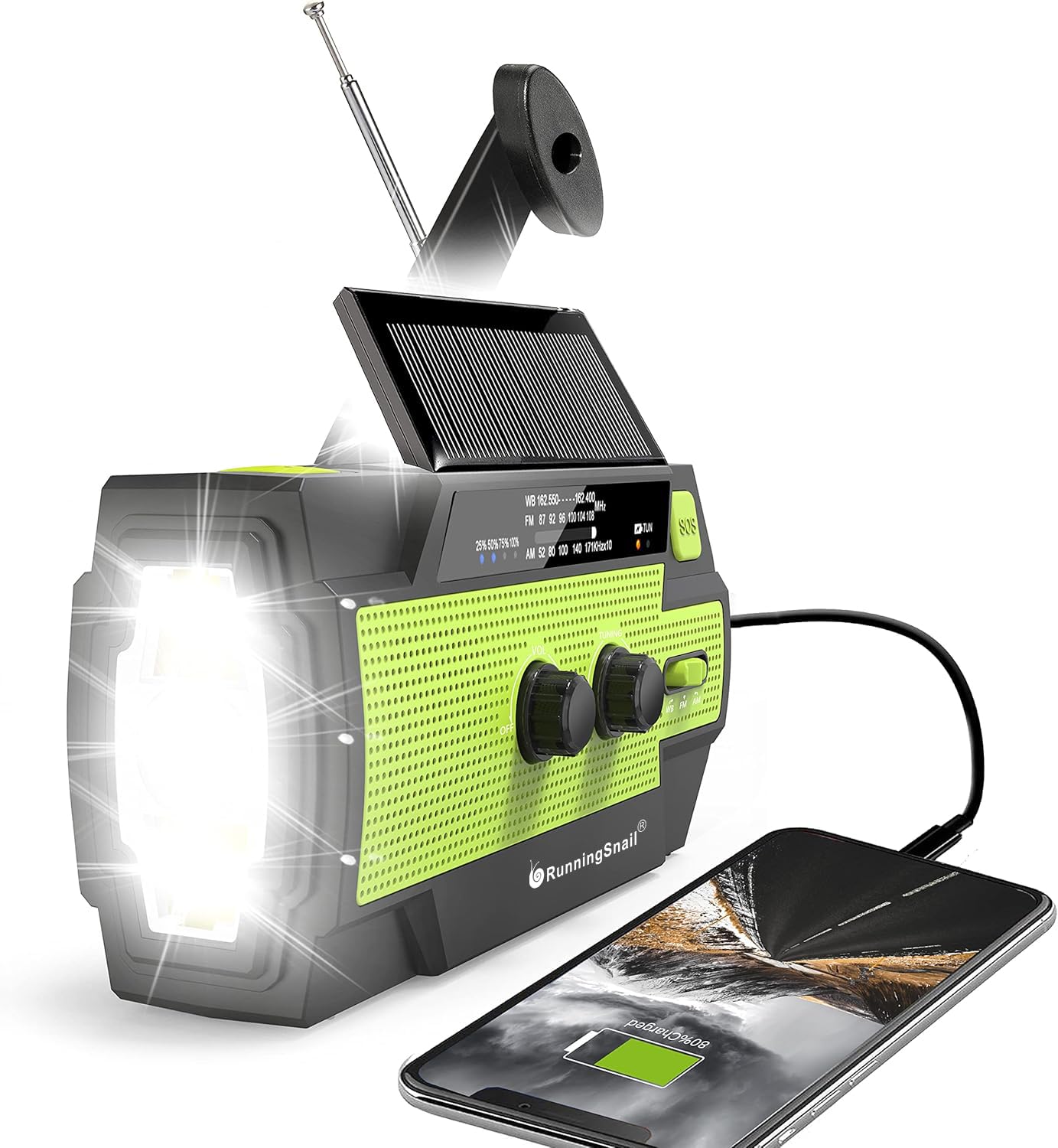
The motion sensor reading lamp is a genuine convenience – it lights up automatically when you move, making it easy to find in the dark. The 1W flashlight is notably bright with three modes, and the radio has been field-tested in real emergencies. Where this radio falls short is battery reliability – some units struggle to hold charge or recharge fully, and the solar panel provides minimal input. This makes the RunningSnail best suited for users who prioritize the lighting features and can tolerate some unit-to-unit variance.

Tip: For best readiness, recharge the radio via USB-C every few months – the solar panel alone won't keep it topped up.

Bottom line: Ideal for those who want a motion-sensing reading lamp and a powerful flashlight in one emergency radio, and are willing to accept the possibility of battery quirks.

11

Nitigo 4000mAh Radio

Nitigo 4000mAh Radio

Reading lamp

Our Score 9.0/10
Check Price

Worth Noting

  • Battery life may decline in some units, leading to faster discharge than expected.
  • Buttons and dials are very small, making operation difficult for larger hands.
Lighting
LED flashlight + rotating lamp
Battery Capacity
4000mAh
Charging Methods
Solar, crank, USB
Tuning Interface
Analog dial

The rotating reading lamp is genuinely useful for hands-free illumination during blackouts, and the headphone jack allows private listening without disturbing others. Solar and crank charging work as intended. However, battery life can be inconsistent, with some units losing charge quickly. The compact size means tiny buttons and dials that may frustrate users with larger hands. These tradeoffs make it a secondary option for those prioritizing bright lighting and headphone output over long-term battery reliability.

Bottom line: Best suited for those who value a bright reading lamp and headphone jack during short power outages, and are comfortable with compact controls.

12

yesiwtc 3-Cable Radio

yesiwtc 3-Cable Radio

Built-in cables

Our Score 9.2/10
Check Price

Worth Noting

  • Tiny controls and dials can be difficult to operate, especially for larger hands or in dim light
  • Charging reliability may vary
Lighting
3-mode LED
Battery Capacity
2000mAh
Charging Methods
Solar, crank, USB
Tuning Interface
Analog dial

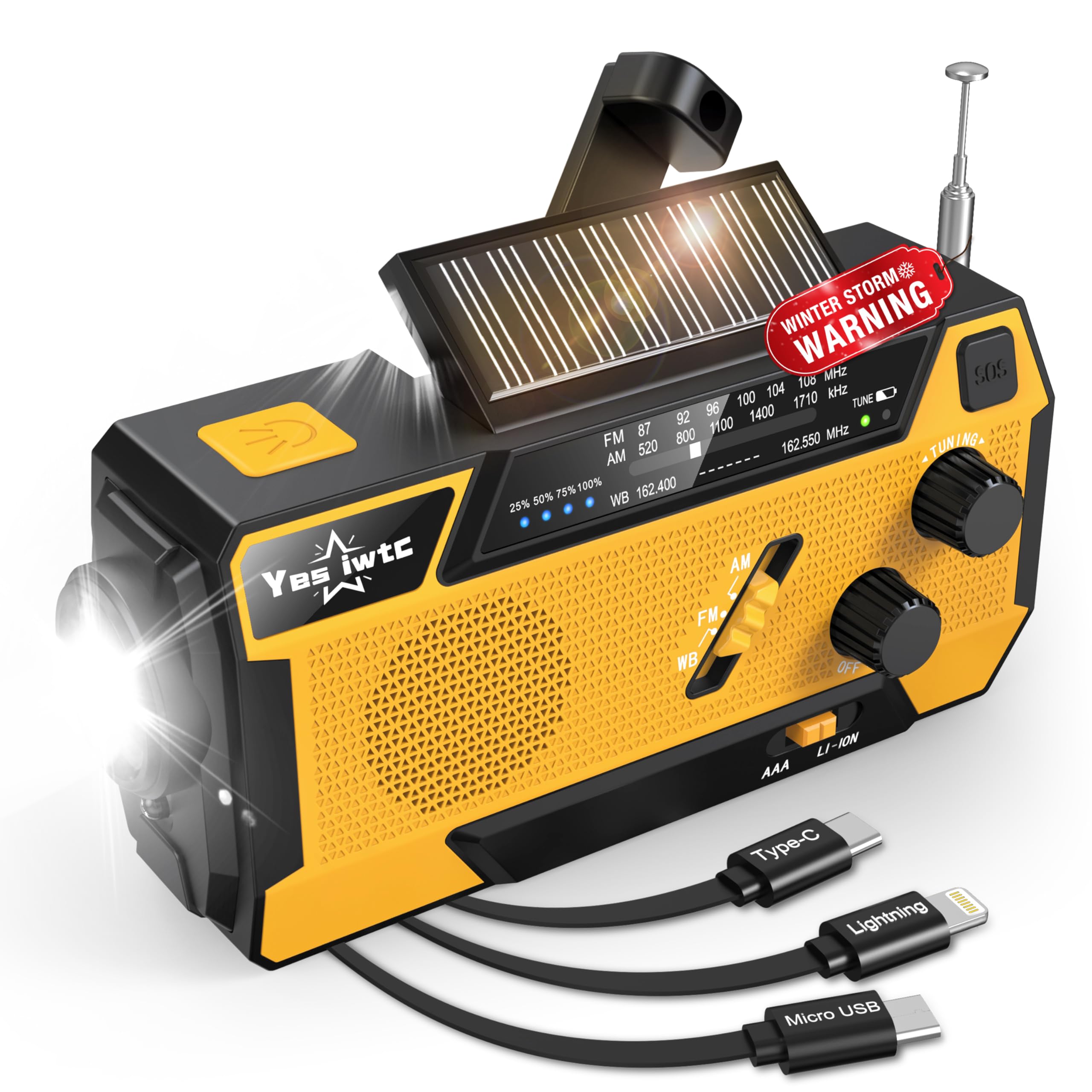
This radio’s built-in Lightning, USB-C, and Micro USB cables are a genuine convenience for anyone who wants to charge a phone without hunting for separate cords. The 7400mWh battery, flashlight with three modes, and AM/FM/NOAA coverage pack solid emergency basics into a package that slips into a pocket or small kit.

The small size, however, makes the tuning dial and controls cramped — users with larger hands may find it awkward to operate, and the FM markings are hard to read in low light. Charging performance can vary: some units may not reach a full charge or hold it over time. These tradeoffs keep it from competing with larger, more consistent models for daily or high-stakes use.

Bottom line: Best for ultra-compact emergency kits where saving cable weight matters, not for daily use or situations where dependable phone charging is a priority.

13

FosPower A1 Emergency Radio

FosPower A1 Emergency Radio

Budget radio

Our Score 9.2/10
Check Price

Worth Noting

  • For anyone planning to recharge a phone during an outage, the USB output often falls short
  • In a quiet room, the speaker sounds tinny and prone to static
Lighting
4 LED + 1W flashlight
Battery Capacity
7400mWh (2000mAh)
Charging Methods
Solar, crank, USB, AAA
Tuning Interface
Analog dial

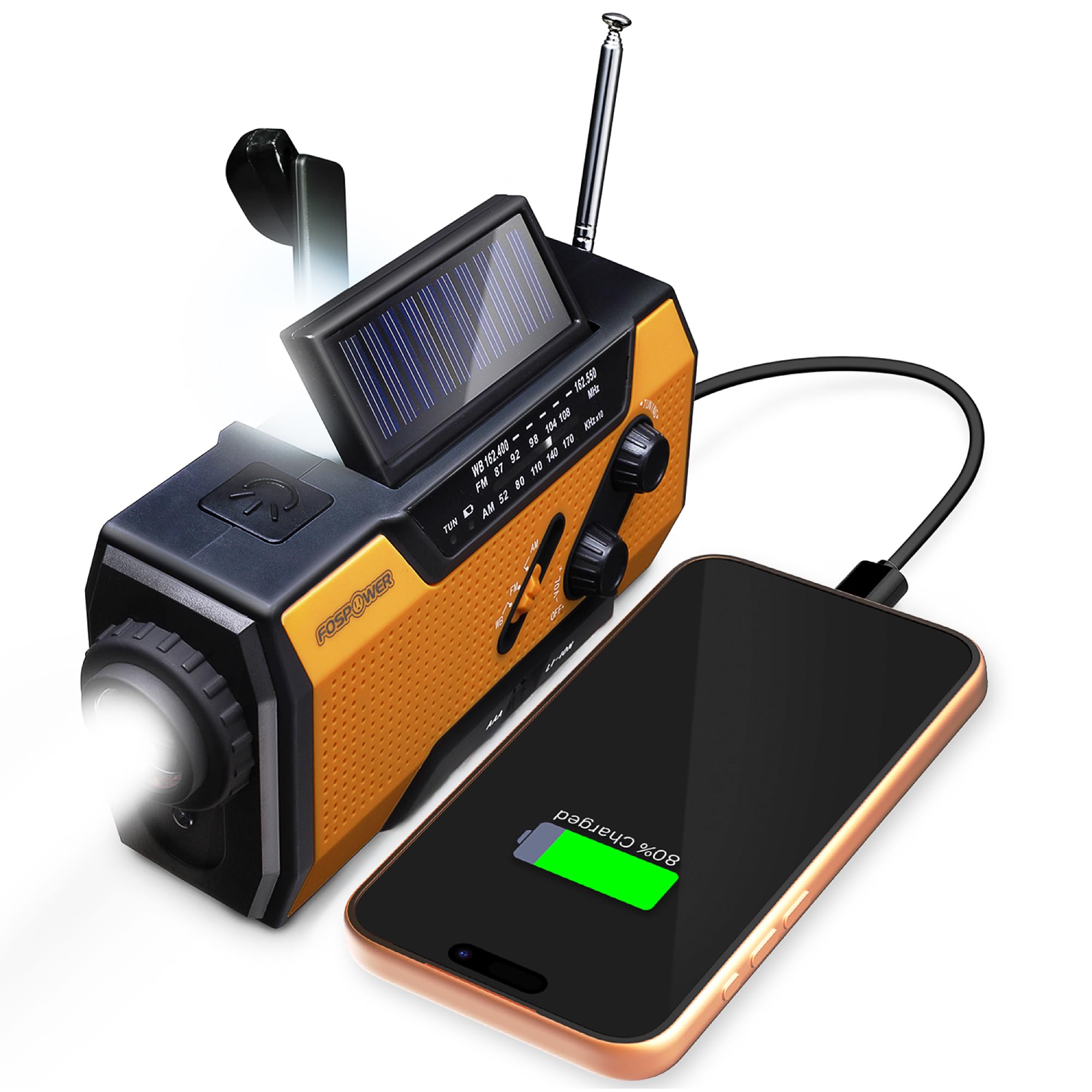
The FosPower A1 is one of the most popular emergency radios on the market, and for good reason: its compact size slips into any go-bag, the hand crank and solar panel provide backup power, and the 4-LED reading light plus 1W flashlight cover basic illumination needs. Priced affordably, it makes sense for buyers who want to stash a radio in multiple kits without spending much. However, the phone charging capability is a known letdown – the USB port often cannot deliver enough current to charge today's smartphones. If you treat this as a radio with a built-in light and ignore the power bank claim, it serves its purpose well. The sound quality is on the thinner side, fine for weather alerts but not for music.

Bottom line: Fits best when you need a basic radio and flashlight for emergency kits on a tight budget, but leave the phone charging expectations at home.

How to Choose

Battery Capacity: Real vs. Claimed

Many radios advertise mWh instead of mAh to inflate numbers. A 7400mWh battery at 3.7V is only 2000mAh – enough for radio use but not to fully charge a phone. Look for units with at least 10000mAh if phone charging matters.

Li-ion batteries in this category often self-discharge faster than expected. A radio that sits in a drawer for six months may be dead when needed. Plan to top off via USB-C every 2-3 months, regardless of marketing.

Water Resistance

An emergency radio that can't handle rain is a liability during outdoor use or wet blackouts. IPX6 rating means it survives heavy splashes and rain – IPX3 only resists light spray. Many budget radios skip any official rating, so keep them inside a dry bag.

Charging Methods

Solar panels on most models are too small to meaningfully recharge the battery – they may trickle-charge in direct sunlight but won't rescue a dead unit. The hand crank is often more useful: a reinforced magneto generator can push enough power for short radio use in minutes.

USB-C input is the most reliable way to charge. If you expect to rely on solar or crank, choose a model with a recharge rate that matches the generator's output (e.g., Mesqool's crank charges faster than typical budget dynamos).

Tuning Interface

Analog dials are simpler and don't drain battery to power a display, but they require manual precision to lock onto weak stations. Digital tuning with presets and auto-scan is more convenient but relies on a receiver chip that can be less sensitive, especially in fringe areas.

For emergency use, analog is often more reliable because there's no backlight to fail. But if you listen to shortwave or want quick access to weather channels, a digital model with NOAA auto-scan is worth the trade-off in battery drain.

Lighting

A bright flashlight and a reading lamp serve different purposes. The flashlight should throw a beam for outdoor navigation (100+ lumens). The reading lamp should be diffused for close-up tasks like reading maps or first aid. Motion-activated lamps are convenient but drain battery faster.

LED efficiency means most lights are adequate, but check for adjustable brightness – a dimmable light saves power and reduces glare in a dark room.

Frequently Asked Questions