Cameras & Photography

9 Best Binoculars for Stargazing 2026: Buy the Light, Not the Hype

Find the best binoculars for stargazing with real aperture and magnification, not marketing hype. Tips on tripod needs and avoiding common missteps.

Shopping for stargazing binoculars often feels like decoding a spec sheet lottery. Advertised magnification numbers get inflated, and the 'free' tripod adapter can't hold the weight steady. The real choice isn't between 15x and 20x — it's between a binocular that gathers enough light and one that just looks impressive in the box.

This guide cuts through the noise by focusing on what actually matters: objective lens size, optical quality, and how the binocular handles in real-world use. The right pick transforms your night sky experience without breaking your bank or your back.

1

Celestron SkyMaster 15x70

Top Pick
Celestron SkyMaster 15x70

Budget deep-sky

Our Score 9.0/10
Check Price

Worth Noting

  • At 3.28 pounds, handheld use produces shaky views; a tripod is essential.
  • The included adapter may not provide sufficient stability; a heavier mount is suggested for steady views.
Prism
BaK-4 Porro
Weight
3.28 lbs
Coating
Multi-Coated
Magnification
15x

The SkyMaster 15x70 delivers a level of light-gathering that typically costs several times more. The 70mm objectives pull in enough light to resolve star clusters and trace the Milky Way, and the multi-coated BaK-4 prisms keep images bright and contrasty. Lunar craters pop at 15x, and even the Andromeda Galaxy appears as a distinct fuzzy patch from a dark site.

At 3.28 pounds, this binocular is too heavy for steady handheld viewing at 15x magnification. A tripod is essential — the included adapter works but a heavier mount will prevent shake. Without proper support, the image wobbles enough to make fine detail difficult to discern, so plan for the added weight of a stable mount in your setup.

This is for budget-conscious stargazers who want to explore beyond the moon and bright planets without spending on a telescope. Expect to budget extra for a heavy-duty tripod and mount — the total cost still stays well under $200 for a capable deep-sky rig. Beginners who already own a solid tripod will find this an easy upgrade path.

For those who prioritize portability and a wide field of view, a lightweight handheld-friendly binocular may be a better fit. But the SkyMaster's 70mm aperture and 15x magnification are unmatched in this price range for deep-sky detail, making it the go-to when your goal is faint fuzzies, not casual scanning.

Tip: Pair with a heavy-duty tripod and a fluid head to minimize vibrations at 15x magnification.

Bottom line: For stargazers on a budget who can accommodate a tripod, the SkyMaster 15x70 offers unmatched aperture value. It is the clear choice for deep-sky exploration without a telescope.

2

Celestron Cometron 7x50

Celestron Cometron 7x50

Beginner scanning

Our Score 9.0/10
Check Price

Worth Noting

  • Weight may feel noticeable during extended handheld use
  • 7x magnification limits detail on planets and deep-sky objects
Prism
Porro
Weight
2 lbs
Coating
Magnification
7x

The Celestron Cometron 7x50 offers a 6.6-degree field of view, making it suited for scanning comets, star clusters, and the Milky Way as a handheld instrument. Unlike higher-power models like the SkyMaster 15x70, which require a tripod and a larger investment, the Cometron keeps things simple: no mount, no extra gear. Its 7x magnification trades close-up detail for a steady, flicker-free view that suits beginners and casual observers.

This binocular is built for first-time stargazers and anyone on a budget who wants to explore the sky without committing to a tripod. The 7x magnification limits what you can see on planets and globular clusters – you get the big picture, not the fine details. It also works well as a gift for young astronomers or those wanting a low-cost entry into astronomy.

At 2 pounds, the Cometron feels heavier than some 7x50 models, but it remains usable for handheld sessions. Using a neck strap or resting on a steady surface helps during longer observations. Build quality is appropriate for the price – the Porro prism design is straightforward and functional.

Tip: Use a neck strap or rest your arms on a steady surface to offset the weight during long sessions.

Bottom line: If your goal is to explore the Milky Way and comets without a tripod, the Cometron delivers remarkable value. For chasing planetary detail, a higher-power model like the SkyMaster 15x70 is a better fit.

3

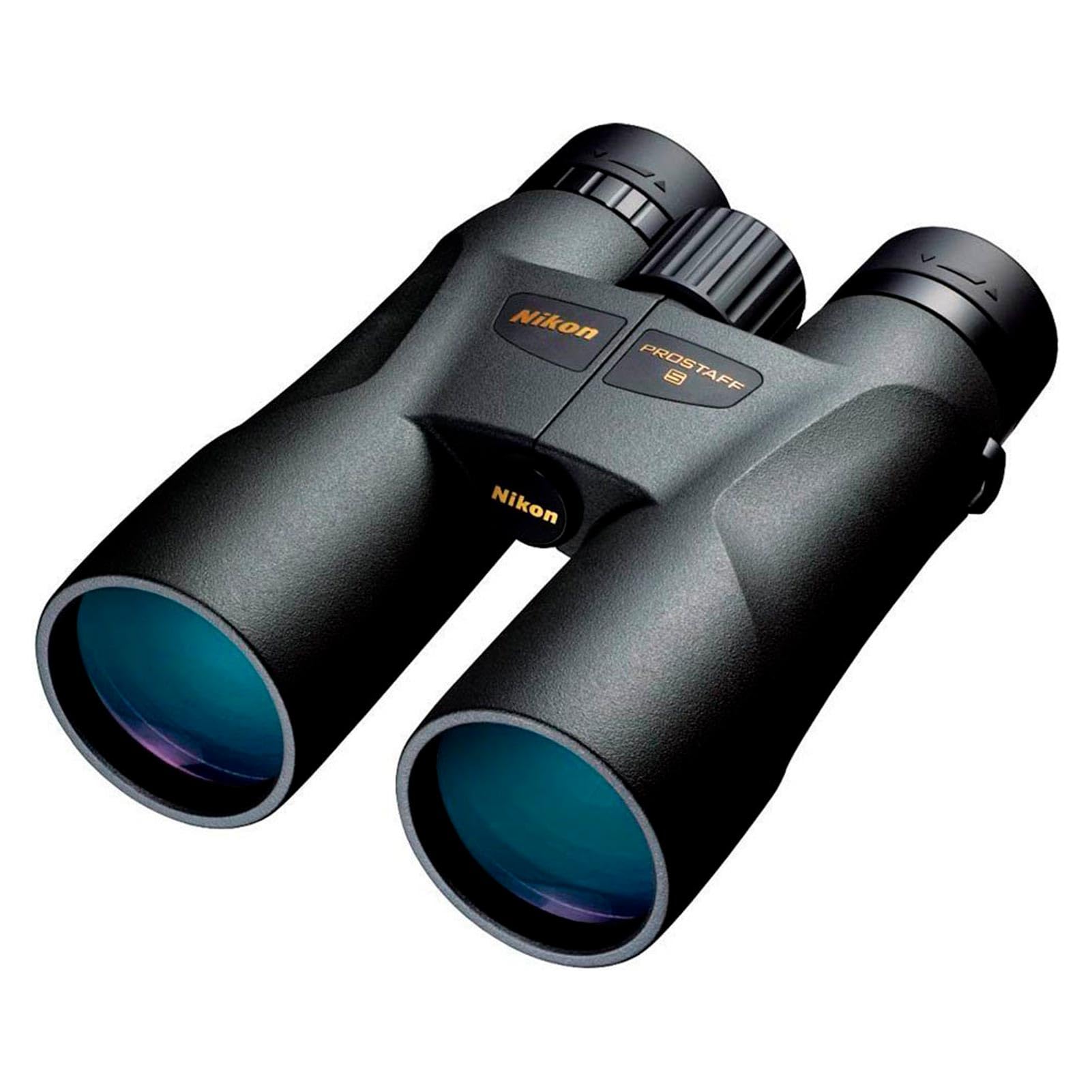
Nikon PROSTAFF 5 12x50

Nikon PROSTAFF 5 12x50

Lightweight all-rounder

Our Score 9.0/10
Check Price

Worth Noting

  • Eyecup and dust cover materials feel less durable than the rest of the build.
  • At 12x, hand tremors become visible without a tripod or monopod for steady viewing.
Prism
Roof
Weight
1.7 lbs
Coating
Multilayer-coated
Magnification
12x

At 1.7 pounds, the Nikon PROSTAFF 5 12x50 is noticeably lighter than most 12x50s and far easier to pack than the bulkier 15x70 models often recommended for stargazing. This weight savings doesn't come at the cost of brightness; the 50mm objective and multilayer-coated optics gather enough light for twilight hikes and casual astronomy without requiring a dedicated tripod just to carry it.

The optical quality holds up well under scrutiny. Views are sharp across most of the field, with good color accuracy and minimal chromatic aberration for a mid-range roof prism design. In real-world use, the PROSTAFF 5 handles both daytime birding and lunar observation with the same clarity — a notable feat for a binocular this portable.

This is a solid choice for hikers and travelers who want one binocular for trail use and casual stargazing, not deep-sky hunting. The 12x magnification reveals lunar craters and star clusters well, but expect some hand-shake without a support — a lightweight monopod or resting on a solid object makes a noticeable difference. If your priority is maximum light-gathering for faint galaxies, a 70mm model will outperform it, but you'll carry three times the weight.

Tip: Resting the binocular on a backpack, fence, or car roof steadies the view significantly when you don't have a monopod handy.

Bottom line: Best for hikers and casual stargazers who want a carry-everywhere binocular that works for both daylight and night sky, provided you're comfortable adding a monopod for steady astronomy.

4

Canon 18x50 IS

Canon 18x50 IS

Handheld high-power

Our Score 9.0/10
Check Price

Worth Noting

  • The 4-pound body (with batteries) may cause fatigue during extended handheld sessions.
  • At over $1,100, this binocular represents a significant investment
Prism
Weight
4.08 lbs
Coating
Magnification
18x

Canon's image stabilization makes 18x magnification usable without a tripod — a rare capability. The system cancels out hand tremors, so stars stay still even when viewing from a moving boat or while standing. This is a fundamental difference from standard 16x binoculars that demand a steady mount.

This binocular fits serious astronomers who prioritize mobility over tripod setup, and marine observers who need steady views on water. But the luxury price tag and 4-pound weight (with batteries) mean it's not for casual or budget-limited buyers. The IS system relies on two AA batteries, which need spares for longer outings.

Optically, the 18x50 IS delivers bright, crisp images — the Moon's craters and Jupiter's moons are clearly defined. After 20-30 minutes of handheld use, the weight becomes noticeable, making a monopod a useful accessory for extended sessions. Battery life is around 2-3 hours of continuous IS operation.

Tip: Carry spare AA batteries; the IS system typically lasts 2-3 hours of continuous use.

Bottom line: For observers who need high-power handheld viewing or often use binoculars from boats, the Canon 18x50 IS is the only option that works — but the price and weight limit its appeal to dedicated users with a larger budget.

5

Nikon ACULON 16x50

Nikon ACULON 16x50

Tripod high-power

Our Score 9.0/10
Check Price

Worth Noting

  • Handheld viewing at 16x is too shaky; a tripod is essential for steady images.
  • At 2.99 pounds, the binocular may feel heavy during extended sessions without a tripod.
Prism
Porro
Weight
2.99 lbs
Coating
Multi-Coated
Magnification
16x

Nikon's 16x50 binocular delivers clear, bright views at a mid-range price. It is a step up from entry-level models, but unlike image-stabilized binoculars that support handheld 18x, this pair demands a tripod for steady observation.

Best for astronomers who already own a sturdy tripod or plan to buy one. The 16x magnification reveals lunar craters and brighter deep-sky objects, but hand shake makes handheld use frustrating. The 50mm objective gathers enough light for pleasant views of the Moon, Jupiter's moons, and the Orion Nebula.

Multi-coated optics and Porro prisms offer sharp, high-contrast images typical of Nikon's mid-range line. The focus wheel is smooth, and the rubber armor provides a secure grip when mounted. At 2.99 pounds, a solid tripod is advisable for comfortable extended sessions.

Tip: Use a tripod with a 90-degree adapter for comfortable overhead sky viewing.

Bottom line: The Nikon ACULON 16x50 offers sharp optics and solid build for stargazing, but only if you already own or are ready to invest in a stable tripod.

6

Sogries 18x70

Sogries 18x70

Digiscoping ready

Our Score 8.8/10
Check Price

Worth Noting

  • Requires a tripod for steady viewing due to significant weight and bulk
Prism
BAK4 Roof
Weight
Coating
Fully Multi-Coated
Magnification
18x

This binocular delivers clear, bright views at 18x thanks to BAK4 prisms and fully multi-coated optics, and the included smartphone adapter makes digiscoping straightforward out of the box. The weight and bulk are significant — this is not a handheld instrument. A sturdy tripod is mandatory for any useful observation, and the lack of a track record from the brand means long-term durability is an open question. Buyers who already own a tripod and want high magnification without spending on premium labels will find the specs appealing, but those expecting grab-and-go use or proven longevity should look elsewhere.

Bottom line: Best suited for buyers who already own a stable tripod and want 18x magnification with digiscoping capability at a mid-range price, and who are comfortable with a less established brand.

7

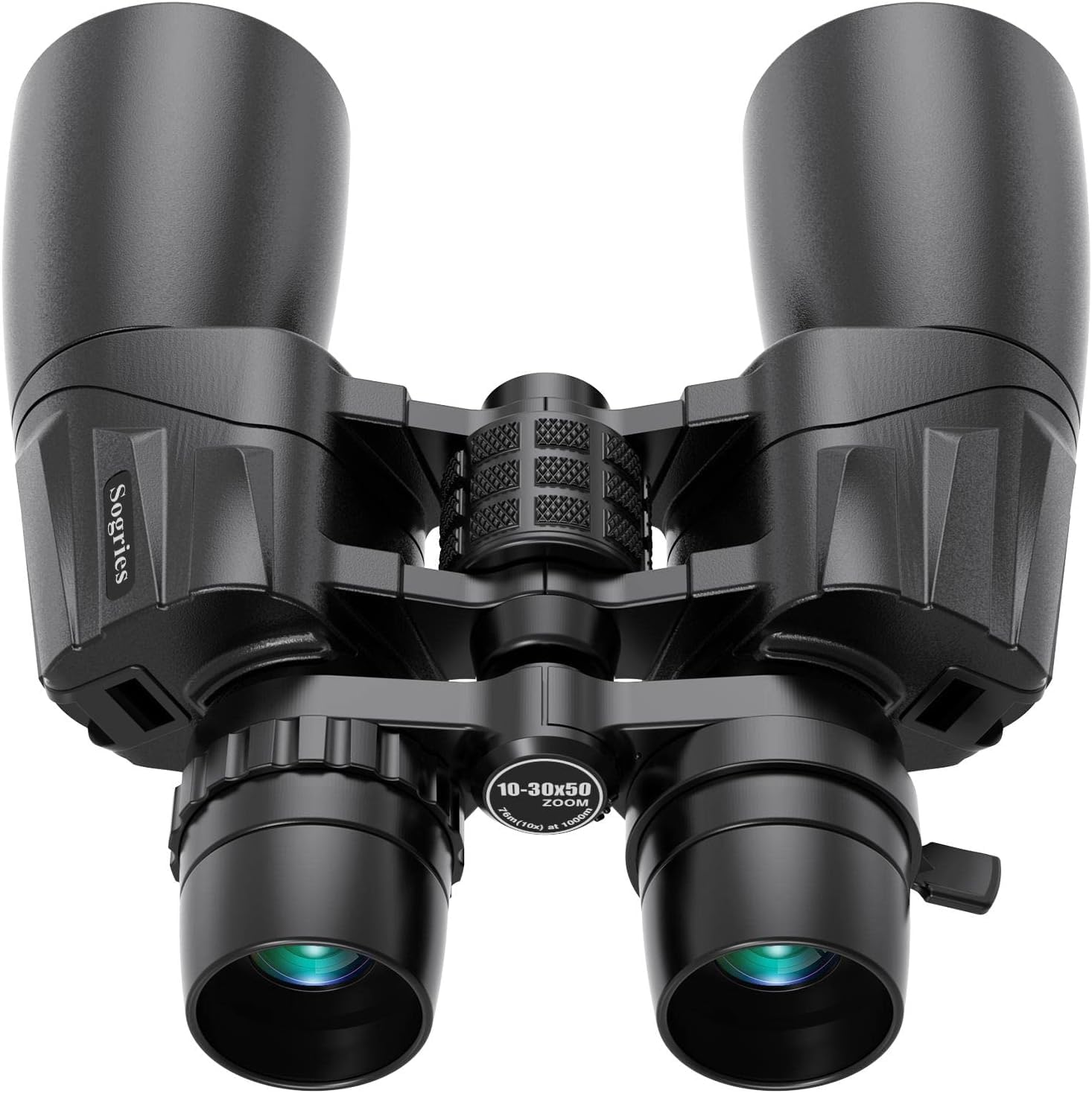
Sogries 10-30x50 Zoom

Sogries 10-30x50 Zoom

Zoom versatility

Our Score 9.0/10
Check Price

Worth Noting

  • Image sharpness drops noticeably at the 30x setting, especially in low light
  • Focus adjustment can be finicky at higher magnifications, requiring careful tweaking
Prism
Porro
Weight
2.1 lbs
Coating
FMC
Magnification
10-30x

The Sogries 10-30x50 delivers the convenience of a zoom range in a single body, letting you switch from wide-field birding to close-up detail without swapping optics. At lower magnifications the image is crisp and bright, making it a solid companion for daytime hikes and casual evening observation. However, as you push toward 30x, image softness increases and the field of view narrows — an inherent tradeoff in zoom designs. The 50mm objective gathers enough light for bright night-sky objects like the Moon, but falls short for faint deep-sky targets. This binocular suits travelers who want one tool for varied scenarios, but serious astronomers should stick to fixed-magnification models with larger apertures.

Tip: Stick to 10x–20x for the best balance of brightness and sharpness; reserve 30x for bright, steady conditions.

Bottom line: A practical choice for travelers and birders who need one binocular for day and casual night use, not for those seeking high-power astronomical clarity.

8

Tinllaans 15x55

Tinllaans 15x55

Ultra-budget

Our Score 8.8/10
Check Price

Worth Noting

  • Phone adapter fit can vary between phone models
  • Plastic body may not withstand rough handling
Prism
BAK4
Weight
Coating
Fully multi-coated
Magnification
15x

The Tinllaans 15x55 provides bright, clear views for its price thanks to fully multi-coated BAK4 prisms and a 55mm objective — enough for casual lunar and brighter deep-sky objects. The plastic construction and non-universal phone adapter fit make this a functional tool for occasional stargazing and travel, but not a durable long-term companion. Those who prioritize build consistency and reliable phone compatibility should look at a more established budget alternative in this guide.

Bottom line: This is a functional entry-level option for occasional stargazers who can accept modest build quality and a phone adapter that may not fit every device.

9

FLYANT 20x50

FLYANT 20x50

Casual daytime

Our Score 8.8/10
Check Price

Worth Noting

  • Focus and alignment consistency can vary between units
  • Advertised 20x magnification is not accurate; actual magnification is lower, limiting use for detailed observation
Prism
BAK4 Porro
Weight
~2 lbs
Coating
FMC
Magnification
20x (disputed)

The FLYANT 20x50 offers a budget-friendly price and sufficient sharpness for daytime activities like sports or nature walks. However, the magnification claim is misleading - actual power is closer to 10-12x, making it unsuitable for serious stargazing where accurate specs and light gathering matter. Build consistency can also vary, with occasional focus or alignment issues that affect image quality.

Bottom line: This binocular fits best as a spare pair or for children's daytime nature outings where exact magnification isn't critical - not for stargazing needs.

How to Choose

Objective Lens Diameter

A larger objective lens collects more light, revealing fainter stars and deeper sky objects. A 50mm binocular works for bright targets like the Moon and Orion Nebula, but a 70mm or 80mm aperture lets you see globular clusters and dim galaxies.

The trade-off is weight: every 10mm increase adds roughly half a pound. A 70mm binocular requires a sturdy tripod for steady views, while a 50mm can be hand-held for brief periods.

Magnification

Magnification magnifies both the image and your hand's tremors. Above 10x, hand-held shake becomes distracting; above 12x, it ruins detail entirely. For hand-held stargazing, 7x to 10x is the sweet spot.

Higher power (15x-20x) reveals fine lunar craters and double stars, but only when mounted on a stable tripod. The exit pupil shrinks with magnification, so at 20x you lose brightness compared to a lower power with the same aperture.

Prism Type and Coatings

BaK-4 glass prisms produce a round, bright exit pupil; cheaper BK-7 prisms cut off light at the edges. Fully multi-coated lenses (FMC) reduce glare and boost contrast, especially important in low-light astronomy.

Look for 'fully multi-coated' rather than just 'multi-coated' — the difference in light transmission can be 5-10%, which matters when trying to spot a faint nebula.

Weight and Tripod Adaptability

Binoculars over 2 pounds are uncomfortable to hold steady for more than a few seconds. For models above 10x and over 2.5 lbs, a tripod with a fluid head or a dedicated binocular mount is essential.

The tripod adapter that comes with many budget binoculars is often too flimsy — plan to upgrade to a heavy-duty mount that won't sag or vibrate in a breeze.

Waterproof and Fogproof Construction

Nitrogen-purged binoculars prevent internal fogging on humid nights and resist dust and moisture. This is less critical for strictly dry-weather stargazing, but essential if you take your binoculars out in dew or coastal air.

An IPX7 rating means the binocular can survive submersion in shallow water — not necessary for astronomy, but a sign of overall build quality.

Frequently Asked Questions