TVs & Video

9 Best VHS to Digital Converter of 2026: Reliable, No-Computer Digitization

Find the best VHS to digital converter that captures your old tapes reliably without requiring a computer or complex setup.

VHS digitization comes down to a fork in the road: standalone converters that work without a computer, or USB capture cards that rely on software. Many buyers assume all options deliver the same result, but the real difference is in how they handle signal interruptions and audio sync.

Choosing between higher resolution and recording reliability is the most consequential trade-off. Some converters offer 1080p capture but will stop recording when the source pauses, splitting your video into multiple files. Others stick to standard definition but record continuously without a hitch.

The right choice depends on your tolerance for interrupted footage and whether you need full-HD output. This guide cuts through the confusion to match you with the converter that fits your tape library and technical comfort level.

1

ClearClick 2.0

Top Pick
ClearClick 2.0

Home movie digitization

Our Score 9.0/10
Check Price

Worth Noting

  • Captures only standard definition (640x480), so video looks soft on high-resolution screens
  • Recording sessions over an hour may produce audio sync drift or occasional video stutter
Inputs
RCA, S-Video
Operation
Standalone
Resolution
SD 720x480

The ClearClick 2.0 gets one thing right that many competitors fumble: it makes digitizing old tapes as simple as connecting a source and pressing Record. The on-screen menus are self-explanatory, and the built-in 3.5-inch LCD lets you preview the feed without needing a computer. For someone who just wants to convert a box of family VHS tapes without learning software or wrestling with drivers, this converter is the most direct path.

When you plug in a VCR, camcorder, or Hi8 deck via RCA or S-Video, the unit records directly to a USB flash drive or SD card (up to 512 GB) in standard MP4 format. The capture resolution is SD 640x480 or 720x480 – think early DVD quality, not Blu-ray. That means playback on modern 4K TVs will look soft, but for archival viewing on a standard monitor or sharing online, the picture is serviceable. Some units have shown occasional video stuttering or audio sync drift during recordings longer than an hour, so it pays to keep an eye on longer transfers.

This converter is best for families who have a modest stack of tapes and prioritize ease over pixel perfection. If you are comfortable with SD quality and just want to preserve memories before the tapes degrade, the ClearClick 2.0 does the job without requiring a computer or third-party software. For those who insist on 1080p upscaling or plan to digitize hundreds of hours of footage where sync drift becomes a real risk, a capture-card-plus-software setup may be a better fit – though it demands more technical comfort.

Tip: For tapes longer than 60 minutes, pause recording at intervals to reset the audio sync – or test a short segment first to check for drift.

Bottom line: If your goal is to convert a few dozen tapes to digital with minimal hassle and you accept SD quality, this is the most dependable standalone converter you can buy. If you need sharp 1080p output, look at a capture-card alternative.

2

Portta VD10

Portta VD10

Plug-and-play

Our Score 9.2/10
Check Price

Worth Noting

  • For tapes with frequent pauses or long uninterrupted scenes, the converter may halt recording, requiring manual restart.
Inputs
RCA, S-Video, AUX
Operation
Standalone
Resolution
1080p30

The Portta VD10 records analog video direct to USB or SD card at 1080p30, a step up in resolution from the top pick's SD-only capture. It also includes S-Video input for sharper capture from Hi8 or S-VHS sources. For typical use, the video and audio transfer is stable, though the unit may stop recording during longer tapes or when the source pauses – a known behavior that matters most for tapes with commercial breaks or long pauses.

This converter is best for non-tech-savvy users with a stack of old VHS tapes who want a computer-free setup. No software or drivers needed – just plug in source and storage, press record. However, if your tapes have frequent stops or you need hands-off capture of long recordings, the auto-stop can interrupt the process, requiring you to restart. Professionals who require flawless throughput should choose a USB capture card with dedicated software.

Tip: Keep an eye on the recording progress – if your tape has long pauses, manually stop and start a new file to avoid auto-halt.

Bottom line: Best value standalone VHS converter for users who can work around the occasional auto-stop – ideal for digitizing clean tapes in short sessions.

3

ClearClick 3.0

ClearClick 3.0

Mixed media

Our Score 8.8/10
Check Price

Worth Noting

  • Video capture is limited to SD resolution (720x480) - suitable for archiving but not for HD viewing.
  • Audio buzzing or low volume can occur on some units - checking source cables and using headphone monitoring helps.
Inputs
RCA, 3.5mm audio
Operation
Standalone
Resolution
SD 720x480

The ClearClick 3.0 sets itself apart from video-only converters by also capturing audio from cassette tapes and vinyl records. Its 5-inch LCD screen provides live preview while recording to USB or microSD, and the built-in rechargeable battery lets you operate without a computer or power outlet. This makes it a single-box solution for digitizing both home movies and audio tapes.

This converter suits users with mixed media collections who want one device for video and audio digitization. The video output is standard definition (720x480 or 640x480) - adequate for archiving but not for modern HD screens. Audio quality can vary between units, with some producing low volume or buzzing; checking source connections and using the headphone monitor helps. For those prioritizing video clarity or pristine audio, a dedicated capture card may be a better fit.

Setup is quick - connect RCA cables, insert a USB drive, and press record. The 5-inch screen shows exactly what is being captured, and you can adjust audio gain before recording. The device also saves files as MP4, WAV, or MP3, compatible with most computers.

Tip: Use the headphone jack to monitor recording - adjust analog source volume to reduce potential buzzing.

Bottom line: If your project combines VHS tapes and audio cassettes, the ClearClick 3.0 handles both in one box - just adjust expectations for SD video and test audio levels first.

4

VIXLW BR117

VIXLW BR117

Mac budget

Our Score 8.8/10
Check Price

Worth Noting

  • Video may appear pixelated in some captures, depending on the source tape quality.
  • Audio levels are noticeably low when capturing directly
Inputs
RCA, S-Video
Operation
Computer required
Resolution
720p HD

The VIXLW BR117 connects directly to a Mac's USB port and works with QuickTime Player without additional drivers — a rare convenience among budget capture cards. Other ultra-budget options often require Windows-only software or finicky third-party apps, making this a simpler choice for Apple users.

This card suits Mac owners who have a stack of VHS tapes ready for digitization and are comfortable editing audio separately. The audio output is quiet, so expect to amplify recordings in software like Audacity after capture — the card captures the video cleanly enough at 720p, but the sound level is the clear tradeoff.

Tip: Amplify captured audio in software like Audacity or iMovie — QuickTime's default volume may be too low.

Bottom line: Mac users seeking a no-hassle capture method will find this card meets the need, provided they are willing to boost audio levels in post-processing. It is a budget-friendly entry point into tape digitization.

5

DigitPro V121

DigitPro V121

1080p capture

Our Score 8.8/10
Check Price

Worth Noting

  • Video output can have flickering or sync problems on some units.
  • User manual and on-screen menus are not intuitive and may frustrate initial setup.
Inputs
RCA, S-Video, HDMI output
Operation
Standalone
Resolution
1080p30

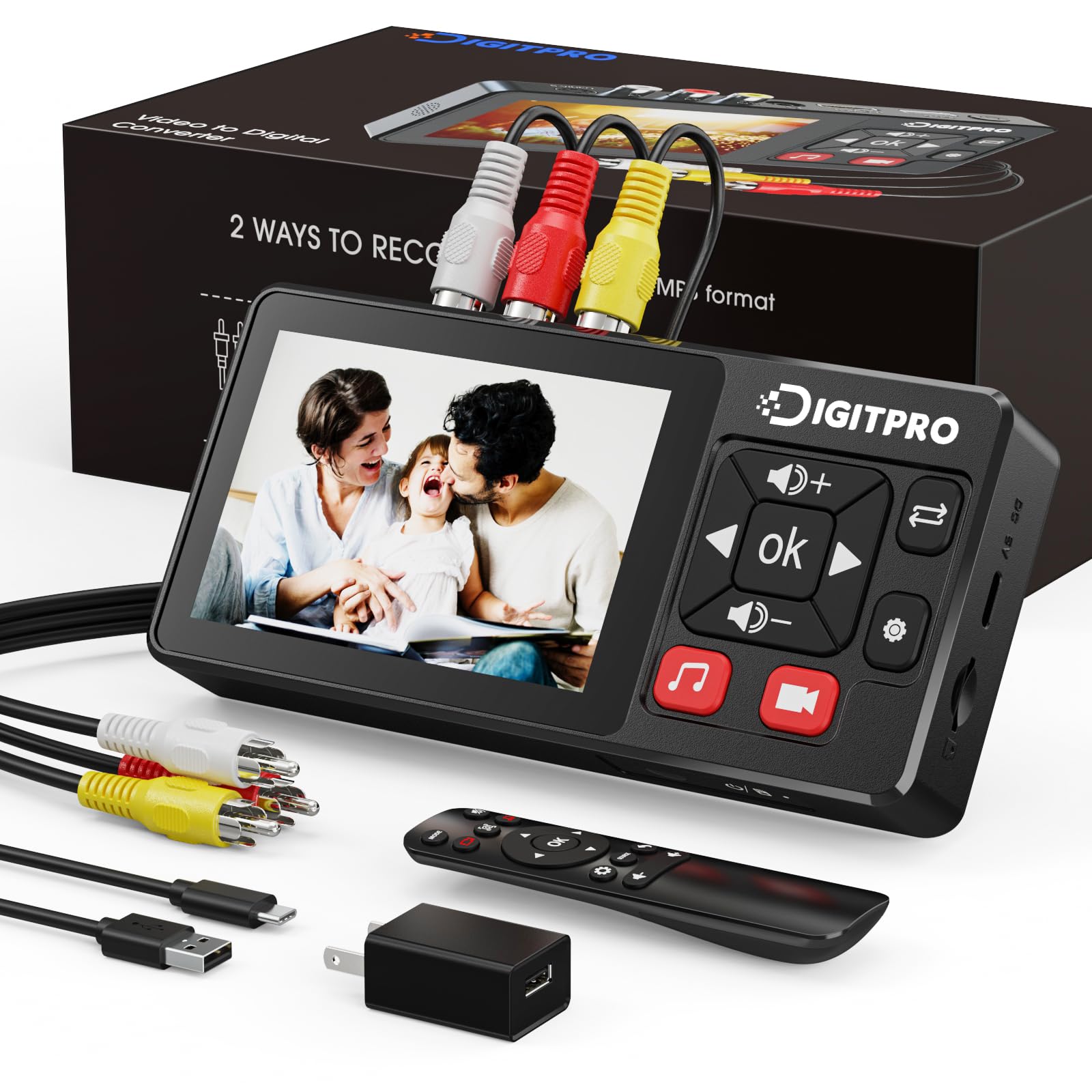
The DigitPro V121 converts VHS, Hi8, and other analog sources to 1080p MP4 files with HDMI output for live preview on a large TV. However, capture quality varies between units — some recordings may show flickering or sync issues. This makes it suitable for users with a moderate tape collection who are comfortable adjusting settings. The on-screen menus and manual are not the most intuitive, but the one-touch recording control is simple. With a smaller user feedback base than top picks, the DigitPro is a mid-range option for those who prioritize 1080p resolution over guaranteed consistency.

Tip: Run a short test recording and adjust settings before capturing important tapes to minimize quality issues.

Bottom line: A viable choice for budget-conscious users who want 1080p output and can accept some unit-to-unit variability in capture quality.

6

VIXLW BR116

VIXLW BR116

Ultra-budget

Our Score 8.8/10
Check Price

Worth Noting

  • Video may appear pixelated, especially when converting low-resolution VHS tapes.
  • Audio output may be quiet or contain static, requiring post-processing to correct.
Inputs
RCA, S-Video
Operation
Computer required
Resolution
720p HD

The VIXLW BR116 captures video from VHS, Hi8, and Mini DV sources when used with free software like OBS or QuickTime. It auto-installs on most Windows machines without additional drivers. However, video output can appear pixelated, especially with already low-resolution tapes, and audio may come through quiet or with static. These limitations make it suitable only for testing a digitization workflow or converting a handful of non-critical tapes before committing to a higher-quality solution.

Bottom line: Choose this only if you need the lowest-cost way to test an analog-to-digital conversion setup and can accept pixelated video and inconsistent audio.

7

avedio links Capture

avedio links Capture

Linux compatible

Our Score 8.4/10
Check Price

Worth Noting

  • Audio may drift out of sync during recordings longer than 30 minutes.
  • Bundled software is outdated and may not capture correctly; third-party apps work better.
Inputs
RCA, S-Video
Operation
Computer required
Resolution
1080p30

The avedio links Capture card offers broad OS compatibility including Linux, making it one of the few budget options for non-Windows users. At its entry-level price, it handles short VHS conversions without fuss, but longer captures can introduce audio sync drift and dropouts. The bundled software is dated; most users switch to OBS or PotPlayer for reliable results. This trade-off suits those who need occasional clips with less critical audio sync, especially on Linux platforms.

Bottom line: For Linux users or anyone grabbing short clips where audio sync is not critical, this budget card does the job without breaking the bank.

8

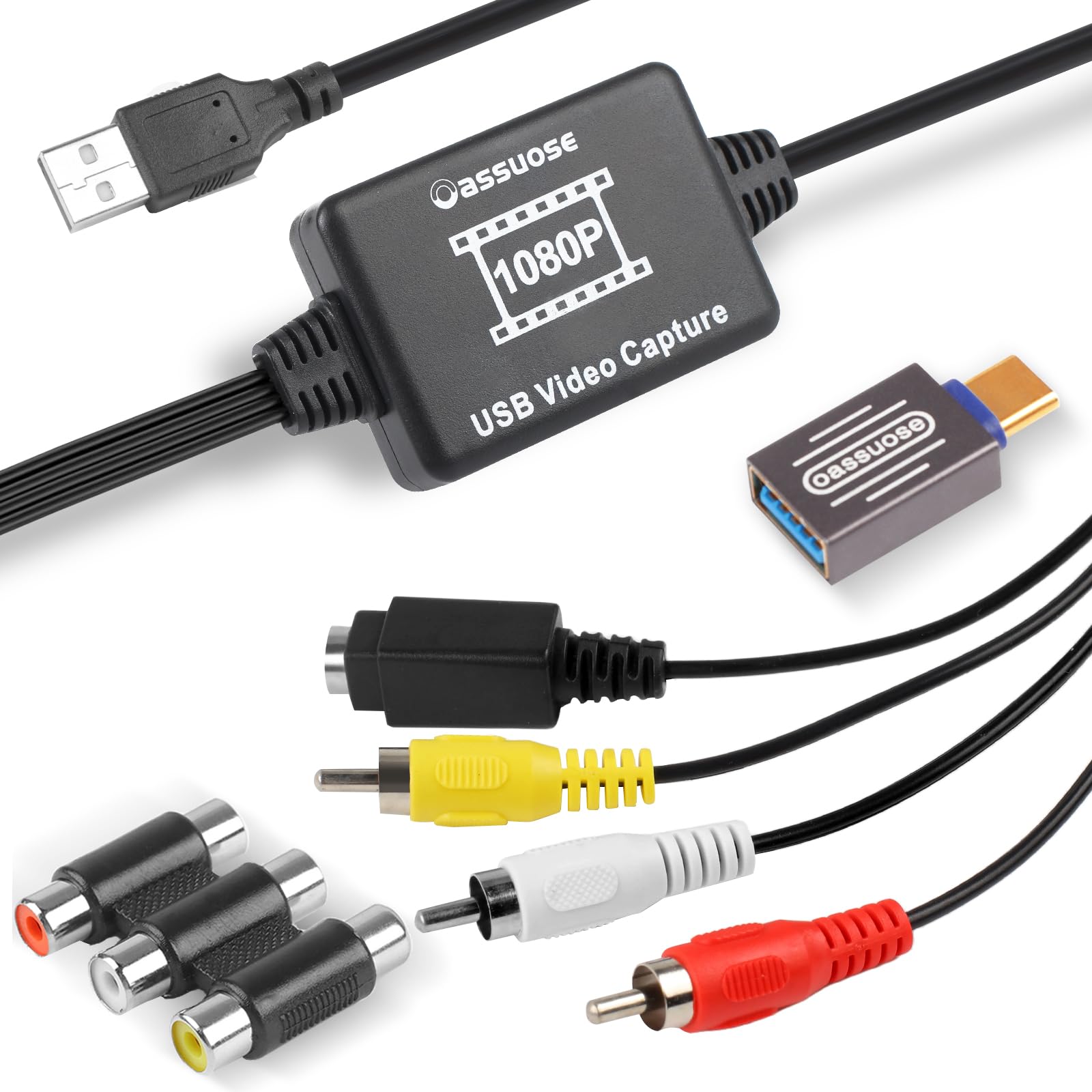
Oassuose Capture

Oassuose Capture

Basic digitization

Our Score 9.2/10
Check Price

Worth Noting

  • Captures audio in mono only, despite having left/right RCA inputs
Inputs
RCA, S-Video
Operation
Computer required
Resolution
1080p30

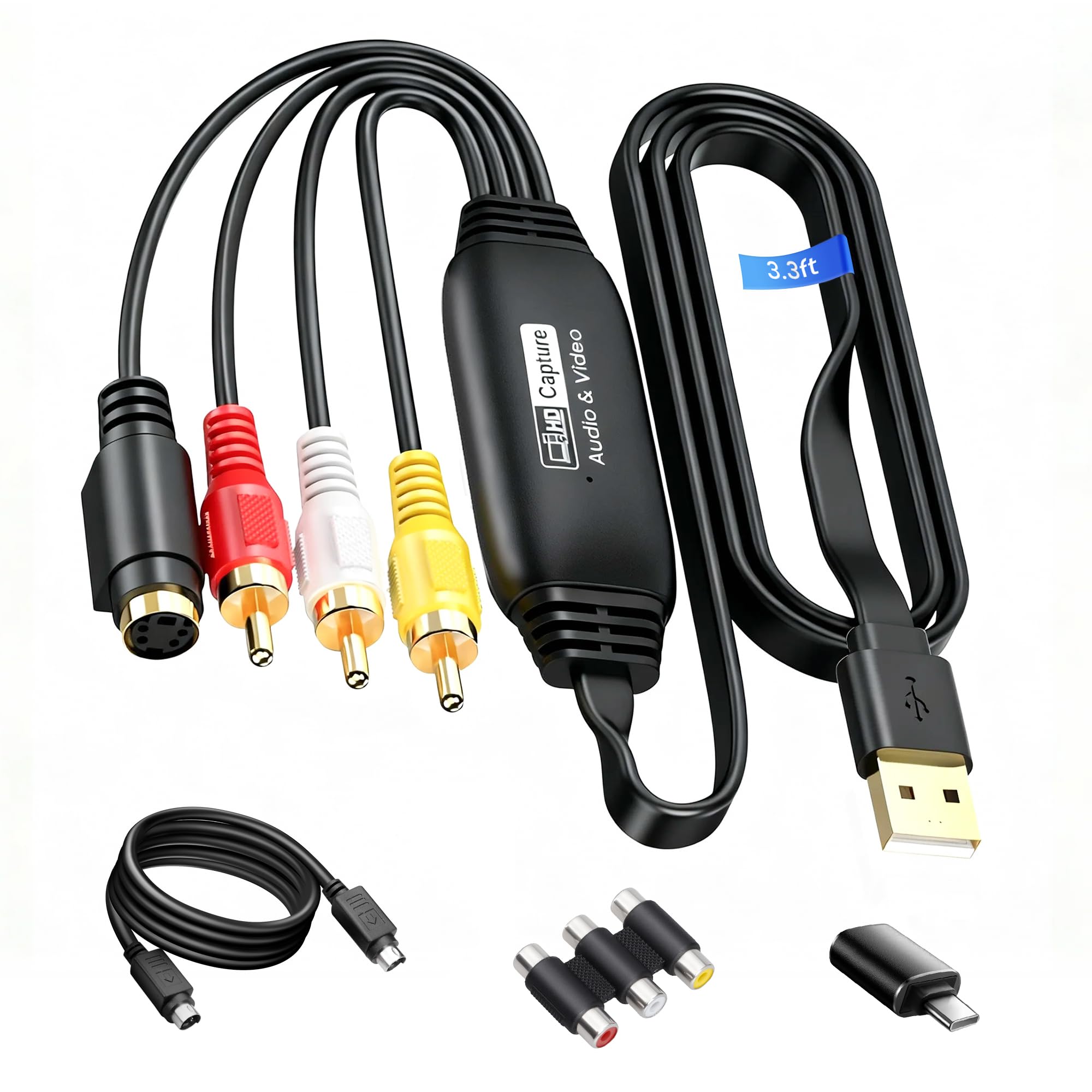
The Oassuose Capture card handles Windows, Mac, and Linux without driver headaches, and the included USB-C connector makes it convenient for modern laptops. Once you install free capture software like OBS, getting video from an analog source to digital file is quick. However, the dual RCA inputs only deliver monophonic audio – so stereo VHS tapes will output sound to one channel only. This makes it best for users who simply need a basic digital copy and don't require stereo separation.

Bottom line: A sensible choice for Mac or Linux users on a tight budget who only need mono audio for one or two tapes.

9

StarTech SVID2USB232

StarTech SVID2USB232

Windows occasional

Our Score 8.4/10
Check Price

Worth Noting

  • Windows-only
  • Audio may cut out or produce echo, especially during quiet passages
Inputs
S-Video, Composite, RCA
Operation
Computer required
Resolution
SD 720x480i

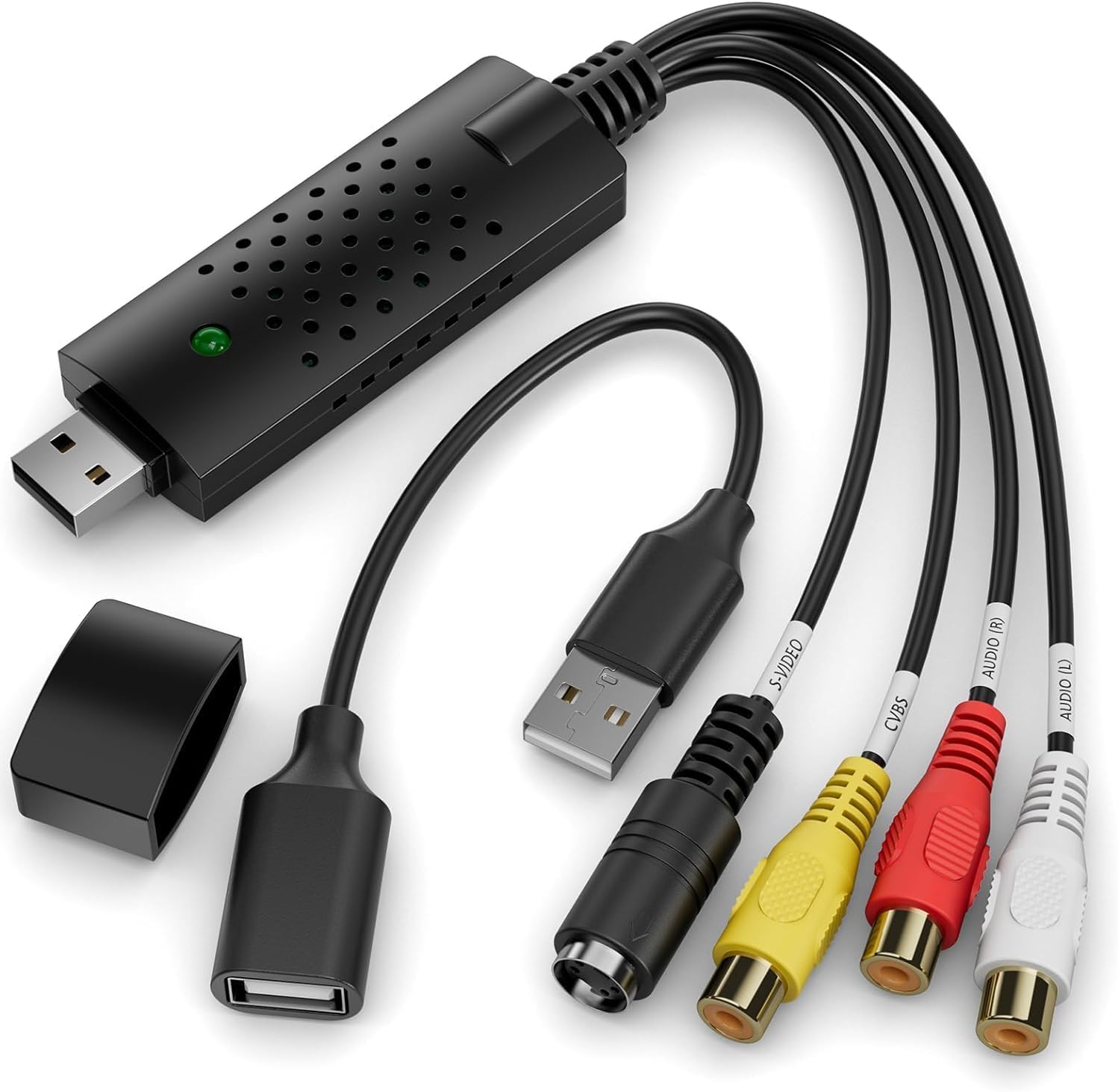
The StarTech USB Video Capture Adapter Cable delivers dependable SD capture from composite or S-Video sources, producing acceptable 720x480i images for digitizing VHS or Hi8 tapes. The hardware feels robust, a contrast to flimsier USB dongles. However, it is strictly limited to Windows 7 through 10, with no macOS support — a clear boundary for anyone on a Mac or newer Windows versions. Audio quality can be inconsistent: sound may cut out or carry an echo, which becomes noticeable during quiet scenes. For a Windows user who values brand reliability and doesn't need cross-platform compatibility, this cable works adequately for occasional archiving, but the audio problems make it a niche choice.

Bottom line: This cable fits best for Windows users who want a brand-name capture device for occasional SD tape conversion and can accept potential audio quirks.

How to Choose

Recording Resolution: SD vs 1080p

Most VHS sources max out at 240-480 lines of resolution. A converter that upscales to 1080p can make the video appear sharper on modern screens, but it cannot add detail that was never there. The result is often a soft image with visible artifacts.

If your tapes are home recordings with low light or generational loss, SD capture (640x480 or 720x480) often looks more natural and avoids the digital noise of upscaling. The exception is game console capture where 1080p60 can reduce motion blur.

Standalone vs Computer Required

Standalone converters have a built-in screen and record directly to a USB drive or SD card. They eliminate the need for a computer, third-party software, and driver troubleshooting. Setup is plug and play: connect your VCR, insert storage, press record.

USB capture cards are cheaper but require a computer running software like OBS Studio. This adds complexity: you need to configure audio sources, monitor for sync drift, and ensure your computer can handle real-time encoding. If you are not comfortable with software, a standalone unit saves hours of frustration.

Preview Screen Size and Quality

A built-in screen lets you monitor the recording in real time without connecting to a TV or monitor. Smaller screens (3.0 to 3.5 inches) are adequate for checking that the tape is playing and the color is acceptable, but not for fine detail assessment.

Larger screens (5 to 7 inches) are easier to read from a distance and allow you to spot subtle issues like tracking lines or color shifts. The trade-off is that larger screens add bulk and cost. If you do not need to monitor closely, a small screen is fine.

Storage Media Support

Standalone converters write files directly to USB flash drives or SD cards. The maximum supported capacity varies – some cap at 32GB, others at 512GB or no limit. A 32GB card holds roughly 4-6 hours of SD video, so for large tape libraries you need higher capacity support.

USB capture cards stream to your computer's hard drive, so storage is only limited by your computer. This makes them more practical for long recording sessions, but the computer must be dedicated to the task during capture.

Input Types: RCA, S-Video, Component

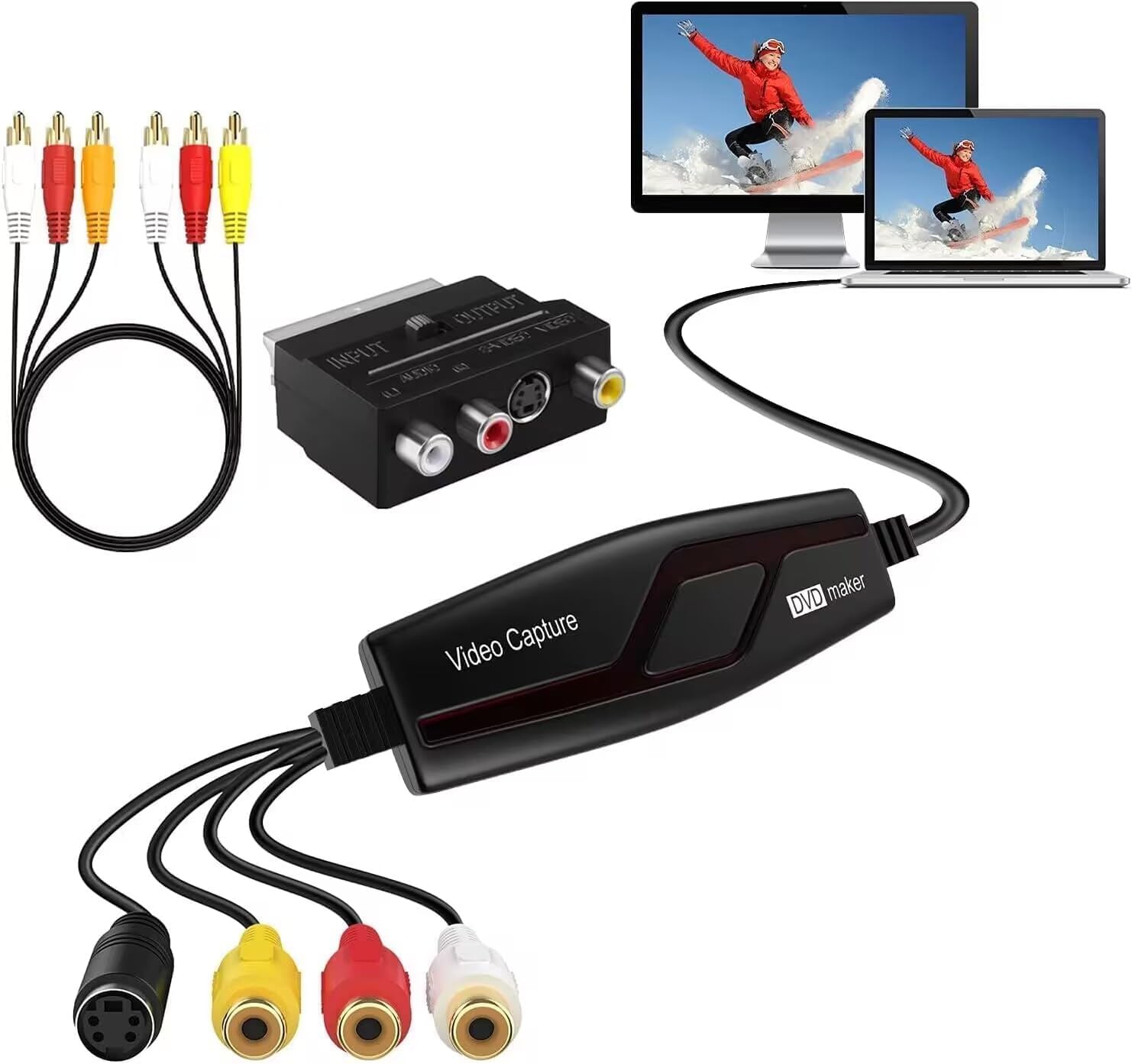
RCA composite (yellow video, red/white audio) is the standard output of most VCRs and works with every converter. S-Video separates luminance and color, producing a slightly sharper image from Hi8 and S-VHS sources. Component inputs are rare on standalone converters but appear on high-end models.

If you plan to digitize multiple formats (VHS, Hi8, game consoles), choose a converter with S-Video and audio inputs beyond RCA. Missing inputs mean you need adapters that can introduce signal loss or noise.

Frequently Asked Questions