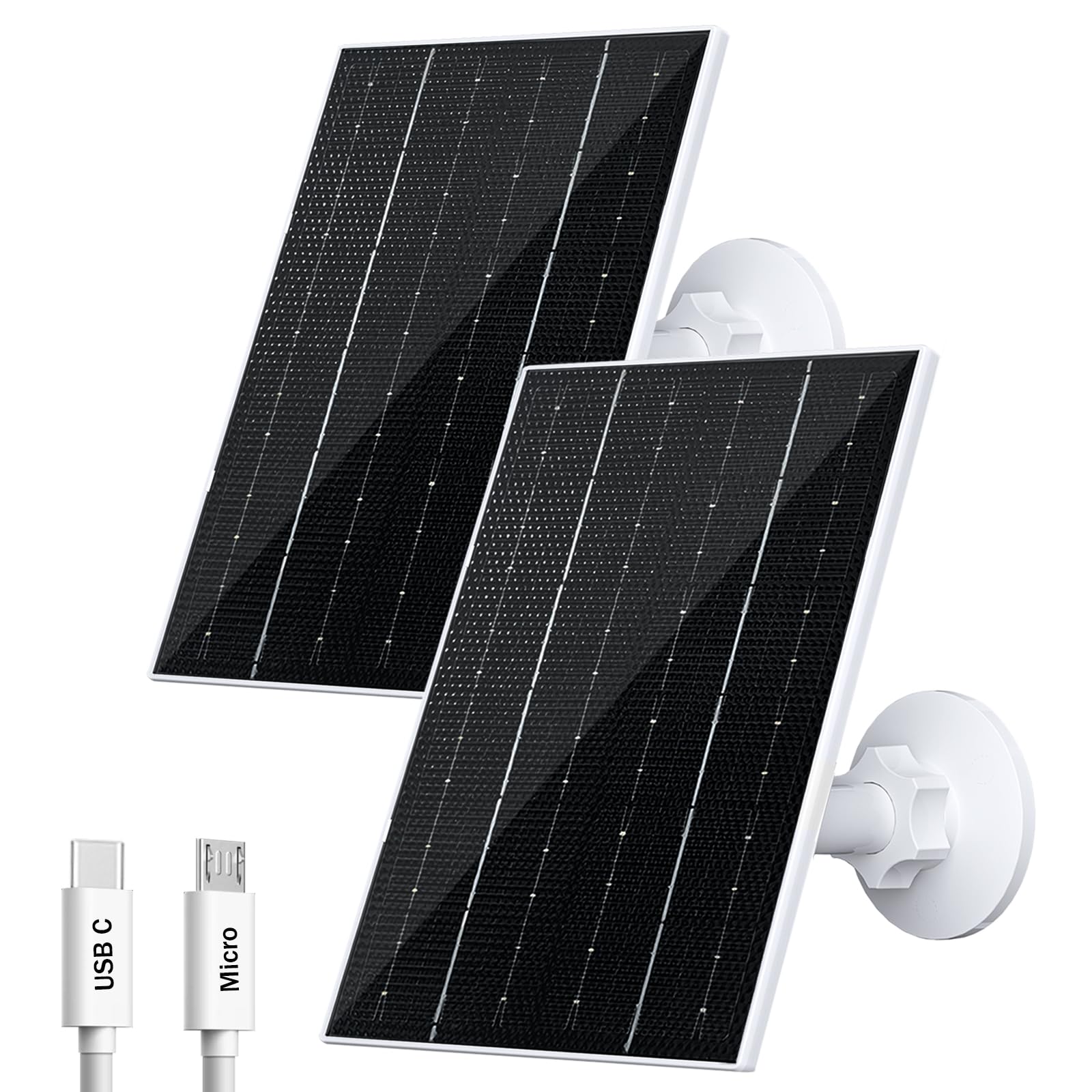
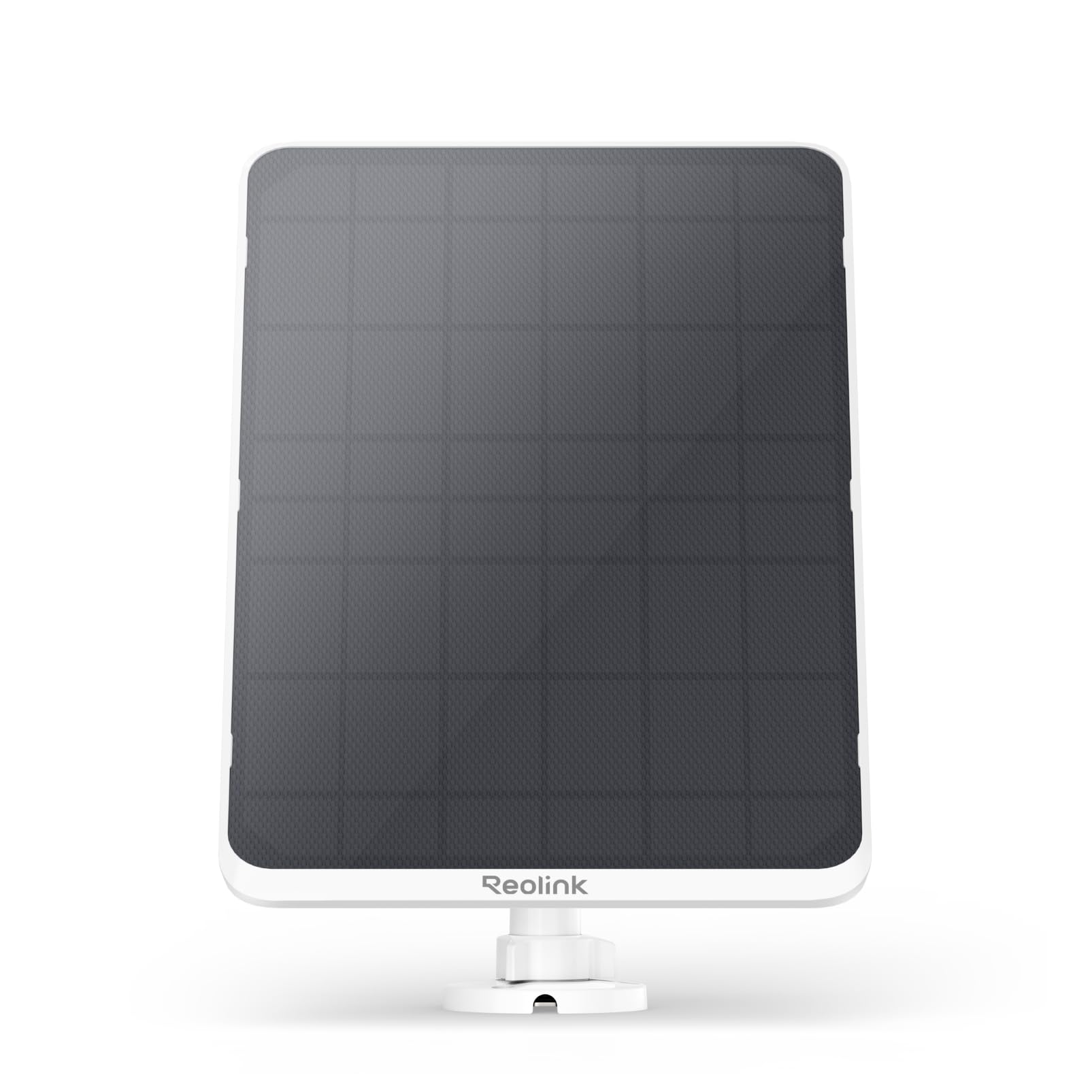
Smart Home & Security

9 Best Solar Panel for Security Camera of 2026: Match Connector & Wattage

Find a solar panel that actually keeps your security camera charged — one that matches your camera's connector, wattage needs, and outdoor conditions.

A solar panel for a security camera sounds simple: plug it in and the battery stays topped up. But many buyers find their panel stops charging after a few months or never works with their camera at all. The real challenge isn't finding any panel — it's finding one that reliably delivers the right power and fits your camera's connector.

Low-wattage panels (2-3W) often fail to keep cameras charged in cloudy weather or during frequent recording. Higher wattage helps, but compatibility is just as critical: many panels claim to work with Ring, Wyze, and Arlo but don't provide the correct voltage or plug fit. This guide focuses on panels that maintain charge over time across the most common camera brands, so you don't end up climbing a ladder to swap dead batteries.

1

Orayafid 6W Multi-Connector

Top Pick
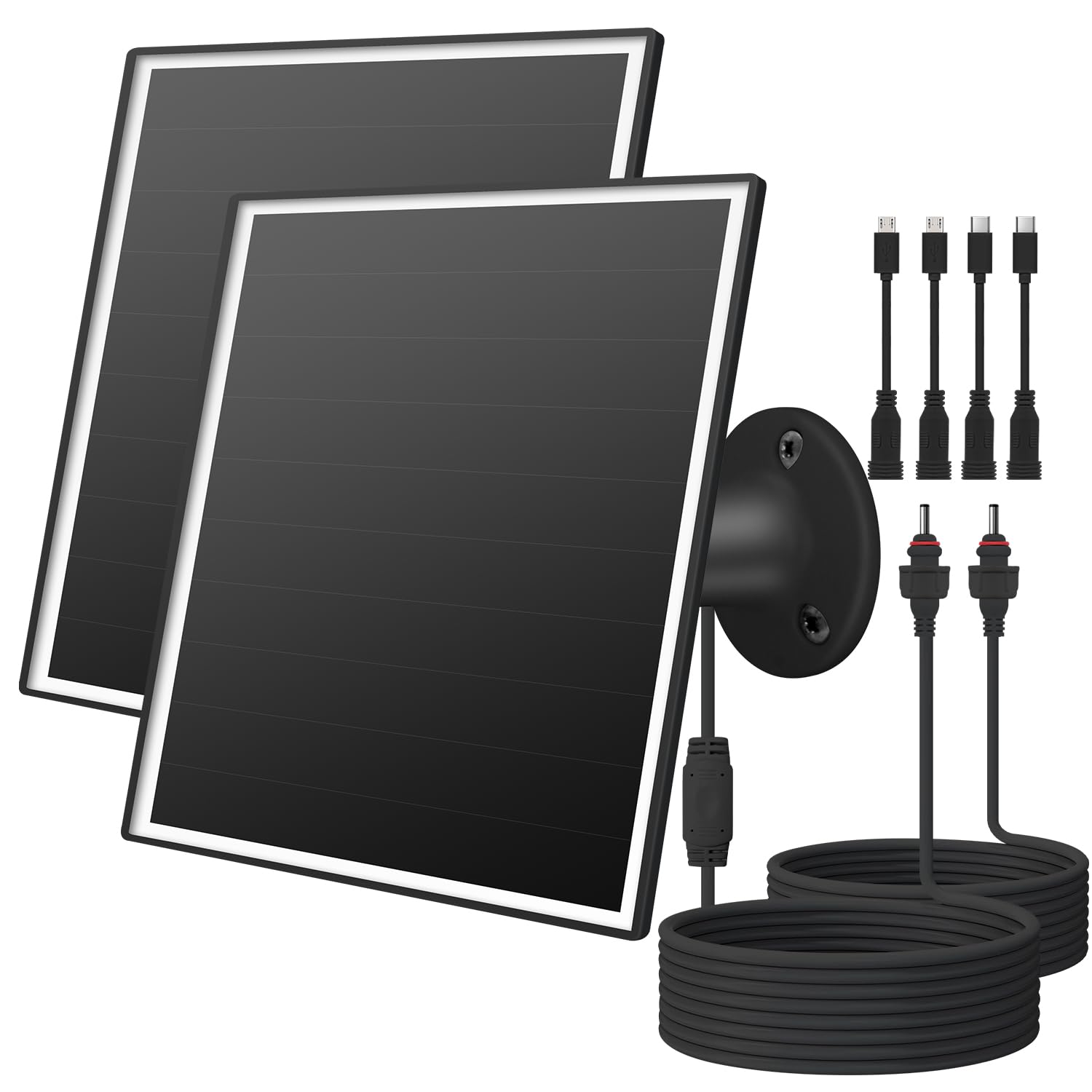
Orayafid 6W Multi-Connector

Multi-brand cameras

Our Score 9.4/10
Check Price

Worth Noting

  • Long-term durability under sustained outdoor exposure is still being observed
  • Incompatible with proprietary connectors used by Arlo and Blink cameras
Wattage
6W
Connector
Micro USB, USB-C, DC
Pack Size
Single
Waterproof
IP65

The Orayafid 6W solar panel brings three connector types to one compact unit, covering Eufy, Wyze, and Ring cameras without requiring adapters. Its built-in voltage stabilization helps maintain consistent charging levels, reducing the risk of battery stress during fluctuating sunlight.

Charging performance across multiple brands is consistent, with users noting that the panel keeps cameras topped up under typical outdoor conditions. The IP65 waterproof rating and 9.8ft cable provide flexibility in mounting placement, and the aluminum frame with tempered glass adds a durable feel at this price point. Installation requires only basic tools and a few minutes of setup.

This panel suits buyers who own cameras from different brands (Eufy, Wyze, Ring) and want a single solar solution. It is not for Arlo or Blink cameras with proprietary connectors. Long-term durability under sustained outdoor exposure is still being observed, but no major issues have surfaced in the product's history so far.

At a budget-friendly price, the Orayafid offers solid construction and the convenience of multiple connectors. The voltage stabilization feature adds an extra layer of protection for camera batteries, making it a sensible choice for those seeking to extend runtime without frequent manual charging.

Bottom line: Owners of Eufy, Wyze, or Ring cameras get the most flexible connection options here, with a wattage that matches typical needs and a price that undercuts brand-specific panels without sacrificing build quality.
2

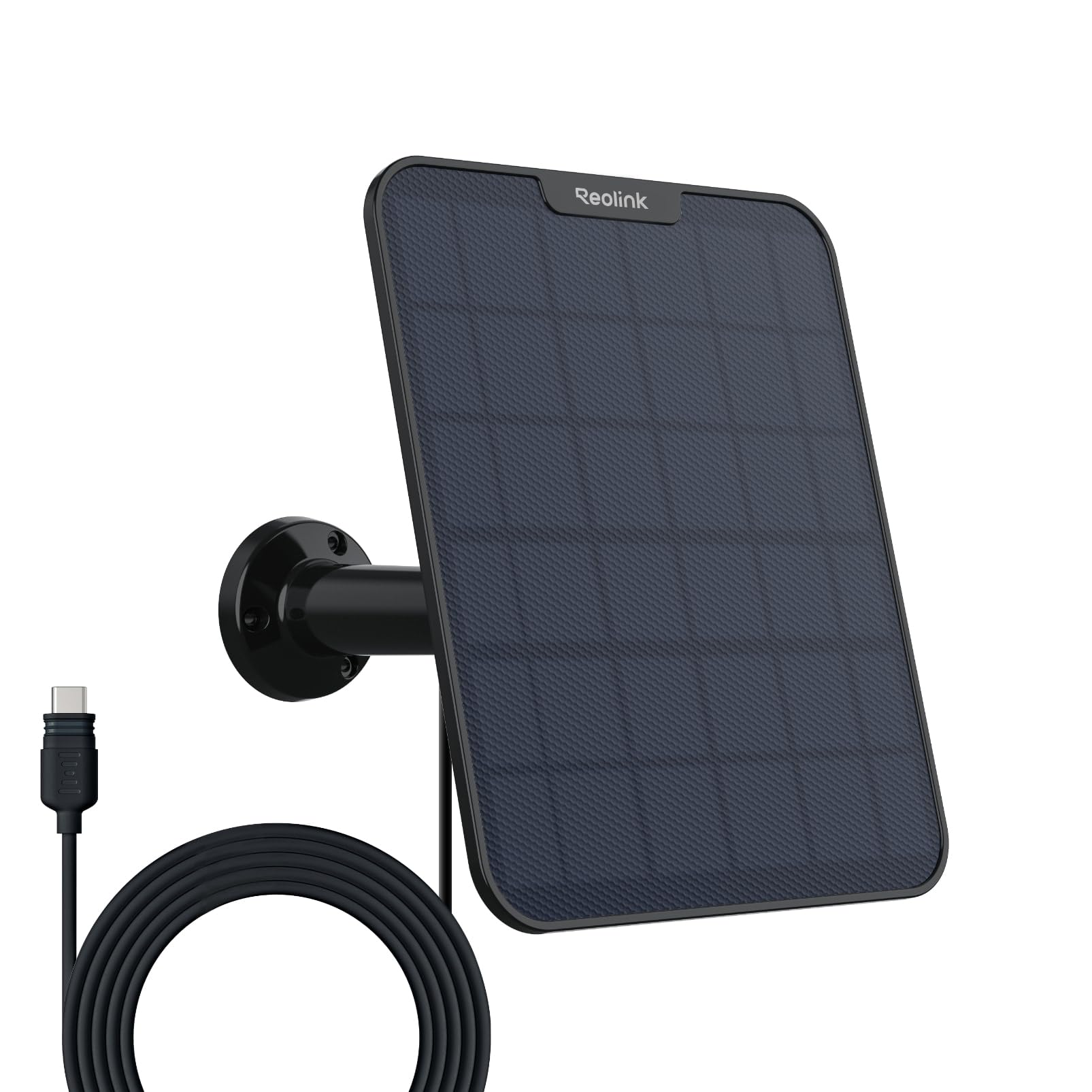
Reolink 6W Solar Panel

Reolink 6W Solar Panel

Reolink cameras

Our Score 9.0/10
Check Price

Worth Noting

  • Charging performance can vary between individual units, with some not delivering consistent power
  • Exclusive to Reolink cameras
Wattage
6W
Connector
Type-C
Pack Size
Single
Waterproof
IP65

The Reolink 6W panel slots in as the mid-range option in Reolink's solar lineup — less powerful than the 12W version but easier on the wallet. Its 6W output keeps most Reolink battery cameras topped up during typical daytime conditions, and installation with the adjustable mount is quick. The included 4m Type-C cable gives enough reach for many mounting spots.

This panel is designed for Reolink camera owners who have moderate sun exposure and want a dependable, brand-specific power solution. It won't work with cameras from other manufacturers, so it's not for mixed setups. Some units have shown occasional charging inconsistencies, so pairing it with a well-lit mounting position reduces the chance of underperformance. Avoid locations with heavy shade.

Tip: Position the panel in direct sunlight to improve charging consistency.

Bottom line: For Reolink users who don't need the maximum solar input of the 12W panel, this 6W model provides reliable daytime charging at a reasonable price.

3

Callsun 2.4W for Ring

Callsun 2.4W for Ring

Ring budget

Our Score 9.2/10
Check Price

Worth Noting

  • Compatibility varies; some Ring models may not charge as expected.
  • Low 2.4W output can't sustain cameras that record frequently or in low light.
Wattage
2.4W
Connector
Barrel plug, USB-C adapter
Pack Size
Single
Waterproof
IP68

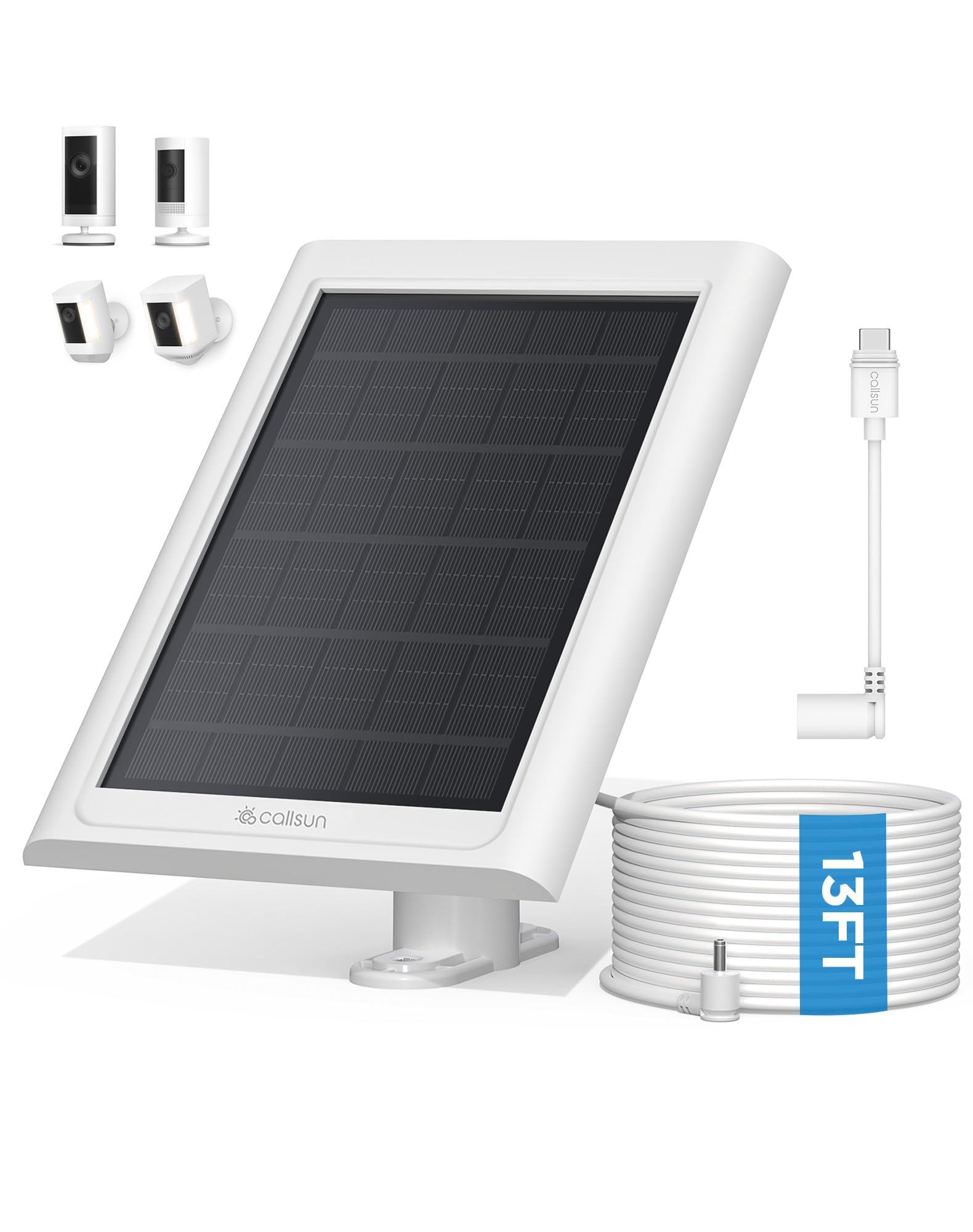
The Callsun panel stands out for its IP68 waterproof rating and budget-friendly price. While higher-wattage options charge faster, this 2.4W model keeps costs low and still protects against rain and dust, making it a weather-resistant companion for Ring cameras.

The 13ft cable and included USB-C adapter give flexibility for mounting in eaves or on walls. In direct sun, the panel maintains a full charge for Ring Stick Up and Spotlight cameras that see moderate motion events.

This panel suits owners who place their Ring camera in a consistently sunny spot and don't require constant recharging for high-traffic areas. In cloudy climates or with cameras that trigger frequently, the low wattage may not sustain the battery.

Tip: Mount the panel in direct sunlight for optimal charging output.

Bottom line: A solid pick for Ring owners with a sunny mounting spot and low activity — just don't expect it to keep up with a busy camera.

4

YCTechCam 5W 2-Pack

YCTechCam 5W 2-Pack

Generic USB cams

Our Score 8.8/10
Check Price

Worth Noting

  • Charging may not keep up in cloudy weather or with high-activity cameras.
  • Durability can be inconsistent; occasional panel stops operating after months outdoors.
Wattage
5W
Connector
Micro USB, USB-C
Pack Size
2-Pack
Waterproof
IP65

The YCTechCam 5W 2-pack delivers the lowest cost per panel among USB-compatible solar chargers, making it an attractive option for households with several generic battery-powered cameras.

This set suits buyers who prioritize value over guaranteed performance and own rechargeable cameras with Micro USB or USB-C ports — but not proprietary models like Ring or Arlo. Charging output can vary with sunlight conditions, and some panels may stop working after several months of outdoor use.

Installation is straightforward with the included wall mount and 9.8-foot cable, so you can position panels where they capture the most sun.

Tip: Aim the panel toward direct sun and clean the surface periodically to maximize charging consistency.

Bottom line: A cost-effective way to keep multiple generic cameras topped up, provided you can accept occasional charging gaps and the risk of early panel failure.

5

SimpliSafe Solar Panel

SimpliSafe Solar Panel

SimpliSafe cameras

Our Score 8.8/10
Check Price

Worth Noting

  • In direct sun, the 2W output may struggle to keep the camera charged during frequent recording; some panels have been noted to deliver no charge at all.
  • Durability concerns exist: a subset of panels have stopped producing output after a few months of outdoor use.
Wattage
2W
Connector
Micro USB
Pack Size
Single
Waterproof
IP65 (camera)

This panel snaps directly into the SimpliSafe outdoor camera’s mount and uses the same micro-USB plug that comes with the camera itself. No adapter hunting, no voltage concerns: it is designed to maintain the camera’s IP65 weather resistance and integrates without a single extra step in the SimpliSafe app.

The tradeoff for that friction-free setup is a 2W output that may not keep the camera topped up in low-light conditions or during periods of heavy motion-triggered recording. Some units have also been noted to deliver no charging at all. This panel makes sense for SimpliSafe owners who prioritize guaranteed compatibility and are willing to accept that the camera may still need occasional manual recharging in winter or shaded spots.

Long-term durability has raised occasional concerns, with a small number of panels ceasing to output power after several months. For buyers outside the SimpliSafe ecosystem, third-party panels like the top pick offer higher wattage and broader compatibility at a lower cost — but they will not click in place with the same zero-effort certainty.

Tip: Mount in a location that receives direct sun for most of the day — partial shade can reduce an already low charging rate.

Bottom line: The SimpliSafe Solar Panel is the correct choice for owners who want a no-guesswork accessory and accept that the 2W output may not fully eliminate manual charging in winter or high-traffic zones.

6

FUTUREZEN 4W 2-Pack

FUTUREZEN 4W 2-Pack

Budget 2-pack

Our Score 9.2/10
Check Price

Worth Noting

  • Durability after months of outdoor exposure has not been widely documented
  • 4W output may not provide enough charge for cameras with frequent recording or in shaded locations
Wattage
4W
Connector
Type-C, Micro USB
Pack Size
2-Pack
Waterproof
IP66

For under $20, the FUTUREZEN 4W two-pack delivers functional charging for low-power security cameras, with users reporting consistent top-ups across multiple camera brands. The IP66 waterproof rating and 9.8ft cable make outdoor installation straightforward. However, the available feedback covers only initial use, so durability over extended outdoor exposure remains uncertain. The 4W output is suited for cameras with modest power needs; higher-drain models may not stay fully charged in low-light conditions.

Bottom line: Best suited for budget-conscious buyers with low-power cameras who are willing to accept unknown long-term reliability.

7

EverExceed 5W 2-Pack

EverExceed 5W 2-Pack

High-review alt

Our Score 8.8/10
Check Price

Worth Noting

  • Charging can be inconsistent, with some units delivering only a trickle charge
  • Some units may stop charging within the first year of outdoor use
Wattage
5W
Connector
Micro USB, USB-C
Pack Size
2-Pack
Waterproof
IP65

This budget 2-pack draws on a large user base and offers solid compatibility with Eufy, SimpliSafe, and Tapo cameras. Installation is quick with the included adjustable bracket. However, charging output can be inconsistent across units, and some owners find that the panel stops delivering usable current within the first year. That makes this a reasonable choice for buyers who want a low-cost entry point and are comfortable with the possibility of an early replacement, rather than for those needing long-term hassle-free operation.

Bottom line: This 2-pack works best for buyers who prioritize low upfront cost and want a spare panel, accepting that individual units may need replacement sooner than pricier alternatives.

8

Reolink 12W Solar Panel

Reolink 12W Solar Panel

Max power

Our Score 8.8/10
Check Price

Worth Noting

  • Only works with Reolink cameras; no support for other brands
  • Long-term performance in harsh weather is still being established given limited exposure
Wattage
12W
Connector
Type-C, Micro USB
Pack Size
Single
Waterproof
IP65

This 12W panel uses monocrystalline silicon and a large surface area to supply power even when sunlight is limited. The aluminum frame and tempered glass build handle outdoor exposure well, and the 4m cable gives flexibility in mounting.

Compatibility is limited to Reolink cameras, so it won't help owners of other brands. The premium price and relatively short time in the field mean long-term durability hasn't been fully tracked — best for early adopters who need maximum power for shaded camera locations.

Bottom line: Best for Reolink owners with shaded camera spots who want the extra power and are comfortable with early adoption.

9

Tapo A200 Solar Panel

Tapo A200 Solar Panel

Tapo cameras

Our Score 8.6/10
Check Price

Worth Noting

  • In consistent outdoor exposure, the panel may lose charging capability within months.
  • The Micro USB plug requires a separate adapter for newer Tapo cameras with USB-C ports.
Wattage
4.5W
Connector
Micro USB
Pack Size
Single
Waterproof
IP65

This official TP-Link accessory provides continuous power to older Tapo cameras through efficient monocrystalline cells, and installation takes minutes with the included bracket. The tradeoff comes in two forms: the connector is Micro USB only, so newer cameras need a separate adapter, and there are durability reports suggesting the panel may give out sooner than expected.

Bottom line: This panel works well for owners of older Tapo cameras who want official compatibility, but those considering a C425 or seeking long-term reliability should look elsewhere.

How to Choose

Wattage

Higher wattage means more current delivered to the battery, especially in low light. A 2W panel works for a camera that records only a few events per day in direct sun. But if your camera records motion frequently or faces a north-facing wall, 5W or more prevents the battery from slowly draining over weeks.

The real trade-off: a 5W panel is roughly 2x the size of a 2W one. Mounting space and aesthetic preference matter. For shaded locations, 6-12W panels compensate for reduced sunlight without needing a bigger footprint than a typical camera housing.

Connector Type

Physical plug shape is only half the battle. Many cameras use a 5V USB-A or USB-C input, but some (like older Ring models) use a barrel plug with specific polarity. A panel that includes multiple adapters or a voltage-stabilized output reduces the risk of underpowering or damaging the camera.

If your camera has a proprietary connector (e.g., SimpliSafe, Tapo), an official panel ensures the plug fits and the weather seal remains intact. Third-party panels often require an adapter that can loosen over time or block the camera's rubber port cover.

Waterproof Rating

IP65 means dust-tight and protected against low-pressure water jets — fine for rain and splash. IP66 adds protection against powerful jets, and IP68 means continuous submersion. For a panel mounted under an eave, IP65 is sufficient. For ground-level or exposed locations, IP66 or higher prevents water ingress that kills the electronics.

The panel itself is usually sealed, but the connector junction is the weak point. A panel with a rubber grommet or screw-on connector reduces corrosion risk. Moisture inside the USB port is a common failure mode for budget panels.

Cable Length

A longer cable gives more flexibility in positioning the panel for optimal sun exposure, especially if your camera is mounted under a deep overhang. 9.8ft (3m) is typical; 13ft (4m) allows placing the panel several feet away from the camera.

Longer cables increase resistance and voltage drop, but for low-power 5V panels the drop is negligible over 13ft. The real downside is cable management — excess coil can trap water or become a tripping hazard. Choose the shortest length that reaches a sunlit spot.

Pack Size

A single panel is simpler and cheaper per camera. A 2-pack costs roughly the same as one branded single panel, making it economical if you have two cameras. However, two low-wattage panels (e.g., 5W each) may still underperform compared to one higher-wattage panel in a single location.

The trade-off: 2-packs often use lower-grade components to hit the price point. If you only need one panel, a higher-quality single panel with voltage stabilization and better connectors is a safer bet than a budget 2-pack that may fail within months.

Frequently Asked Questions