Car & GPS

11 Best Portable Jump Starter 2026: Reliable Starts Without the Battery Blues

Find a portable jump starter that actually holds a charge when you need it, with picks for cars, trucks, and budget-minded buyers.

Every lithium jump starter shares a dirty secret: the battery can degrade in months if not recharged regularly. That $80 emergency tool becomes dead weight when your engine won't turn over.

The category splits between compact lithium packs that demand periodic maintenance and lead-acid beasts that weigh 18 pounds but shrug off neglect. Most buyers don't know the trade-off until they're stranded.

This guide focuses on real-world battery endurance, clamping power matched to engine size, and the maintenance habits that keep a jump starter reliable. The right pick depends on how often you'll use it and how much space you have.

1

NOCO GB40

Top Pick
NOCO GB40

Cars & SUVs

Our Score 9.2/10
Check Price

Worth Noting

  • Battery can discharge over time when stored for months; periodic recharging is required.
Weight
2.4 lbs
Peak Amps
1000A
Engine Support
6.0L gas / 3.0L diesel
Battery Capacity
2150 mAh

The NOCO GB40 pairs a 1000-amp peak output with a 2.4-pound body that fits inside most gloveboxes. Its spark-proof terminals and reverse polarity protection make it approachable for anyone who has never used a jump starter before. The unit carries UL certification, which adds confidence beyond typical marketing claims.

When you need it, the GB40 connects quickly and usually starts a car on the first attempt, even on larger V6 and V8 engines within its 6.0-liter gas limit. The rubberized housing and IP65 rating handle dust and splashes, so keeping it in the trunk or under a seat doesn't require delicate care.

This is the right tool for daily drivers of sedans, crossovers, and SUVs who want something they can stash away and forget until needed. It is not suited for diesel trucks over 3.0 liters. A key tradeoff: the lithium battery can lose charge over months of inactivity, so it needs a top-up every two to three months to stay reliable. That is standard behavior for this battery chemistry, not a defect.

Tip: Recharge the unit every 2–3 months to maintain battery readiness.

Bottom line: If you drive a standard gas car or SUV and want a jump starter that is easy to keep on hand and backed by broad real-world use, the GB40 fits that need without unnecessary bulk or expense.

2

NOCO GB70

NOCO GB70

Large trucks & diesels

Our Score 9.4/10
Check Price

Worth Noting

  • Clamp ground terminal may wear under frequent heavy use
  • Battery capacity can degrade over time if not recharged regularly
Weight
4.2 lbs
Peak Amps
2000A
Engine Support
8.0L gas / 6.0L diesel
Battery Capacity
5000 mAh

The GB70 provides enough power to start 8.0L gas and 6.0L diesel engines, making it the right choice for owners of full-size SUVs, trucks, and commercial vehicles. It remains compact enough for trunk storage, though the higher-rated GB40 is more portable and affordable for smaller cars.

This unit suits drivers who need extra cranking power for large engines and want the assurance of NOCO's safety features like spark-proof connections and reverse polarity protection. Battery longevity requires attention — some units may lose capacity if not recharged every few months, so periodic maintenance is essential to keep it ready.

Tip: Recharge the unit every 2-3 months to maintain battery health; periodic charging keeps it ready for emergencies.

Bottom line: The GB70 is the right pick for large-vehicle owners who prioritize starting power and safety over the lowest cost or smallest size, provided they are willing to maintain the battery with periodic recharges.

3

Hulkman Alpha85

Hulkman Alpha85

Tech-friendly drivers

Our Score 9.4/10
Check Price

Worth Noting

  • Over months of storage, the internal battery may stop accepting a charge
Weight
4.5 lbs
Peak Amps
2000A
Engine Support
8.5L gas / 6.0L diesel
Battery Capacity
20000 mAh

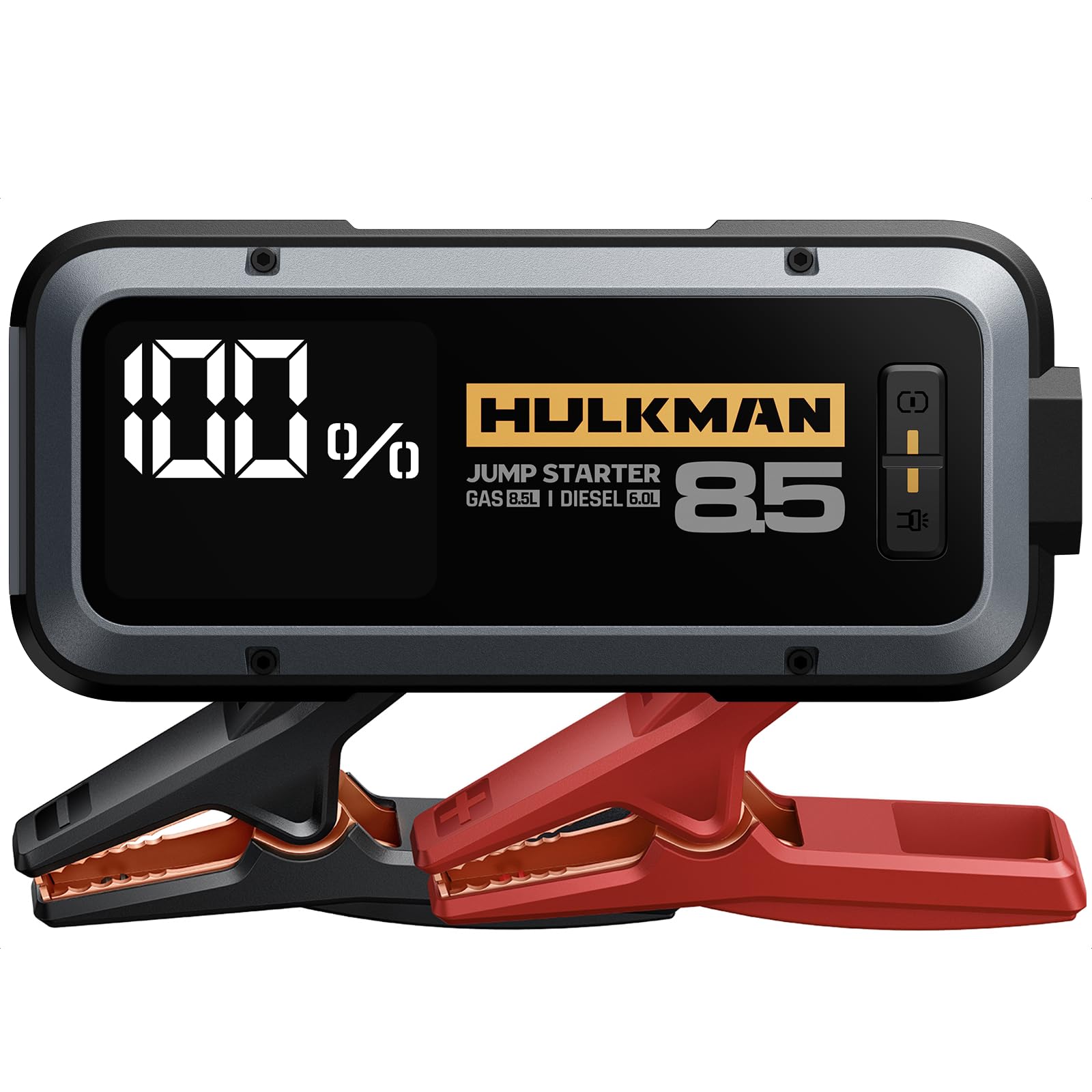
The Alpha85’s 3.3-inch screen shows battery level, voltage, and error codes, so you know why a jump isn’t happening before you connect cables. That clarity pairs with a 65W USB-C port that recharges the unit from dead to 80% in about an hour — handy when you realize the pack is low after an emergency.

This is the right pick for drivers who want a display for peace of mind and fast top-ups between uses. It handles mid-size to large vehicles (up to 8.5L gas / 6.0L diesel) and includes IP65 weather resistance against rain or dust. The tradeoff: some units have stopped accepting a charge after a few months, so battery health requires periodic checking — not a concern if you recharge it every couple of months as part of routine prep.

Tip: Recharge the unit every two to three months even when not used — this helps maintain battery health over time.

Bottom line: Choose the Alpha85 if you value a clear screen and fast recharging over a longer track record; the NOCO GB40 remains the safer bet for those who prioritize proven long-term owner confidence.

4

Clore JNC660

Clore JNC660

Shops & fleets

Our Score 9.4/10
Check Price

Worth Noting

  • Weighs 18 lbs and is bulky, impractical for personal vehicle storage.
  • Lead-acid battery needs periodic charging when not used regularly.
Weight
18 lbs
Peak Amps
1700A
Engine Support
Large gas & diesel
Battery Capacity
22 Ah

The Clore JNC660 delivers consistent starting power with thick #2 AWG cables and a robust AGM battery that handles frequent use in auto shops. While compact lithium units like the NOCO GB40 are better suited for personal vehicle carry, the JNC660's longer cables and higher capacity make it the go-to for mechanics who need repeated starts without battery degradation.

This unit is built for heavy daily use in garages, fleets, and service bays. At 18 pounds, it's not something you toss in a glovebox — it belongs on a shop shelf or in a service truck. The lead-acid battery requires periodic charging if left idle, but for consistent weekly use it stays ready.

Tip: Charge the battery every 3-4 months if the unit sits unused to prevent self-discharge.

Bottom line: Ideal for auto shops and fleet managers who jump-start multiple vehicles daily and need durable cables and consistent power.

5

TREKURE 4000A

TREKURE 4000A

Ultra-portable backup

Our Score 9.2/10
Check Price

Worth Noting

  • Battery may struggle to hold a charge over time; periodic recharging is required to maintain readiness.
Weight
0.8 lbs
Peak Amps
4000A
Engine Support
8.0L gas / 6.5L diesel
Battery Capacity
16800 mAh

At 0.8 pounds, the TREKURE 4000A is the lightest unit in its power class—small enough to tuck into any glovebox without sacrificing the 4000A peak needed for most gas and diesel engines. That weight and size difference matters when you are already carrying a spare tire or tool kit. By contrast, the top pick (the NOCO GB40) is heavier and more expensive, but it earns its place through a long record of reliability and safety certifications.

This TREKURE is best suited for budget-first buyers who want a lightweight emergency starter for occasional use, not a daily driver. The tradeoff: some units have been noted to lose their charge over time or stop holding a charge altogether, and the brand does not have the multi-year track record of established names. If you need absolute certainty that the jump starter will work six months from now, a more established option offers better peace of mind.

Tip: Recharge the unit every two to three months to help prevent battery drain during storage.

Bottom line: A smart pickup for drivers who prioritize weight and price over long-term track record—just keep it maintained with occasional top-ups.

6

WOLFBOX MV24

WOLFBOX MV24

Fast-charge all-rounder

Our Score 9.2/10
Check Price

Worth Noting

  • Battery capacity may degrade over time if the unit is not recharged periodically.
Weight
3 lbs
Peak Amps
4000A
Engine Support
10L gas / 10L diesel
Battery Capacity
6000 mAh

WOLFBOX’s MV24 stands apart from most portable jump starters with its 65W USB-C input — a fully depleted unit reaches a full charge in roughly 1.3 hours, dramatically faster than typical overnight charges. The bright LCD display shows battery level and status at a glance, eliminating guesswork when you need it most. With 4000A peak current, it handles large gasoline and diesel engines up to 10 liters, making it suitable for trucks and SUVs.

Weighing 3 lbs, it is heavier than ultra-compact options, but the trade-off delivers faster recharging and higher peak current. This unit suits owners of large vehicles who want quick recharge and appreciate the LCD display for peace of mind. Battery degradation can occur with infrequent use; periodic recharging every 2-3 months helps maintain capacity.

Tip: Recharge the unit every 2-3 months to minimize battery degradation.

Bottom line: For drivers who prioritize fast charging and clear status over the lightest weight, this is a capable alternative to the top pick with modern conveniences.

7

GOOLOO GP4000

GOOLOO GP4000

Diesel on budget

Our Score 9.2/10
Check Price

Worth Noting

  • Some units may become inoperable after a few uses.
  • Battery charge retention can be inconsistent over time.
Weight
3.9 lbs
Peak Amps
4000A
Engine Support
10.0L diesel / all gas
Battery Capacity
24000 mAh

The GOOLOO GP4000 offers enough starting power to handle the largest diesel trucks on the market, making it a compelling option for owners who need maximum cranking force without spending premium money. However, the trade-off for that power comes in the form of durability variability: some units may stop working after limited use, and battery charge retention can be inconsistent. This is a unit best suited for budget-focused diesel owners who prioritize raw starting capability over long-term reliability and are comfortable with the possibility of an early replacement.

Bottom line: A sensible choice for diesel truck owners on a tight budget who need maximum starting power and are willing to accept the risk of early battery degradation.

8

GOOLOO GP3000

GOOLOO GP3000

Budget high power

Our Score 9.4/10
Check Price

Worth Noting

  • Battery capacity may decline over time if not regularly recharged.
  • Build quality can vary between units, with occasional early performance issues noted.
Weight
1.39 lbs
Peak Amps
3000A
Engine Support
9.0L gas / 7.0L diesel
Battery Capacity
16000 mAh

The GOOLOO GP3000 provides 3000A peak starting power at a budget-friendly price, capable of handling large gas and diesel engines when needed. However, reliability has been inconsistent across units, making this a better fit as a secondary emergency backup for price-sensitive buyers who prioritize upfront power over long-term dependability. Higher failure rates have been noted compared to similarly priced alternatives from TREKURE or DBPOWER.

Tip: Recharge the unit every 2-3 months during storage to maintain battery health.

Bottom line: A capable budget backup for drivers who need high starting power occasionally and can accept potential battery degradation; not the best choice for a primary emergency tool.

9

DBPOWER 3000A

DBPOWER 3000A

Lightweight power bank

Our Score 9.0/10
Check Price

Worth Noting

  • Battery performance can degrade over time; some units may hold charge poorly or fail to recharge.
Weight
1.1 lbs
Peak Amps
3000A
Engine Support
8.0L gas / 6.0L diesel
Battery Capacity
18000 mAh

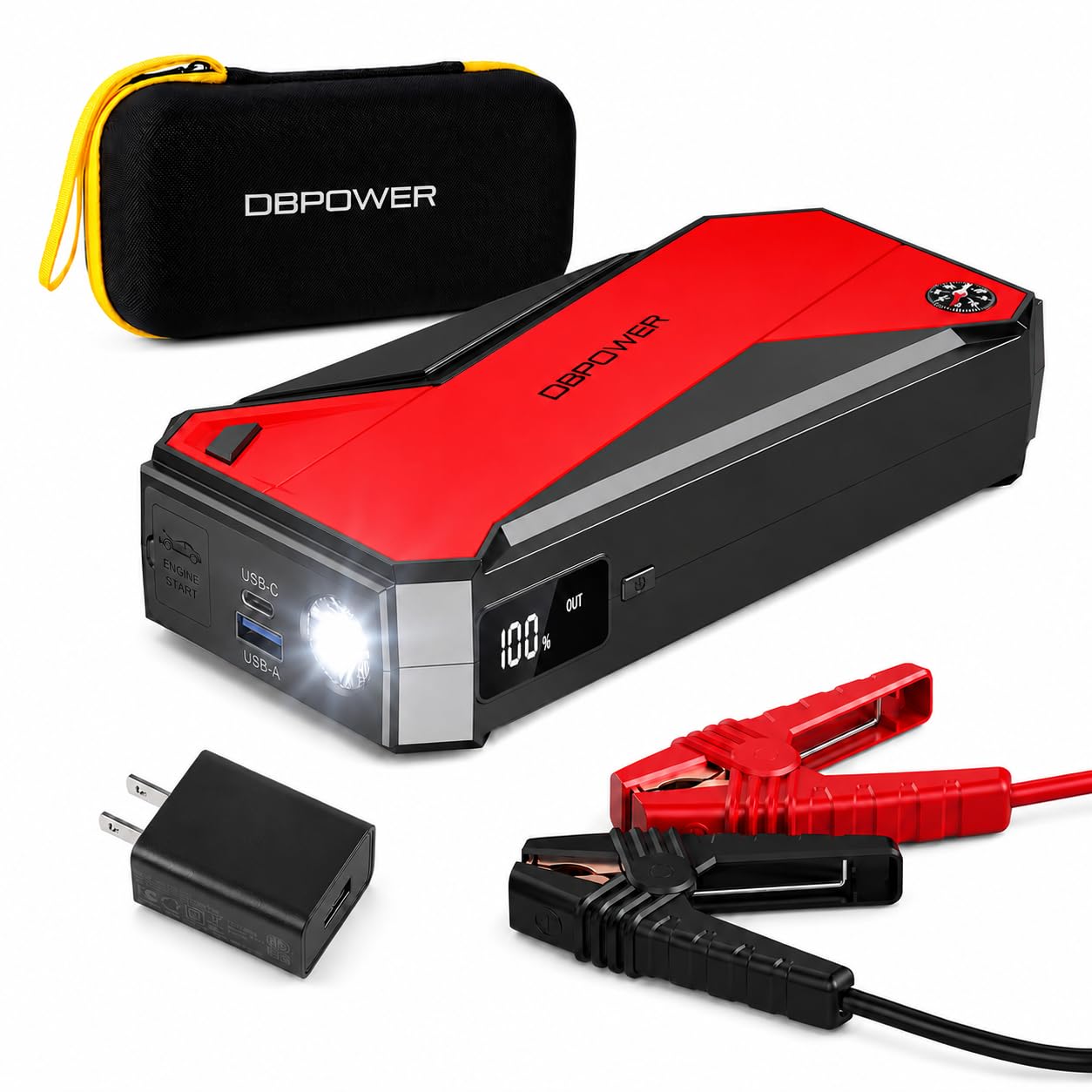
The DBPOWER Peak 3000A packs 3000A into a 1.1-pound frame, making it one of the lightest high-power jump starters available. It doubles as a power bank for phones and laptops, and the included compass, LCD screen, and multiple adapters add convenience. However, battery reliability is a concern — some units can lose charge quickly or fail to recharge, so this is better suited as a secondary backup than a primary emergency tool.

Tip: Recharge the unit every 3 months to maintain charge readiness and extend battery life.

Bottom line: Best as a lightweight backup for drivers who want a budget-friendly combo jump starter and power bank, but not as a primary emergency tool.

10

NEXPOW Q10S

NEXPOW Q10S

Cheap backup unit

Our Score 9.0/10
Check Price

Worth Noting

  • Battery may not hold charge over extended storage
  • Unit can fail to deliver power when needed
Weight
~1.5 lbs
Peak Amps
3000A
Engine Support
9.0L gas / 7.0L diesel
Battery Capacity
12800 mAh

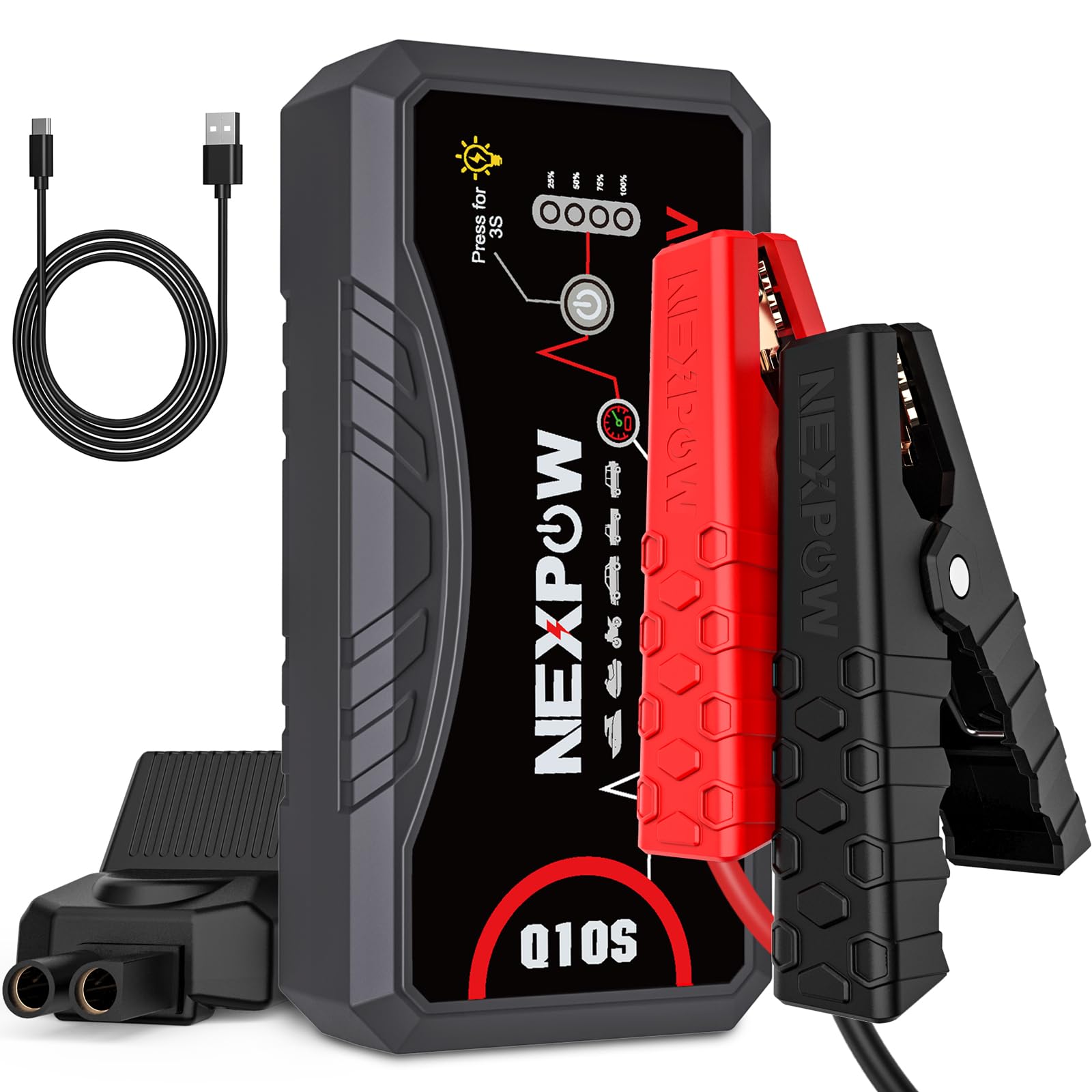
The NEXPOW Q10S delivers 3000A peak power at a budget-friendly price, enough to start large gas and diesel engines. Its compact size and multiple ports double as a useful power bank. However, the unit may lose charge over time or fail to start when called upon — a gamble best reserved for a secondary emergency kit, not daily reliance.

Bottom line: Best for budget-conscious drivers who want an inexpensive backup starter for emergencies, accepting that it may not always perform when needed.

11

S ZEVZO ET03

S ZEVZO ET03

Ultra-light alternative

Our Score 9.2/10
Check Price

Worth Noting

  • Charging may not be consistent enough for sole reliance on this unit.
Weight
1.4 lbs
Peak Amps
4000A
Engine Support
8.0L gas / 7.0L diesel
Battery Capacity
20000 mAh

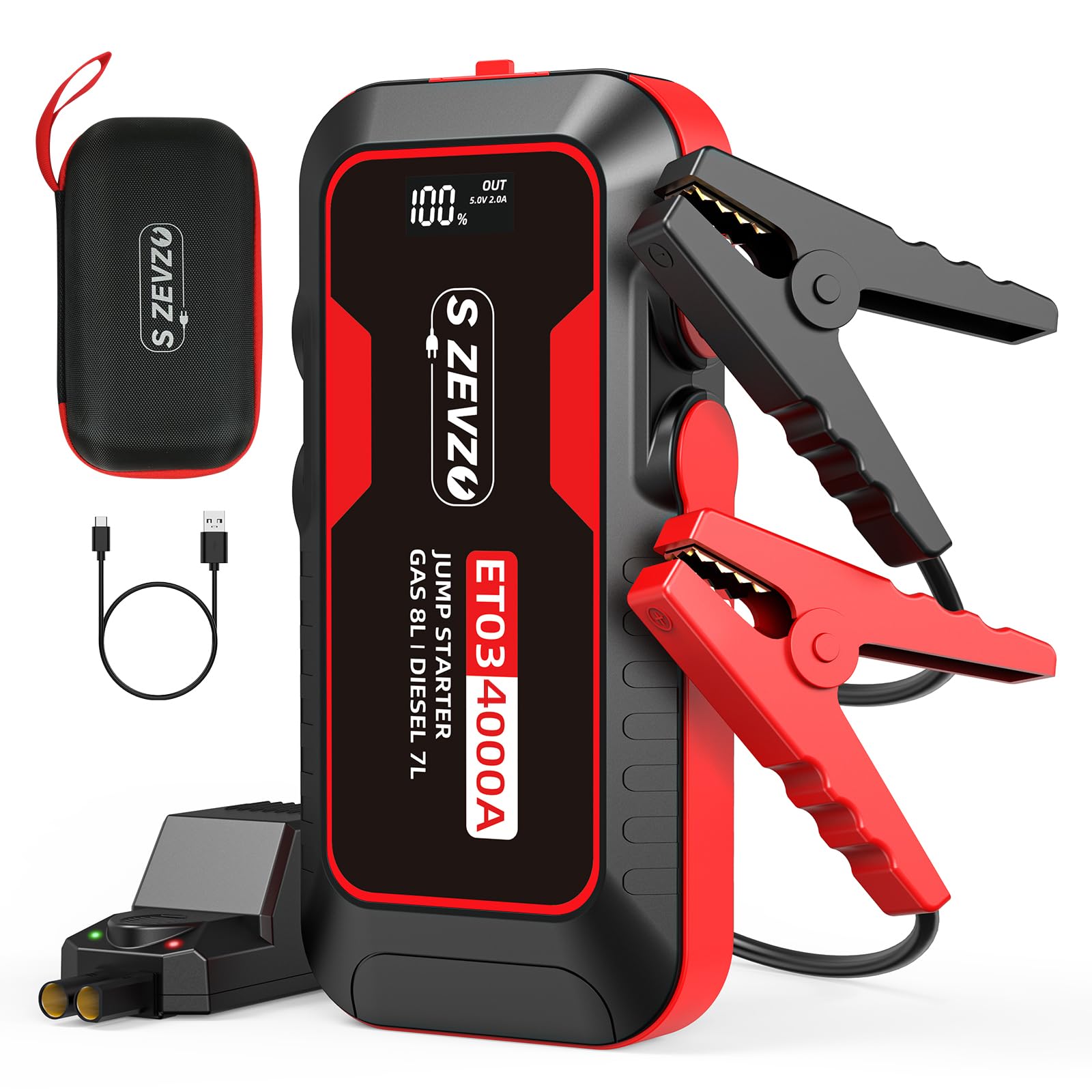
With a 1.4 lb build and 4000A peak, the ZEVZO ET03 is light enough to stow in a trunk compartment and strong enough for most gas and diesel engines up to 8.0L. The LCD screen gives clear battery status, and connecting it to start a dead vehicle is straightforward. However, charging can be inconsistent in some cases, which makes it less suitable as a primary emergency tool — better as a backup if the lighter TREKURE is unavailable or you want to keep costs down.

Bottom line: Pick this if you need an affordable backup jumper that stays out of the way in the trunk and you already have a primary starter for daily peace of mind.

How to Choose

Peak Amps vs Engine Size

Peak amperage indicates the maximum current the unit can deliver in a short burst. A 1000A starter easily handles a 4-cylinder car, while large V8 gas engines need at least 1500A. Diesel engines require roughly double the current of a gasoline engine of the same displacement because of higher compression ratios.

Manufacturers often inflate numbers with a 'peak' rating that lasts milliseconds. Look for the guaranteed engine displacement in liters (gas and diesel) rather than peak amps alone. A unit rated for 6.0L gas will start most SUVs; 8.0L+ gas is needed for full-size trucks.

Battery Chemistry: Lithium vs Lead-Acid

Lithium jump starters are compact and lightweight but self-discharge faster. If left untouched for three months, the battery management system may cut off output, leaving you with a paperweight. You must recharge every 60-90 days even without use.

Lead-acid (AGM) units like the Clore JNC660 are heavy (15-20 lbs) but tolerate neglect better. They lose charge more slowly and can be serviced with a standard battery charger. The trade-off is portability; they belong in a shop or truck bed, not a glovebox.

Charging Speed and Port Type

USB-C Power Delivery (PD) charging has become standard, with 65W models reaching 80% in about an hour. Older units with Micro-USB can take 6-8 hours for a full charge. A fast recharge matters if you use the jump starter as a power bank or need it ready between trips.

Some budget units lack a wall charger entirely, forcing you to supply your own USB-C adapter. Check the included accessories before buying, especially in the $50-70 price range.

Weight and Portability

Sub-2-pound lithium units fit in a glovebox but typically offer only 1-2 jumps before needing a recharge. Three-to-five-pound packs have more reserve capacity for multiple starts or powering devices. Lead-acid units above 15 pounds are stationary emergency tools.

For a daily driver who occasionally forgets lights on, a 2-3 pound lithium pack strikes the best balance. For a mechanic jump-starting multiple cars, the heavy lead-acid unit saves time with thicker cables and longer reach.

Safety Certifications

Spark-proof and reverse polarity protection are mandatory. Look for UL certification or equivalent third-party testing. Low-quality units may lack these safeguards, risking arcing or battery damage if clamps are connected backward.

NOCO's 'UltraSafe' technology uses a solid-state design that prevents sparks even when the clamps touch. Many competitors now offer similar protections, but verify the claim in the product manual.

Frequently Asked Questions