Computers & Accessories

6 Best KVM Switch of 2026: Models That Work With Laptops and Dual Monitors

Find a KVM switch that handles multiple computers and monitors without switching glitches, laptop incompatibility, or hidden trade-offs.

Most KVM switches advertise cross-platform support, but the real difference comes down to how they handle laptop connections and monitor resets. Many budget models work flawlessly with desktop PCs but explicitly exclude laptops, while others add features like EDID emulation to prevent screen flicker.

The trade-off is straightforward: you often choose between desktop-only reliability and broader laptop compatibility. Getting the right fit means matching a switch's actual limits to your hardware mix, not the marketing copy.

This guide cuts through the noise by focusing on models that deliver stable switching for specific setups — whether you need triple-monitor high refresh rates, a remote management tool, or a simple dual-monitor dock.

1

UGREEN AK704 Triple Monitor

Top Pick
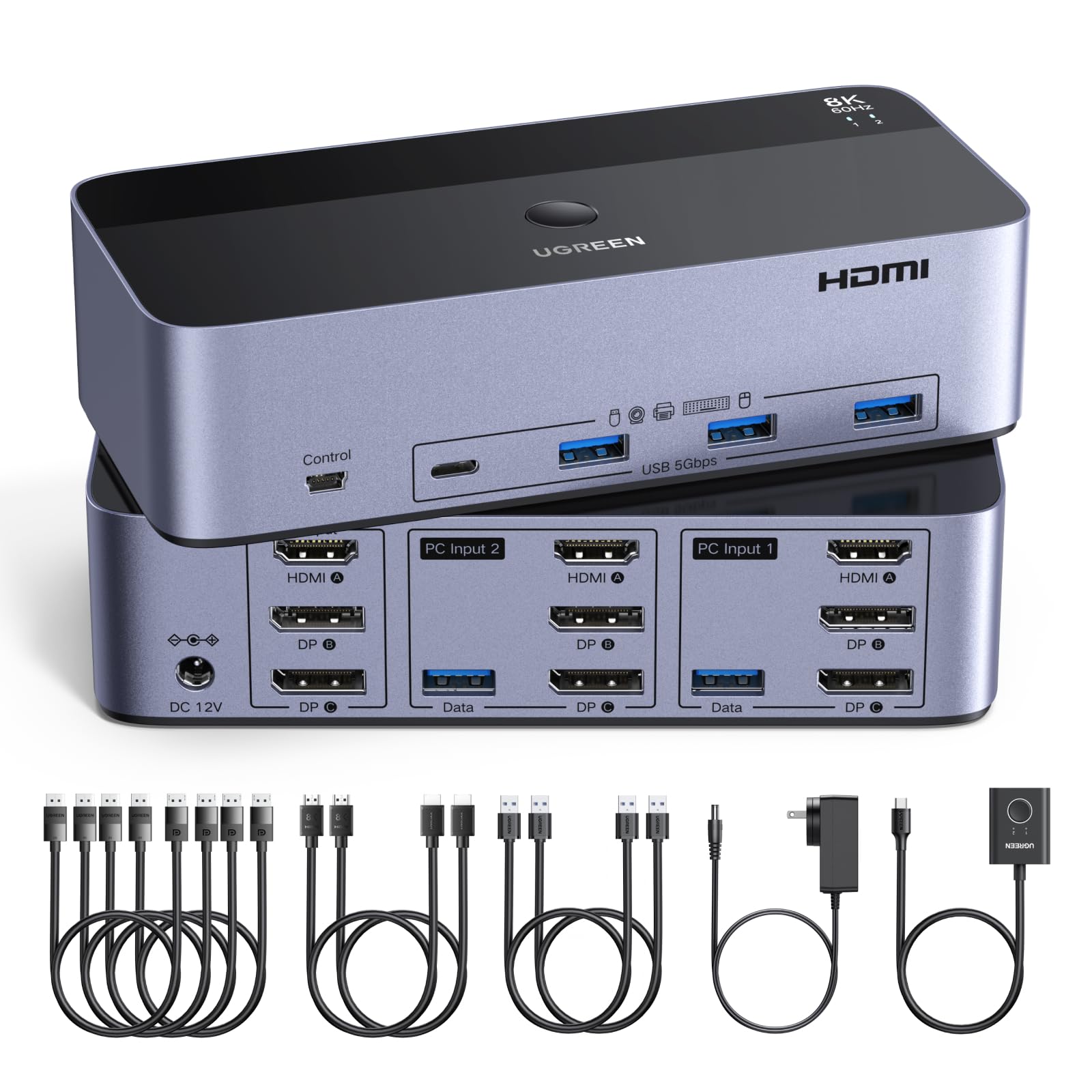
UGREEN AK704 Triple Monitor

Triple-monitor setups

Our Score 8.4/10
Check Price

Worth Noting

  • No EDID emulation can cause monitors to re-detect briefly when switching computers
  • Switching requires pressing a button or using the desktop controller
Monitors
3 (2 DP + 1 HDMI)
Switching
Button + desktop controller
USB Ports
4x USB 3.0
Max Resolution
8K@60Hz / 4K@240Hz

The UGREEN AK704 handles three monitors at once — two DisplayPort and one HDMI — with support for 8K@60Hz or 4K@240Hz on compatible displays. This makes it a strong fit for content creators and gamers who want high refresh rates across a multi-monitor setup without upgrading to a single ultra-wide. It also works with both Windows and Mac computers, including USB-C laptops when used with an adapter.

Switching between computers happens via a button on the unit or the included desktop controller — there is no keyboard hotkey support. The lack of EDID emulation means monitors may go through a brief re-detection cycle when you switch sources. For most users, this delay lasts a few seconds and is noticeable but not disruptive; it becomes more of an issue if you switch frequently or run applications that lose window placement during the transition.

This KVM is best suited for a home office with mixed Windows and Mac systems, or a content creation setup where triple-monitor real estate and high refresh rates matter. Laptop users will need a USB-C to HDMI or DisplayPort adapter, which is common but adds to the total cost. People who rely on quick hotkey switching or need seamless, instant monitor transitions should consider other options, as the button-only switching and EDID gap are inherent tradeoffs here.

The aluminum housing gives the unit a solid feel, and the included cables (two DisplayPort, one HDMI, and USB) are of good quality — no need to buy extras for a typical triple-monitor setup. Setup is straightforward: connect the monitors and USB peripherals, plug in the two computers, and press the button to switch. For the feature set and build, the price falls in the mid-range and represents reasonable value.

Tip: Using identical monitors with the same resolution and refresh rate can reduce re-detection delays when switching sources.

Bottom line: If your setup demands triple monitors, high refresh rates, and cross-platform compatibility, this UGREEN KVM delivers those features at a mid-range price — just be ready to trade hotkey switching and instant monitor transitions for that versatility.

2

Unitek DKM202 Dual Monitor

Unitek DKM202 Dual Monitor

Desktop dual-monitor

Our Score 9.0/10
Check Price

Worth Noting

  • Not compatible with laptops, including Windows and MacBooks
  • Some high-power USB peripherals (HDDs, webcams) may not function as expected
Monitors
2 (1 HDMI + 1 DP)
Switching
Button + wired remote
USB Ports
3x USB 3.0
Max Resolution
4K@60Hz

The Unitek DKM202 delivers dependable dual-monitor switching for desktop-only setups — no drivers, no laptop complications. Where the top pick offers triple-monitor support and cross-platform versatility, this unit focuses on doing two monitors and two computers reliably at a lower cost.

This KVM is built for desktop users with two computers and two monitors who want plug-and-play simplicity and a budget-friendly price. It is not for anyone using laptops — that is a hard boundary. Some USB devices, particularly external HDDs and webcams, may not work consistently, so it suits standard peripherals best.

Switching between computers is handled via a button on the unit or the included wired remote. The three USB 3.0 ports provide 5Gbps throughput for keyboards, mice, and moderate-power devices. Hookup is simple: HDMI for one monitor, DisplayPort for the other, and USB for peripherals.

Tip: If you plan to use external HDDs, connect them via a powered USB hub to reduce potential power draw issues.

Bottom line: For desktop users with two monitors who want a straightforward, cost-effective KVM without laptop support, this is the right choice.

3

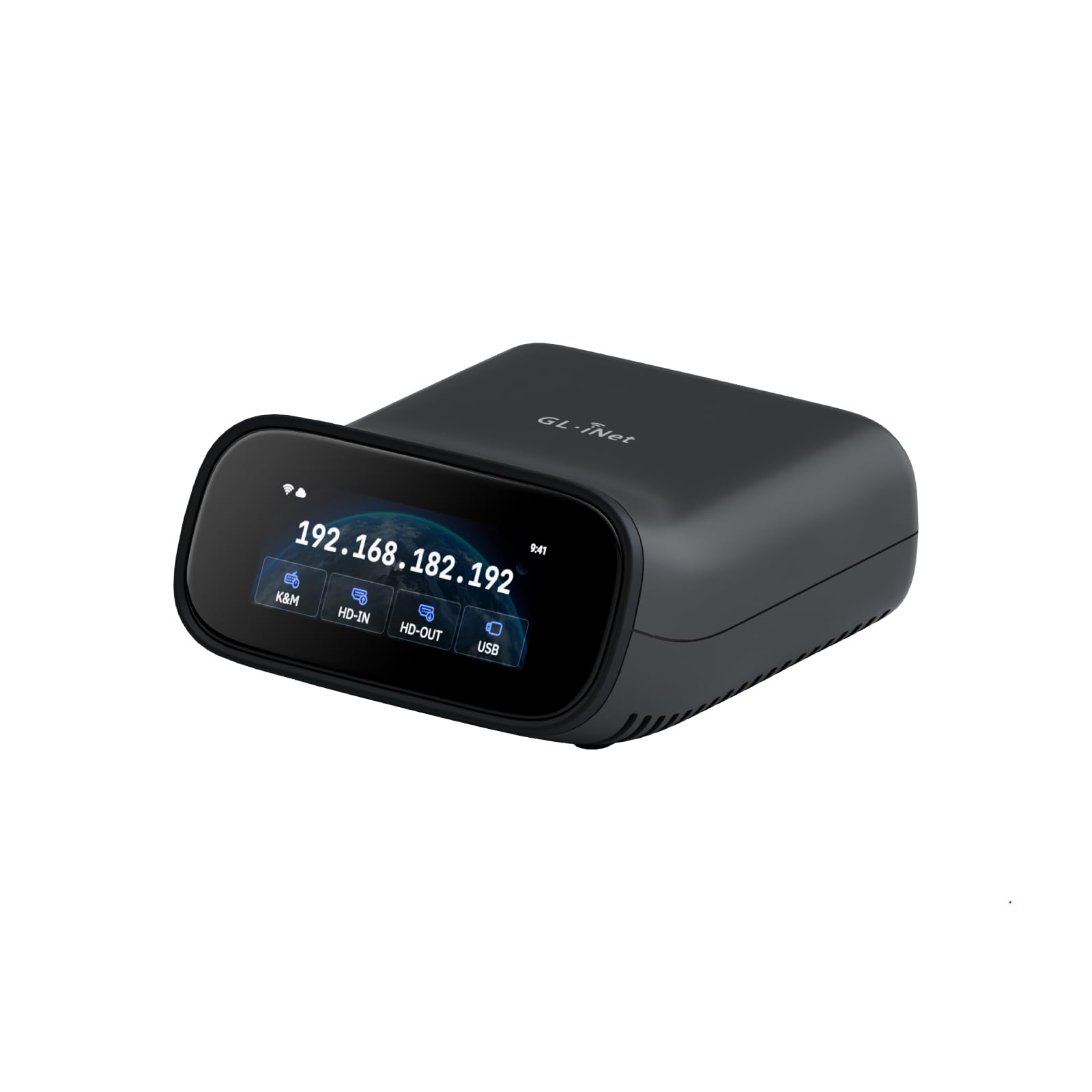
GL.iNet Comet Pro Remote

GL.iNet Comet Pro Remote

Remote management

Our Score 9.2/10
Check Price

Worth Noting

  • HDMI or USB may not be recognized on first connection, requiring cable reseating or power cycling
  • 4K@30FPS passthrough limits suitability for gaming or high-refresh displays
Monitors
1 (passthrough)
Switching
Touchscreen, app, web
USB Ports
Not specified
Max Resolution
4K@30FPS

The Comet Pro delivers remote BIOS-level access over Wi-Fi, not just software-based management – a capability unique among KVM switches. The touchscreen simplifies on-device setup, and Tailscale VPN ensures encrypted connections without complex network configuration. The tradeoff is a 4K@30FPS passthrough limit and occasional HDMI/USB recognition hiccups, but for its intended remote-management role, this unit outperforms any software-only alternative.

This device suits IT professionals managing remote servers or home labs who need to power cycle and troubleshoot at the BIOS level from anywhere. The wireless design and VPN support eliminate the need for dedicated network gear. It is not a local desktop switcher or a gaming KVM, but for its niche, the boundaries are well-defined.

Tip: If a connected device isn't detected, try reseating HDMI and USB cables or cycling power to the Comet Pro.

Bottom line: For remote server management where BIOS access and power cycling are essential, this KVM delivers functionality that software-only solutions cannot match.

4

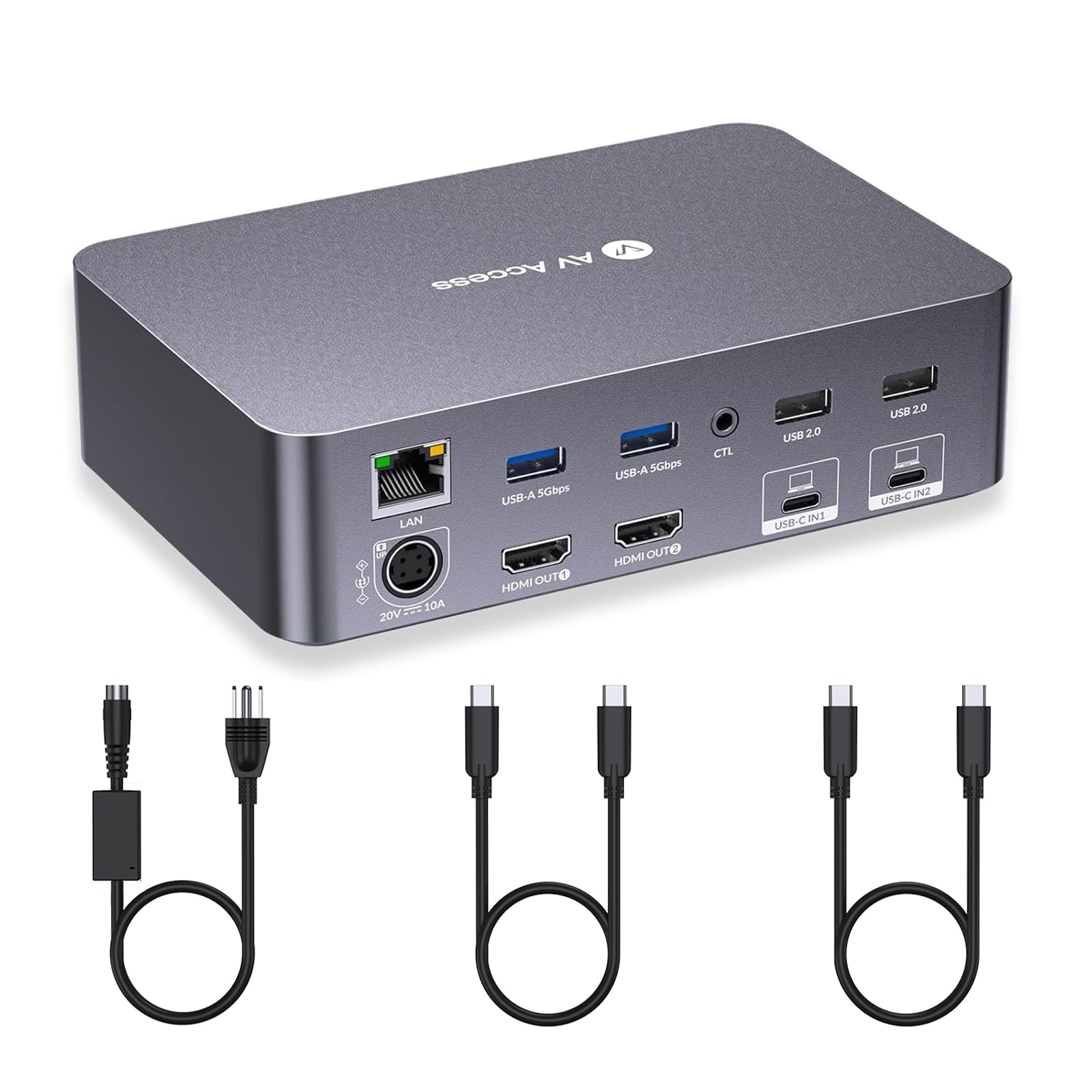
AV Access iDock-C20

AV Access iDock-C20

Dual-laptop dock

Our Score 8.4/10
Check Price

Worth Noting

  • During extended use, the unit runs hot
  • Long-term reliability is uncertain; some units have stopped working after a few months
Monitors
2 HDMI (MST)
Switching
Button (2-3s)
USB Ports
2x USB 3.0, 4x USB 2.0, 1x USB-C
Max Resolution
4K@60Hz

The AV Access iDock-C20 combines a KVM switch and a docking station into one unit, letting you connect two USB-C laptops through a single cable each while charging them at 60W. It also includes Ethernet, an SD card slot, and multiple USB ports – covering the peripherals most professionals need without extra hubs. Switching between laptops takes about two seconds.

This setup works best for users with a work and personal USB-C laptop who want one cable for power, display, and peripherals. The dual HDMI output runs at 4K@60Hz (duplicate mode on MacOS). However, the unit heats up noticeably during extended use, and some units have shown failure after a few months – making long-term reliability a point to evaluate.

The heat does not pose a safety risk, but in a warm office or near other electronics it may be noticeable. The occasional failure reports are limited to a subset of units, but they are enough to consider if you plan to rely on this daily for years. For the target buyer – dual-laptop professionals who want charging and connectivity in one device – the iDock-C20 delivers on its core promise.

Tip: Keep the dock in an open, well-ventilated area to manage heat buildup during heavy use.

Bottom line: For professionals with two USB-C laptops who want a single-cable solution that charges and switches peripherals, this KVM dock covers all the essentials. If heat or long-term durability are primary concerns, consider alternatives with stronger track records.

5

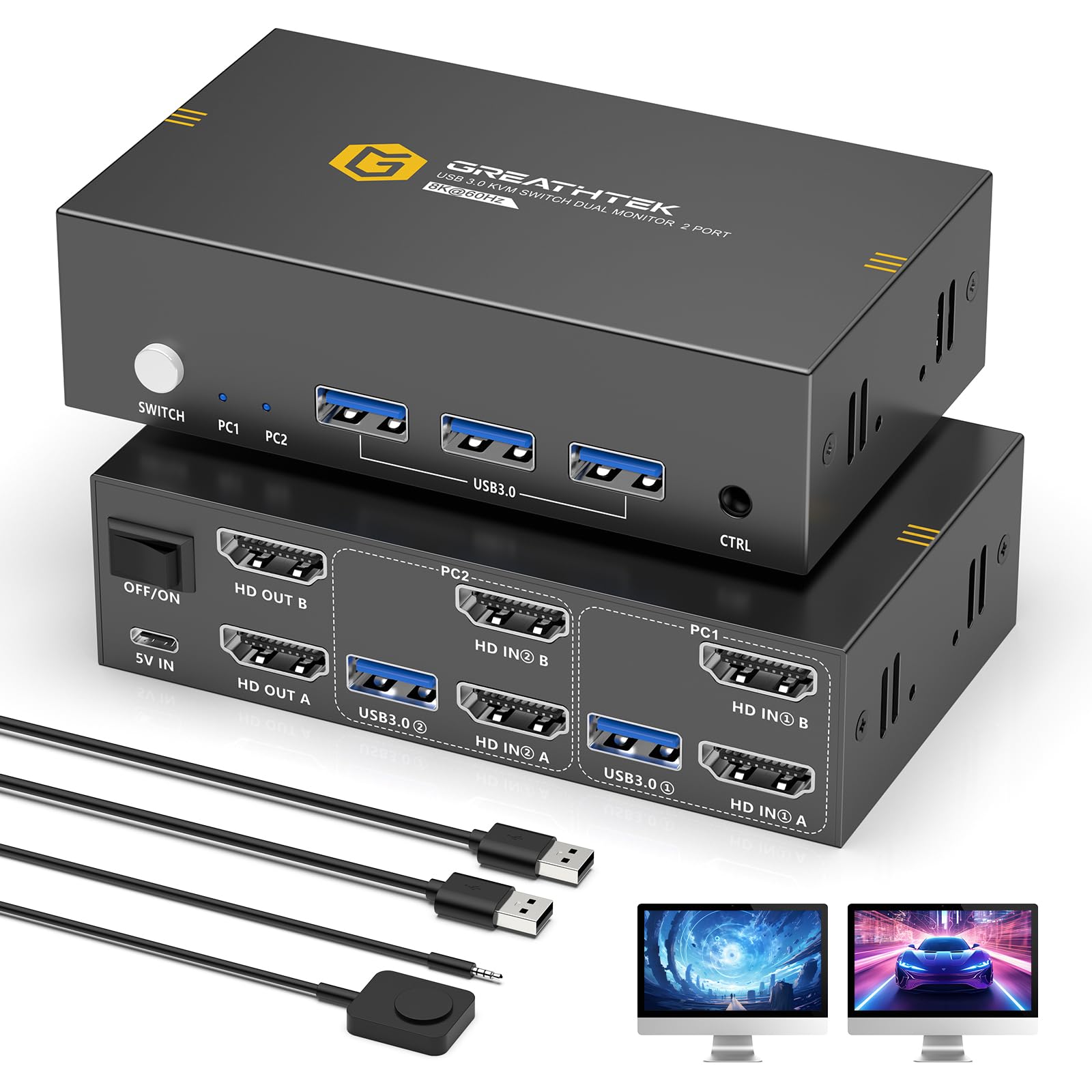
GREATHTEK 8K Dual Mon

GREATHTEK 8K Dual Mon

Budget 8K dual

Our Score 8.4/10
Check Price

Worth Noting

  • USB devices may lose connection or fail to switch properly during operation
  • Some units have been known to stop working within several months of use
Monitors
2 HDMI
Switching
Button + remote
USB Ports
3x USB 3.0
Max Resolution
8K@60Hz / 4K@240Hz

The GREATHTEK 8K HDMI KVM Switch delivers dual-monitor 8K@60Hz support at a price point that undercuts most competitors. Switching between connected computers completes in under two seconds, and the unit works across Windows, Linux, and Mac without extra configuration. For anyone chasing high-resolution multi-monitor setups on a tight budget, this is the most affordable entry point available.

USB peripherals connected through the switch can lose connection during switching or stop responding intermittently. This is a known limitation that may require a manual power cycle of the KVM unit. Additionally, a small number of units have been reported to stop functioning altogether after several months of use. These issues are not guaranteed to occur, but they factor into the decision for buyers who need consistent, long-term reliability.

This KVM is best suited for enthusiasts who prioritize 8K resolution and low cost over rock-solid USB behavior. If you can tolerate the occasional USB glitch and are comfortable with the possibility of an early unit replacement, the GREATHTEK offers compelling value. It is less ideal for mission-critical setups or users who cannot afford any downtime from peripheral disconnections.

Tip: If USB devices stop responding during switching, power-cycle the KVM unit to restore connectivity.

Bottom line: This KVM suits users who need 8K dual-monitor capability on a budget and are willing to accept occasional USB switching hiccups or the possibility of an early unit replacement.

6

Jancane V806 Single Mon

Jancane V806 Single Mon

Ultra-budget single

Our Score 8.4/10
Check Price

Worth Noting

  • Mac and USB-C laptop compatibility can be problematic
  • Included HDMI cables may need replacement for consistent video signal
Monitors
1 HDMI
Switching
Button only
USB Ports
2 (via USB-A)
Max Resolution
4K@60Hz

This Jancane KVM offers an entry-level price point for Windows desktop users who need to switch a single keyboard, mouse, and monitor between two computers. Setup is straightforward with included cables, though some users note that the HDMI cables may need replacement for consistent signal. Mac compatibility is limited, especially with newer USB-C laptops. The single-monitor support restricts its use to basic desktop setups. Best suited as a budget-friendly emergency or secondary option.

Bottom line: A viable choice for a secondary or emergency setup where budget is the primary concern and only Windows desktops are used.

How to Choose

Monitor Count and Resolution

The number of monitors and the resolution you need directly determine the KVM's video bandwidth requirements. A dual-monitor 4K@60Hz switch requires enough HDMI or DisplayPort bandwidth to drive both screens simultaneously without dropping frames.

If you run high-refresh gaming (e.g., 4K@240Hz) or three monitors, you need a switch that explicitly supports those resolutions per port. Many budget switches list a 'max resolution' that only applies when using a single monitor.

Video Input Ports

Most KVM switches use HDMI or DisplayPort inputs. Check that your computers and monitors have matching ports – a switch with two HDMI ports cannot connect a computer that only outputs DisplayPort without an adapter, which may introduce instability.

USB-C input is common on laptop-focused KVM docks but rare on traditional switches. If you use a modern MacBook or laptop with USB-C only, look for a switch that explicitly supports USB-C video input or includes adapters.

USB Ports and Speed

USB 3.0 ports (5Gbps) are sufficient for keyboards, mice, and webcams, but high-power devices like external hard drives may not switch reliably, especially on budget models. Some switches have mixed results with USB 2.0 peripherals as well.

If you need to share USB storage or high-bandwidth devices, prioritize models with dedicated USB 3.0 ports and positive reviews on peripheral compatibility. Budget switches often share bandwidth among ports, causing drops.

EDID Emulation

EDID emulation tells each computer that a monitor is still connected even while the KVM is switched to the other computer. Without it, monitors may re-detect the signal every time you switch, causing a 2-5 second black screen or desktop rearrangement.

This feature is critical if you frequently switch between computers on dual or triple monitor setups. Most budget KVM switches lack EDID, resulting in noticeable delays – a trade-off worth accepting only if you switch rarely.

Laptop Compatibility

Many KVM switches, especially budget models, are designed exclusively for desktop computers. They lack the necessary USB-C or Thunderbolt support and may not deliver power or video to laptops without additional adapters.

If you use a laptop (MacBook, Windows USB-C, or any notebook), look for a KVM that explicitly lists laptop support in its specs. Some require an active USB-C adapter; others are entirely incompatible. This is the most common cause of returns.

Frequently Asked Questions