Audio & Headphones

9 Best Earbuds for Running of 2026: The Ones That Stay Secure and Last

Find the best earbuds for running that stay secure, resist sweat, and last – whether you need open-ear safety or budget-friendly hooks.

Most running earbuds advertise impressive specs — IPX7, 40-hour battery, secure hooks. But many develop issues within months when a single earbud stops charging or the connection drops. The real test is not what's on paper but how they perform after weeks of sweat and impact.

This guide focuses on long-term reliability alongside fit and water resistance. It highlights earbuds that consistently stay put during sprints and keep working over time — across budget and open-ear designs. Whether you need situational awareness for road running or earhooks for intense gym sessions, the options here match your priorities without the reliability gamble.

1

Jesebang YT18

Top Pick
Jesebang YT18

Budget waterproof fit

Our Score 8.8/10
Check Price

Worth Noting

  • In some cases, the earbuds may fail to pair or charge correctly after months of use.
  • Battery life may fall short of the 48-hour claim; real-world usage can yield around 30 hours.
Fit Type
Over-ear hooks (soft TPU)
Battery Life
8h + 48h case
Water Resistance
IP7 (1m)

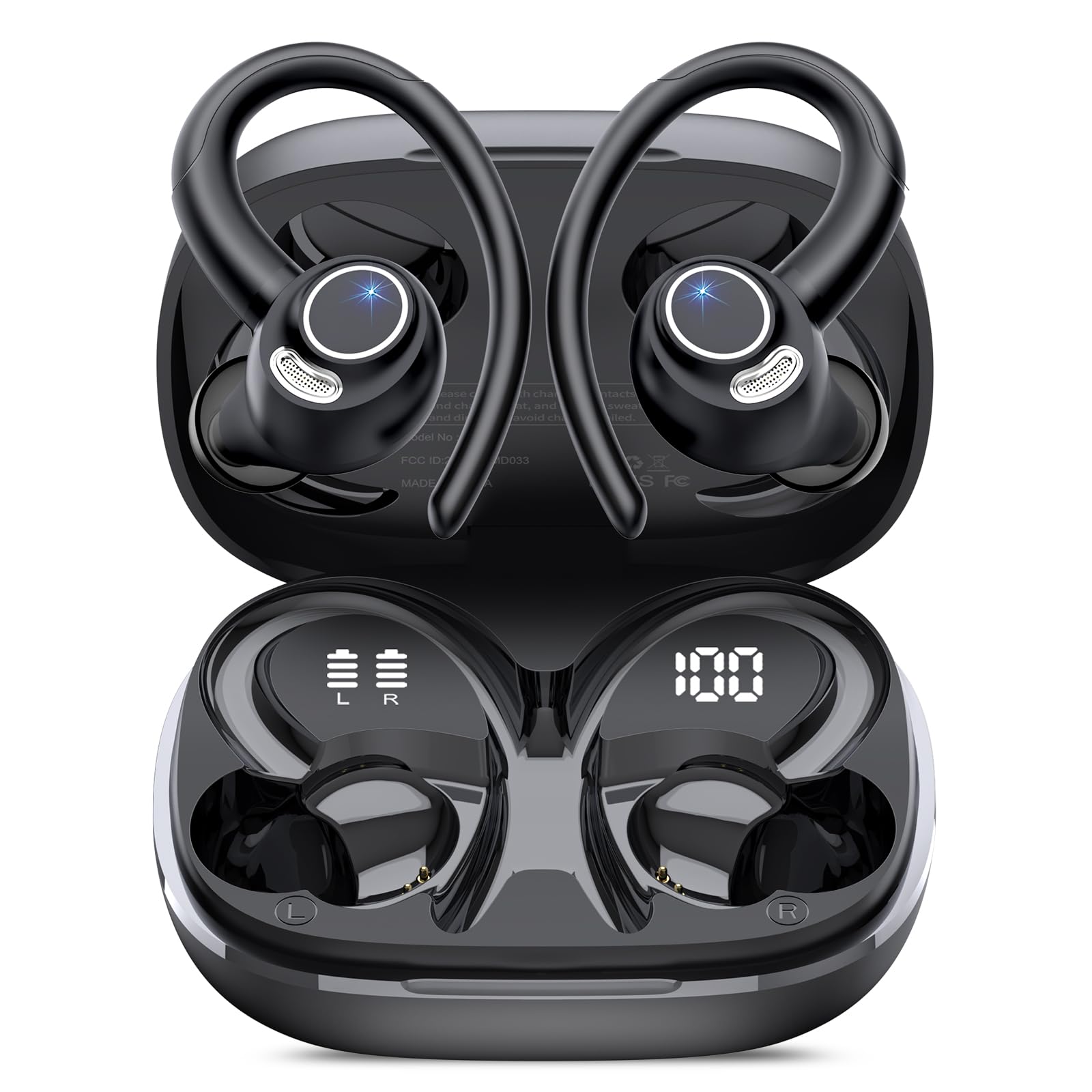
The Jesebang YT18 stays locked in place during high-intensity runs, thanks to its over-ear hooks and soft TPU construction. The 14.2mm drivers deliver a bass-forward sound that suits energetic workouts, with clear mids that avoid the muddiness typical of budget earphones. Combined with IP7 waterproofing, this is a rare combination of features under $25.

In practice, the 48-hour battery claim (8 hours per charge plus case) assumes moderate volume levels. Most users will get closer to 30 hours of combined playback, which still covers a week of daily runs. The Bluetooth 5.4 connection is generally stable, though some units may need a reset if pairing drifts over time. Charging via USB-C is straightforward, but the case contacts can occasionally require cleaning to maintain a consistent connection.

This earbud is built for runners and gym-goers who prioritize a sweat-proof, secure fit over open-ear awareness. The earhooks eliminate the worry of losing an earbud during sprints or burpees, and the IP7 rating means it can survive a drenching. The tradeoff: a small chance of charging or pairing quirks over months of heavy use, which is less of a concern for those who want a replaceable budget option rather than a long-term investment.

At this price point, the combination of IP7, Bluetooth 5.4, and earhooks is unmatched. The YT18 delivers the core features that matter for active use without the premium price tag of brands like Shokz or Bose.

Tip: Occasionally clean the charging contacts with a dry cloth to maintain a consistent connection.

Bottom line: The YT18 is the budget pick that focuses on what matters for active use: staying put and staying dry.

2

SHOKZ OpenRun

SHOKZ OpenRun

Situational awareness

Our Score 9.0/10
Check Price

Worth Noting

  • Battery performance may decline with heavy use over many months
  • Titanium frame can snap if bent repeatedly or stored under stress
Fit Type
Open-ear (bone conduction)
Battery Life
8h + quick charge
Water Resistance
IP67

The SHOKZ OpenRun keeps your ears open to traffic and surroundings while providing clear audio through bone conduction — a rare combination that makes it the go-to for runners who refuse to block out the environment. Its IP67 rating handles sweat and rain, and the 8-hour battery with quick-charge support covers long training sessions.

This headphone is best for road runners and cyclists who need to hear approaching vehicles, and for anyone who finds in-ear buds uncomfortable or painful. The lightweight frame stays secure and barely noticeable during a run, but buyers should know that the titanium band can snap under repeated flexing after months of use, and battery life may gradually shorten over time.

Tip: Store the headset in its case or flat to avoid repeated bending of the titanium band, which may reduce the risk of breakage.

Bottom line: For runners who prioritize hearing their environment over bass depth, the OpenRun delivers that safety reliably — just be aware the frame and battery are not lifetime components.

3

Aptkdoe HD65

Aptkdoe HD65

Max battery life

Our Score 8.6/10
Check Price

Worth Noting

  • Bass may feel thin for listeners who prefer low-end punch
  • Charging behavior can be inconsistent over time
Fit Type
Over-ear hooks (TPU)
Battery Life
15h + 75h case
Water Resistance
IPX7

The Aptkdoe HD65 delivers a 15-hour single charge and 75-hour total battery life — enough for multi-day trips without reaching for a charger. The earhooks keep the buds locked in place during sprints and jumps, and the IPX7 rating means rain or sweat won't cut a session short.

This pair suits runners who prioritize endurance over audio nuance. The sound profile leans toward thin treble with limited bass impact — fine for energetic playlists but not for critical listening. Occasional charging hiccups have been noted, so it's wise to keep the case contacts clean and dry.

Bluetooth 5.4 provides stable connectivity through typical gym distances, and the TPU hooks adjust easily for different ear shapes. If bass weight and long-term durability are non-negotiable, the top pick in this category offers stronger bass and better water resistance at a similar price.

Tip: Keep charging contacts dry and clean to reduce the chance of intermittent connection.

Bottom line: A battery champion for runners who can accept a lean sound signature and occasional charging quirks — ideal for long days or travel where plugging in is rare.

4

Soundcore V20i

Soundcore V20i

Glasses wearers

Our Score 8.8/10
Check Price

Worth Noting

  • Open-ear design provides no noise isolation; ambient sound remains present
  • Some units may experience charging or reliability issues over time
  • Battery life can fall to 6-7 hours per charge in some cases
Fit Type
Open-ear with adjustable hooks
Battery Life
8h + 36h case
Water Resistance
IP55

The Soundcore V20i stands out for its adjustable ear hooks that work comfortably with glasses, a rare feature in open-ear designs. The 16mm drivers with BassUp deliver clear, loud audio with surprising bass depth for the form factor, and the Soundcore app provides EQ customization plus multipoint Bluetooth 5.4 connection to two devices at once — all at a budget-friendly price.

Where the V20i falls short of top pick status is water resistance and fit security for high-impact running. The IP55 rating handles sweat and light rain but not heavy downpours or submersions, and the open-ear clip-on design can shift during sprints or interval work — earhook models like the Jesebang YT18 stay more locked in. A small number of units may also develop charging or reliability issues over time, and some users report battery life closer to 6-7 hours than the advertised 8.

This earbud suits the runner who needs situational awareness on roads or trails, wears glasses, and wants app-based sound tuning without spending premium money. It is less appropriate for triathlon training in heavy rain or for anyone who prefers the isolation of in-ear buds. For those who prioritize secure fit and full waterproofing, the top pick is a better match.

Tip: Keep the charging case handy for mid-day top-ups if you run long — real-world battery may not last a full 8-hour session.

Bottom line: A smart pick for runners who need glasses compatibility and open-ear awareness, but those who want a more secure, waterproof option should look elsewhere.

5

TOZO OpenEarRing

TOZO OpenEarRing

Lightweight open-ear

Our Score 8.8/10
Check Price

Worth Noting

  • Clip-on fit may loosen during high-impact movement
  • Some units may become unresponsive after months of use, affecting long-term value.
Fit Type
Open-ear clip-on
Battery Life
10h + 30h case
Water Resistance
IPX5

At 5.1g per earbud, the TOZO OpenEarRing is one of the lightest open-ear clip-on options available. Combined with 40 hours of total playtime (including a digital display case) and Bluetooth 5.4, it delivers an impressive spec sheet at a budget-friendly price. The fit favors glasses wearers and those who find bulkier earhooks intrusive, though it doesn’t match the secure lock-in of the leading open-ear competitor with adjustable hooks.

This is a solid choice for runners who value situational awareness and long-term comfort over a locked-in fit during sprints. The clip-on design stays put for steady-paced jogs and daily commutes, but it may shift during high-impact movement or quick direction changes. Some units may also become unresponsive after extended use, a factor to weigh when considering long-term value.

Tip: Test the clip-on fit with a quick head shake before heading out for a run – it's secure for most but may shift during high-impact movements.

Bottom line: A light, affordable open-ear option for easy jogs and daily wear – the compromise is a less secure fit under impact and occasional durability concerns.

6

bmani T16

bmani T16

Proven review volume

Our Score 8.8/10
Check Price

Worth Noting

  • One earbud may stop charging or connecting after months of use.
  • Bluetooth connectivity can have occasional dropouts or pairing hiccups.
Fit Type
Over-ear hooks
Battery Life
8h + 80h case
Water Resistance
Sweat resistant

The bmani T16’s earhooks keep the buds locked in during runs, and the 80-hour total battery cuts down on charging. Sound is clear with surprising bass for the price. These strengths matter to runners who want a dependable fit without overspending. However, there is no official IP rating, so sweat resistance is unverified, and some units may eventually have one earbud stop charging or suffer Bluetooth dropouts. This makes it less ideal for heavy sweaters or those wanting long-term consistency, but for budget-focused athletes who value battery life and secure fit over water protection, it remains a practical choice.

Bottom line: Best for budget-focused runners who want a secure fit and long battery life, and are willing to accept unverified water resistance and possible unit variation over time.

7

SHOKZ OpenMove

SHOKZ OpenMove

Bone conduction entry

Our Score 8.8/10
Check Price

Worth Noting

  • Fit can be problematic for some head sizes
  • 6-hour battery life that may shorten over time
Fit Type
Open-ear (bone conduction)
Battery Life
6h
Water Resistance
Sweat resistant

The SHOKZ OpenMove brings bone conduction to a lower price point with a 29g build, USB-C charging, and 6-hour battery. For newcomers wanting open-ear awareness during jogs, it delivers clear outdoor audio without blocking ambient sound. However, the fit can feel too tight or too loose depending on head size, battery life may degrade over time, and some units have stopped working after a few months. These limitations make it a starting point rather than a long-term running companion.

Bottom line: A sensible trial for bone conduction newcomers on short, casual runs who don't need all-day battery or a guaranteed fit.

8

OYIB S75

OYIB S75

Budget alternative

Our Score 8.8/10
Check Price

Worth Noting

  • Bass response is clear but lacks punch for bass-heavy music.
  • Long-term durability may vary; some units have stopped working after several months.
Fit Type
Over-ear hooks
Battery Life
8-10h + 50h case
Water Resistance
IPX7

The OYIB S75 delivers a feature set that matches or exceeds many pricier running earbuds: IPX7 water resistance withstands heavy sweat and rain, Bluetooth 5.4 ensures stable connectivity, and the earhooks keep the buds locked in during sprints or gym sessions. Quick charging provides hours of playback in minutes. However, because the user base is smaller, long-term performance is less established, and the sound profile leans toward clear mids with limited bass extension — not ideal for those who need thumping low-end. This makes it a sound choice for occasional runners who want solid waterproofing without spending more, as long as they accept that deep bass and years of hard use are not guaranteed.

Bottom line: A budget-friendly pick for runners who need IPX7 waterproofing and a secure fit, and can overlook shallow bass and uncertain long-term reliability.

9

Soundcore Sport X20

Soundcore Sport X20

Extreme waterproofing

Our Score 8.4/10
Check Price

Worth Noting

  • Battery life drops significantly with ANC active
Fit Type
Rotatable/extendable hooks
Battery Life
12h + 48h case (ANC off)
Water Resistance
IP68 (1.5m)

The Sport X20 stands out for its IP68 rating that handles full submersion and heavy rain, paired with BassUp low-end and a secure hook fit. However, long-term durability has been inconsistent – some units may stop working within months, which prevents a higher recommendation. This is best for runners who need maximum water protection and accept the uncertainty.

Bottom line: For triathletes and runners who need the highest water protection and can accept the possibility of early unit issues, the Sport X20 provides waterproofing unmatched in this price range.

How to Choose

Secure Fit Mechanism

Earhooks provide the most secure fit for running – they wrap around the ear and stay locked during sprints and jumps. Open-ear designs (like bone conduction or clip-ons) offer less pressure but may slip if your ear shape doesn't match. If you do high-intensity intervals, earhooks are the safer bet.

For glasses wearers, adjustable hooks or open-ear clip-ons avoid frame interference. Test the fit when moving your head side to side – a good pair won't shift even after sweat reduces grip.

Water and Sweat Resistance

IPX7 means the earbuds can survive immersion in 1 meter of water for 30 minutes – plenty for heavy rain or a rinse. IPX5 resists sweat and light rain but not submersion. However, IP ratings test water ingress, not corrosion of charging contacts. Sweat can erode pins over time regardless of the IP rating.

For frequent runners, choose at least IPX5. If you run in heavy downpours or plan to rinse the earbuds under a tap, IPX7 or IP68 is worth the extra cost. Just remember that even high IP ratings don't prevent battery degradation or charging port failure from repeated sweat exposure.

Battery Life

Claimed battery life is often measured at 50% volume with no ANC – real-world usage can be 20–30% lower. With ANC enabled, expect even less. For daily runs of an hour, even 6 hours per charge is enough, but if you travel or do long sessions, look for at least 8 hours per earbud.

Total playtime (case + buds) matters for trips. The case's charging speed also counts: quick-charge features that give 1.5 hours from a 5-minute top-up are very practical. Be aware that battery capacity degrades over time – after a year, expect about 80% of original runtime.

Sound Quality and Ambient Awareness

In-ear earbuds with passive noise isolation or ANC block out gym noise but also mask traffic – dangerous for road runners. Open-ear designs (bone conduction or air conduction) let you hear your surroundings but sacrifice bass and fullness. Bone conduction in particular lacks low-end punch but is clear enough for podcasts and music.

If you need both awareness and decent sound, look for open-ear models with larger drivers or BassUp features. The trade-off is that no open-ear earbud will match a sealed in-ear design for bass impact. Decide which matters more: safety or audio immersion.

Reliability and Longevity

The most common failure point in running earbuds is the charging contact – sweat or debris causes intermittent charging and eventually a dead earbud. Another weak spot is the battery, which degrades faster with frequent full discharges and heat. Products with replaceable ear tips or modular charging ports tend to last longer.

Check user reports for patterns like 'left earbud stopped charging after 3 months' or 'case no longer holds charge'. A high IP rating doesn't prevent these issues. The best indicator is a large number of reviews with positive long-term comments, not just initial satisfaction.

Frequently Asked Questions