Car & GPS

8 Best Digital Voice Recorder of 2026: Clear Audio Without Hidden Costs

Find the digital voice recorder that matches your needs - from budget lectures to AI-powered meeting notes - without paying for features you won't use.

Digital voice recorders seem simple: press record, capture audio. But the real differences - microphone quality, battery longevity, file transfer methods - determine whether you end up with clear lecture notes or a frustrating paperweight. Many budget models skimp on stereo mics or use fragile slide-out USB ports that break within months.

The category is crowded with Sony, but newer brands like Plaud and Tonfarb are pushing features like AI transcription and massive built-in storage. The trade-off is clear: convenience often comes with a subscription or inconsistent audio quality. This guide focuses on matching recorders to your actual use case - whether that's hour-long interviews, semester-long courses, or daily meeting summaries.

The right recorder balances sound clarity, battery runtime, and file transfer ease. Ignoring any one of these can turn a $30 purchase into a $100 headache.

1

Sony ICD-PX370

Top Pick
Sony ICD-PX370

Students, interviewers

Our Score 9.0/10
Check Price

Worth Noting

  • Mono recording lacks spatial separation for multi-speaker environments
  • Battery life may run shorter than the 57-hour spec depending on recording settings
File Transfer
Built-in USB
Battery & Life
2 AAA (57 hrs)
Recording Format
MP3
Storage Capacity
4 GB internal

The Sony ICD-PX370 delivers clear mono voice capture with a built-in USB port that eliminates the need for cables or adapters. File transfers happen by plugging directly into any computer, and the controls are intuitive enough to use without reading the manual. At this price point, recording quality outperforms most smartphone microphones for speech.

Battery life from two AAA cells can vary in practice. Some sessions run shorter than the advertised 57 hours, especially when recording in high-quality MP3 mode. For a lecture or a series of interviews, the recorder will hold up fine, but extended fieldwork without spare batteries may require planning.

This recorder targets students on a tight budget, casual interviewers, and anyone who needs a straightforward device for capturing spoken content. The mono microphone limits spatial audio separation, so in a roundtable discussion or classroom with multiple speakers, isolating each voice from the recording will be harder. For single-speaker lectures or one-on-one interviews, the sound is perfectly usable.

Tip: Keep spare AAA batteries on hand if recording at high quality for long sessions.

Bottom line: If your needs are limited to capturing speech from a single source and you value ease of transfer above all else, this is the best budget pick available.

2

Sony ICD-UX570

Sony ICD-UX570

Professionals, compact

Our Score 9.0/10
Check Price

Worth Noting

  • Slide-out USB connector may break if pulled at an angle rather than straight out
  • Battery life can vary between units; some may drain faster than expected
File Transfer
Slide-out USB
Battery & Life
Built-in rechargeable (quick charge)
Recording Format
MP3/WMA
Storage Capacity
4 GB + microSD

The ICD-UX570 captures stereo audio with a built-in rechargeable battery that charges quickly, giving it an edge over the top pick's mono format. Its compact shell houses a speaker loud enough for group playback.

This recorder suits students and professionals who need stereo separation for lectures or meetings. The slide-out USB port is a weak point — it can break if not pulled straight out — so it's best for users who transfer files occasionally and handle the connector with care.

The 4GB internal memory accepts microSD cards for expansion, and the MP3/WMA recording format simplifies file management. The compact size makes it easy to carry to class or the office.

Tip: Grip the USB tabs firmly and pull straight out to reduce strain on the slide-out mechanism.

Bottom line: A capable stereo recorder for lecture and meeting use, but requires careful USB handling — better suited to those who transfer files infrequently.

3

Plaud Note Pro

Plaud Note Pro

Business professionals

Our Score 9.2/10
Check Price

Worth Noting

  • Full transcription features require an ongoing subscription after the included trial.
  • No headphone jack; playback relies on Bluetooth or the app, not wired monitoring.
File Transfer
Bluetooth 5, magnetic
Battery & Life
30 hrs (rechargeable)
Recording Format
WAV
Storage Capacity
64 GB internal

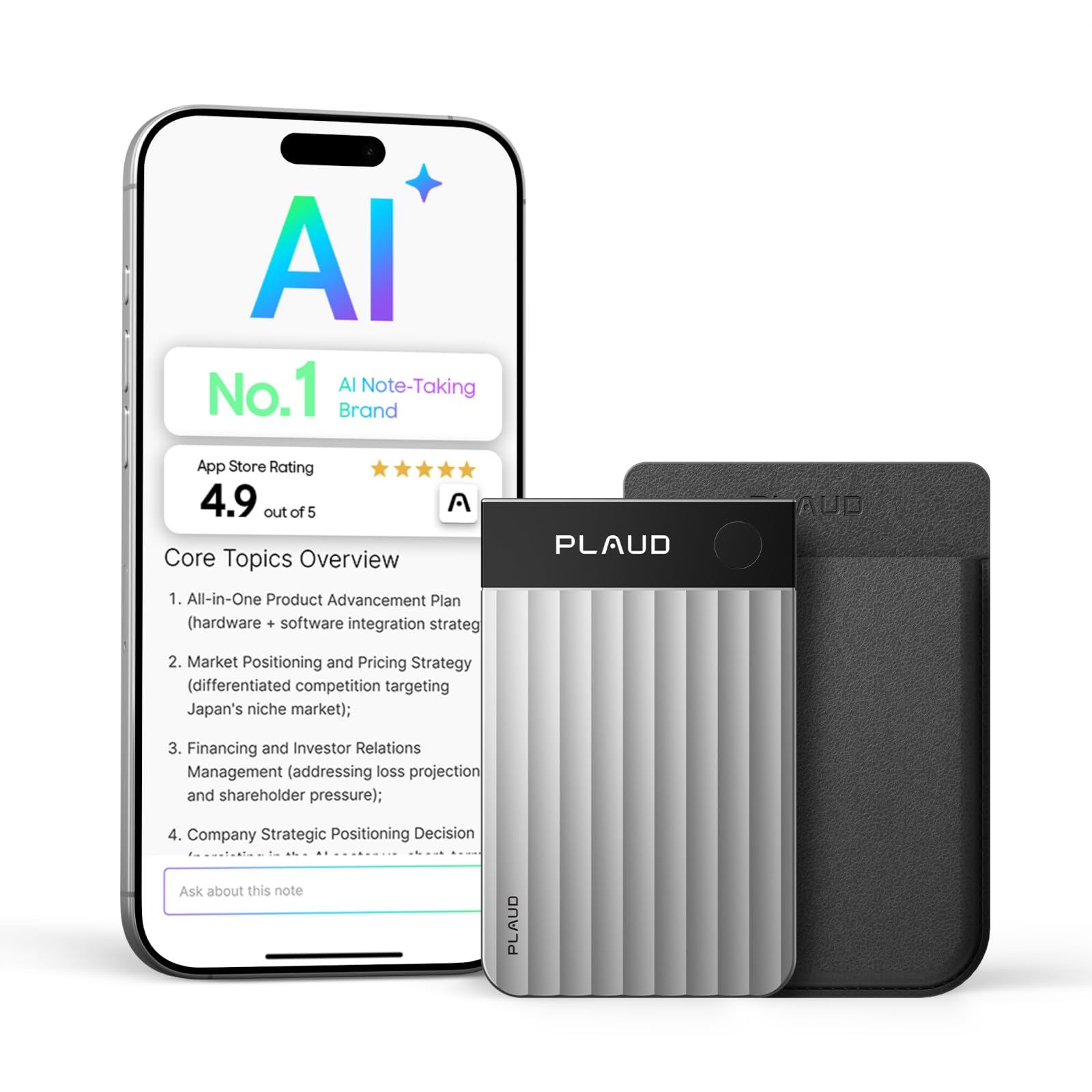
The Plaud Note Pro’s AI engine processes recordings through 112-language transcription and speaker-labeled summaries, eliminating the need to manually review hours of audio. Its slim card-sized body and AMOLED display make it a discreet companion for back-to-back meetings.

For professionals who need instant meeting minutes or interview transcripts, this device saves significant time. However, the full AI feature set requires a monthly subscription – a recurring cost beyond the premium price. Also, the lack of a headphone jack means you will rely on Bluetooth earbuds or the companion app for playback, which may be a limitation if you prefer wired monitoring.

Recording quality is consistently clear across varied environments thanks to four MEMS microphones and a voice pickup unit. The included magnetic charging case adds convenience, and 64GB of internal storage holds countless hours of WAV files.

Tip: Keep the subscription active after the trial period to avoid losing access to speaker labels and summarization features.

Bottom line: If your workflow demands automatic, searchable notes from every meeting and you are comfortable with a subscription, the Plaud Note Pro is the most capable recorder in this roundup.

4

OM SYSTEM DM-720

OM SYSTEM DM-720

Journalists, interviewers

Our Score 9.2/10
Check Price

Worth Noting

  • Premium price relative to competitors with similar recording quality.
File Transfer
Retractable USB
Battery & Life
1 AAA (985 hrs)
Recording Format
PCM 48kHz/16-bit
Storage Capacity
4 GB + microSD

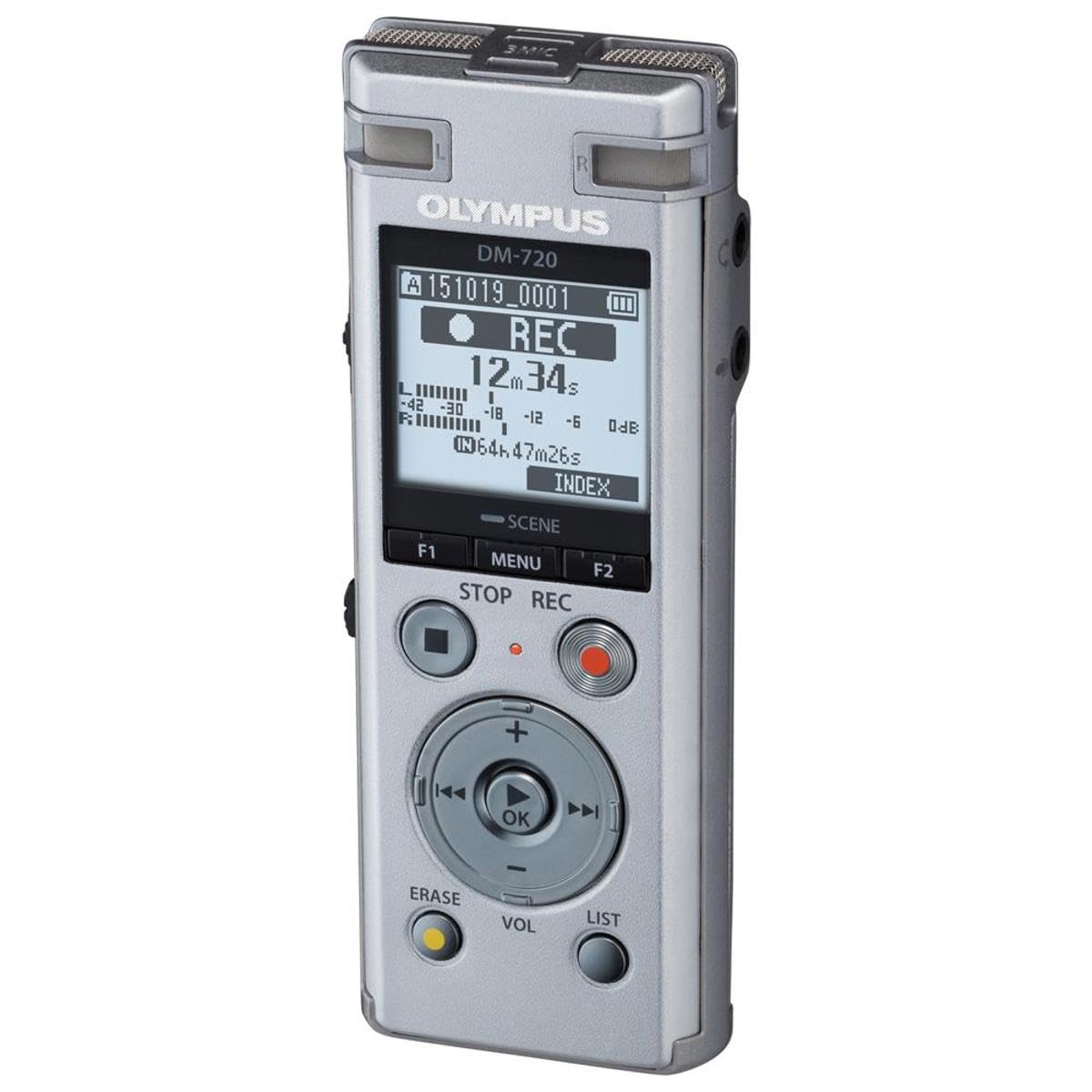
The OM SYSTEM DM-720 records for 985 hours on a single AAA battery — more than any other recorder in this roundup. That endurance alone sets it apart for journalists and interviewers who work remote or multi-day assignments without access to power.

Its TRESMIC three-microphone system captures clear, natural-sounding audio. The compact body with a retractable USB port makes file transfers simple, and the durable build holds up to daily field use.

This recorder fits professionals who prioritize battery longevity above all else. However, its price sits higher than comparable Sony models that offer similar sound quality — a tradeoff worth weighing if battery life isn't your top concern.

Bottom line: If you need a recorder that lasts through long interview days without recharging, the DM-720's battery endurance justifies its premium price.

5

Tonfarb 136GB A20

Tonfarb 136GB A20

Students, long sessions

Our Score 8.8/10
Check Price

Worth Noting

  • In quiet study rooms, playback clarity can be inconsistent between recordings
  • Voice activation may not reliably start on soft speech
File Transfer
USB-C
Battery & Life
1100mAh (68 hrs)
Recording Format
PCM/MP3/WAV
Storage Capacity
8 GB + 128 GB microSD

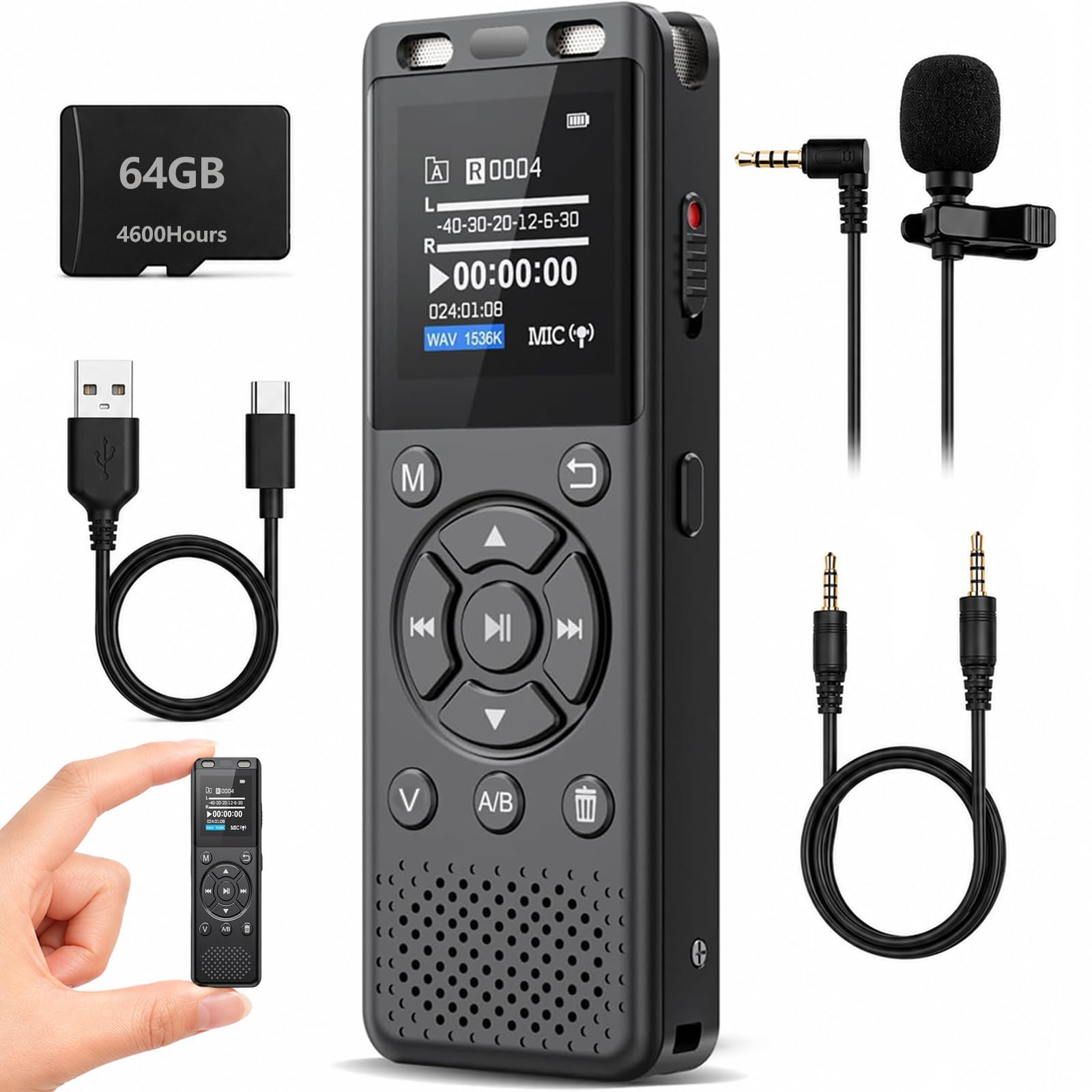
Open with 136GB of storage (8GB internal plus included 128GB microSD) and a 68-hour battery, the Tonfarb A20 removes the need to offload files mid-semester. The dual noise reduction mics handle lecture hall rumble better than many budget recorders, and the metal casing survives backpack tosses. Compared to the top pick’s simpler mono design, the A20 trades some audio consistency for vastly more capacity and a longer runtime.

This recorder is built for students who want to drop a file on day one and never think about storage again. The tradeoff is playback clarity — in quiet settings, audio quality can vary between recordings, and the voice activation feature may not trigger reliably on soft speech. If pristine sound for transcription is non-negotiable, the top pick delivers more consistent results. But for anyone whose priority is recording everything without transferring files, the A20 hits a strong value note.

Tip: Set recording to manual mode for interviews or soft-spoken speakers to avoid missing the start.

Bottom line: For students who want to record dozens of lectures without touching a computer, this delivers unmatched storage at a budget price — just don't expect studio-grade audio.

6

Tonfarb 64GB A12

Tonfarb 64GB A12

Budget backup

Our Score 8.4/10
Check Price

Worth Noting

  • Audio quality varies between units
  • Battery life may be significantly shorter than the advertised 48 hours.
File Transfer
USB-C
Battery & Life
AAA (48 hrs)
Recording Format
MP3/WAV
Storage Capacity
64 GB internal

The Tonfarb A12 packs 64GB of storage at a price under $30, making it the most affordable option for capturing lectures or meetings without breaking the bank. Audio clarity is inconsistent though — some recordings sound muffled or distorted — and battery life can fall well short of the advertised 48 hours. This recorder suits anyone who needs a simple backup device for non-critical situations where losing a few words of audio won't matter. For professional-grade recordings, consider spending more on a Sony model with verified consistent performance.

Tip: Keep an extra set of AAA batteries handy — actual recording time can be unpredictable.

Bottom line: Best for users who need a cheap backup recorder for casual note-taking and can tolerate occasional audio inconsistencies.

7

Philips DVT4115

Philips DVT4115

Early adopters

Our Score 8.0/10
Check Price

Worth Noting

File Transfer
USB-C, app remote
Battery & Life
Lithium polymer (36 hrs)
Recording Format
MP3, PCM
Storage Capacity
8 GB internal

The Philips DVT4115 is a mid-range voice recorder that combines three stereo microphones with a trial of Sembly AI, letting you test speech-to-text transcription without committing to a paid plan. The multi-mic setup captures distant speakers in meetings or lectures, and the 36-hour battery handles long sessions. This is a solid entry point for early adopters who want integrated AI features and are curious about automated transcription, though the broader market lacks sufficient feedback to confirm long-term performance patterns. It suits buyers who value experimentation over established track records.

Bottom line: Best for curious buyers who want to try AI transcription without a subscription — treat it as a short-term experiment rather than a long-term investment.

8

Philips DPM6000

Philips DPM6000

Medical/legal dictation

Our Score 8.6/10
Check Price

Worth Noting

  • Premium price for 1GB internal storage with no expandable memory
File Transfer
Micro USB
Battery & Life
Li-ion (100 hrs)
Recording Format
DSS, MP3
Storage Capacity
1 GB internal

The Philips DPM6000 is built around professional dictation needs: push-button editing and priority settings streamline transcription workflows, and the stainless steel casing meets military shock standards for use in busy clinical or legal environments. But the tradeoff for this specialized focus is a steep price paired with only 1GB of internal storage and no way to add more — a hard limit for anyone recording long sessions or multiple cases. This is not a general-purpose voice recorder; it's a niche tool for professionals who can work within its storage constraints and need a rugged, workflow-oriented device.

Bottom line: A capable dictation tool for medical and legal professionals who need durable hardware and can work within 1GB storage limits — not a fit for general recording or budget-conscious buyers.

How to Choose

Mic Configuration

Mono microphones capture sound from a single channel, which works fine for a single speaker in a quiet room. Stereo mics record left and right channels, creating spatial separation that lets you distinguish speakers around a table. For lectures with audience questions or multi-person meetings, stereo is a noticeable upgrade.

Multiple microphone arrays (like OM SYSTEM's TRESMIC or Plaud's 4 MEMS) add beamforming and noise reduction. The trade-off: extra mics increase cost and power draw. A well-placed single mono mic can outperform a poorly positioned stereo array in echo-heavy rooms.

Recording Format

MP3 is compressed and saves storage, but loses high-frequency detail that matters for transcription software. PCM (WAV) files are much larger but preserve clarity for speech-to-text accuracy. Most recorders default to MP3, but PCM is the safer choice if you plan to run recordings through AI or human transcription.

Sample rates and bitrates matter: 48kHz/16-bit is the minimum for clean transcription. Some budget recorders advertise 'PCM' but at lower bitrates (e.g., 8kHz) that sound muffled. Always check the numeric spec, not just the label.

Battery & Life

AAA-powered recorders (like the Sony PX370) offer easy replacement - carry spare batteries for multi-day field use. Rechargeable built-in batteries (like Sony UX570) add convenience but mean the recorder is unusable during charging. Lithium-polymer cells degrade faster if left at full charge for weeks.

Advertised battery hours are often at the lowest quality setting. Real-world recording at PCM 48kHz typically cuts claimed runtime by 40-60%. For heavy users, a recorder with 50+ hours of rated battery will last about 20-30 hours of actual PCM use.

Storage Capacity

Internal storage is convenient but fixed - 4GB holds roughly 60 hours of MP3 at 128kbps, but only 2.5 hours of PCM 48kHz/16-bit stereo. Expandable microSD slots let you swap cards for unlimited capacity, but require carrying extra cards and risk losing them.

Tonfarb's 136GB recorder includes a 128GB card out of the box, which eliminates the need to transfer files for an entire semester. The drawback: when the card fails (and all cards eventually do), every unsaved recording is lost. A recorder with separate card slot lets you recover data via a card reader.

File Transfer

Built-in USB (slide-out or retractable) eliminates the need for a cable, but the sliding mechanism is a common failure point - especially on Sony UX570 units. Retractable USB like the OM SYSTEM DM-720 is sturdier but still vulnerable to dirt and wear.

Bluetooth and app-based transfer (Plaud Note Pro) offer wireless convenience but rely on battery drain and app compatibility. Wired USB-C is the most reliable for large files, but requires carrying a separate cable. For daily use, a recorder with a fixed (non-moving) USB plug is the most durable option.

Frequently Asked Questions