Car & GPS

12 Best Dash Cams of 2026: Clear Footage You Can Count On

The best dash cam picks that deliver crisp night footage and withstand scorching dashboards, giving you evidence that holds up when it matters most.

It's common to see dash cams that boast 4K video but stop recording when your dashboard gets toasty or refuse to connect to your phone reliably. The market is flooded with high-spec claims, yet the unglamorous reality is that many models falter in everyday use. A dash cam should be a silent witness you never think about until you need it, not a source of constant troubleshooting.

The gap between marketing and real-world dependability is what separates the few workhorses from the spec-sheet heroes. We've focused on models where video clarity, heat survival, and Wi-Fi stability held up across thousands of owner experiences—so you can find a dash cam that stays awake when your engine is off and doesn't flake out in summer traffic.

Some setups prioritize maximum dual-channel HDR detail, demanding a bit more patience with settings and occasional app hiccups. Others deliver a complete, card-included kit that just works, even if the rear camera's resolution isn't the highest. Matching the tool to your habits means you'll trust the evidence when it counts, without chasing specs you'll never actually use.

1

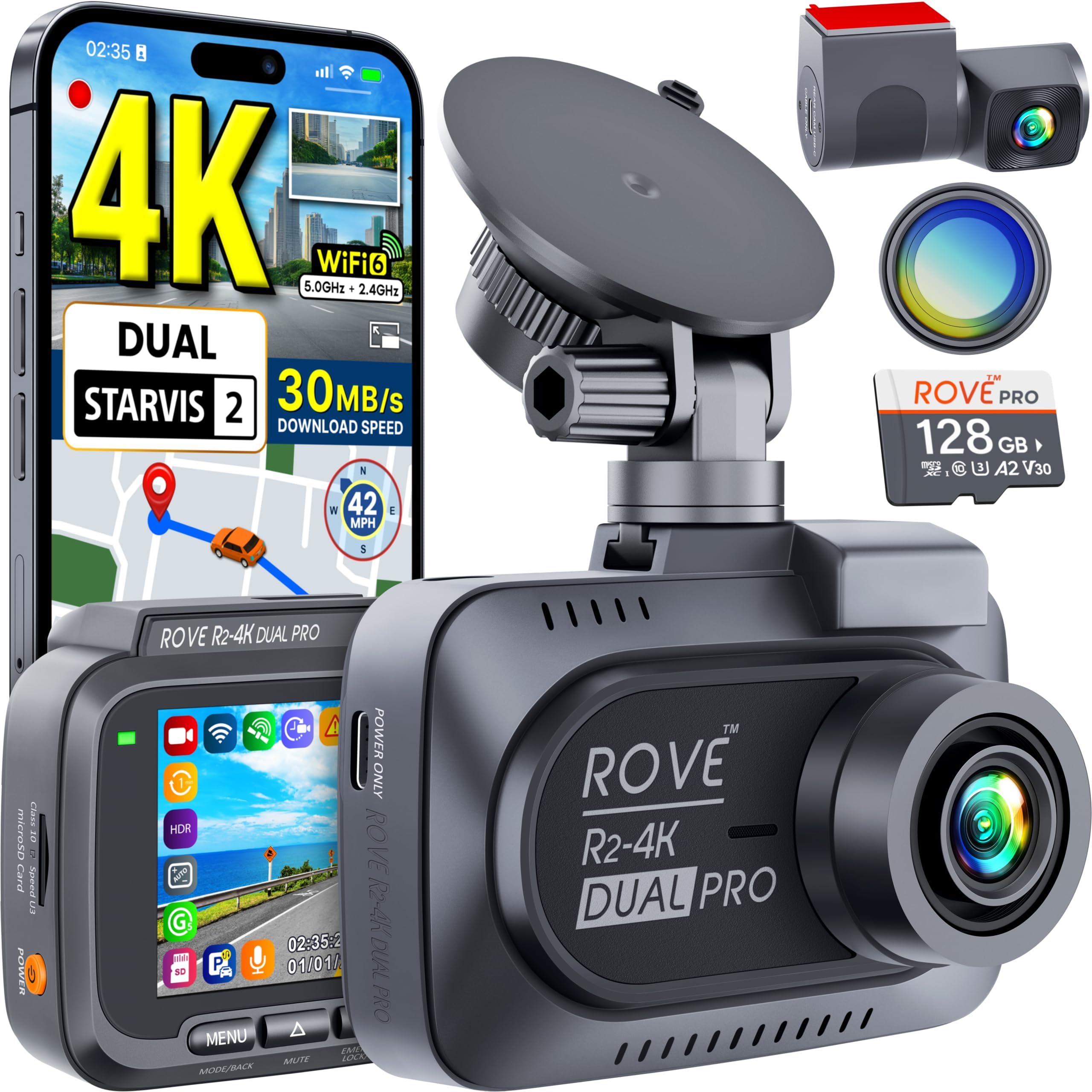
ROVE R2-4K DUAL

Top Pick
ROVE R2-4K DUAL

First-Time Buyers

Our Score 9.0/10
Check Price

Worth Noting

  • Phone-to-camera Wi-Fi may drop during video downloads, requiring a retry or using the memory card instead.
  • Prolonged exposure to extreme heat can cause the camera to shut down temporarily.
Wi-Fi
5GHz, 20MB/s
Night Vision
F1.5, STARVIS 2
Parking Mode
24H, 3 modes (hardwire)
Rear Resolution
1080p

The Sony STARVIS 2 IMX675 sensor and F1.5 front aperture capture sharp 4K video, preserving plate details in daylight and managing low-light scenes with less noise than older sensors. The rear camera records 1080p at 30fps, enough to document following traffic and incidents behind the vehicle.

Installation is straightforward — the front camera uses a slim adhesive mount that tucks behind the mirror, and the lengthy rear cable routes under trim with patience. The 3-inch IPS screen and button-driven menus let you review footage and adjust settings on the camera itself, while the companion app offers a simple interface for occasional phone access.

A supercapacitor handles power instead of a lithium battery, eliminating swelling concerns in parked cars under sun. Three parking mode options are available, though they require a separate hardwire kit to tap into constant power. For normal driving, the camera powers on and off with the ignition without any button presses.

The ROVE R2-4K DUAL fits daily commuters and families who want a complete, no-hunt-for-accessories dual-cam setup. The included 128GB card means you start recording immediately. It is not the best match for drivers in regions with sustained triple-digit heat, nor for those who rely on flawless phone-to-camera Wi-Fi for urgent clip sharing; those users should explore enthusiast-grade models with advanced thermal management or Wi-Fi 6. For everyone else, this kit balances capability, completeness, and value in a way that is hard to beat.

Tip: For hassle-free bulk transfers, pop the included SD card into a computer; the Wi-Fi connection is best suited for quickly previewing a single clip on your phone.

Bottom line: For a daily commute where you want front and rear recording out of the box without hunting for accessories, the ROVE R2-4K DUAL delivers — the only extra you might consider is a hardwire kit for parking mode.
2

ROVE R2-4K Dual PRO

ROVE R2-4K Dual PRO

Pixel Peepers

Our Score 8.8/10
Check Price

Worth Noting

  • Possible random shutdowns or boot loops after months of use on some units.
Wi-Fi
Wi-Fi 6, 30MB/s
Night Vision
F1.7/F1.55
Parking Mode
24H, 3 modes (hardwire)
Rear Resolution
1440p 2K

Where the top pick sticks to a 1080p rear, this Pro model deploys a 2K Sony IMX675 for noticeably sharper rear footage and combines it with a 4K IMX678 front. The difference is tangible — license plates and street signs retain more legibility in low light. Wi-Fi 6 transfers files at a brisk 30MB/s, and the bundled CPL filter cuts glare immediately. The entire kit arrives with a 128GB memory card, making it a turnkey high-resolution solution. This is a camera built for pixel peepers, not for those who want a set-and-forget guard.

Enthusiasts who crave the highest possible dual-channel quality and can accept the risk of occasional reliability hiccups will find the Pro's output unmatched at this price. The tradeoff is real: some units may develop random shutdowns or reboot loops after months of use. For drivers who already own a backup camera or who are comfortable monitoring the device's health, that gamble is manageable. Anyone who demands absolute dependability from a single unit should look elsewhere.

Bottom line: The ROVE R2-4K Dual PRO rewards enthusiasts with the sharpest dual-channel footage you'll find without stepping into professional territory, but the risk of later-life shutdowns means it's not a set-and-forget companion. If peace of mind matters more than resolution, the top pick is the wiser choice.

3

REDTIGER F17

REDTIGER F17

Budget 3-Channel

Our Score 8.8/10
Check Price

Worth Noting

  • Phone app Wi-Fi connection can be difficult to establish and maintain, turning wireless file transfers into a test of patience.
  • In some units, the rear camera feed may drop out or the dash cam can shut down without warning.
Wi-Fi
5GHz
Night Vision
Parking Mode
Time-lapse, collision (hardwire)
Rear Resolution
1080p

The REDTIGER F17 packs front, cabin, and rear cameras into one kit at a cost that undercuts many 2-channel rivals, and the adhesive mount plus straightforward wiring make it a quick DIY job. The bright 3-inch screen and included 64GB card mean you are up and running without hunting for accessories.

Daytime 4K footage from the front STARVIS 2 sensor is sharply detailed, rendering plates and signs clearly at 30fps, while the interior and rear 1080p feeds hold up for documentation. IR cabin night vision works well in darkness, and GPS coordinates are automatically embedded. Rear nighttime performance is predictable — usable but grainy without external lighting — exactly what you would expect from a 1080p rear sensor at this level.

Families monitoring a teen driver and rideshare operators who want interior coverage without stretching for a top-tier system will find the F17 a natural fit. The tradeoff is the Wi-Fi app experience: phone pairing can be finicky and wireless video transfers are slow and unreliable. Treat the app as a settings remote, and pull the memory card when you need footage — this removes the headache. A small subset of units has exhibited rear camera signal dropouts or random power-offs, so this is for buyers who can tolerate an occasional cable reseat or power-cycle in exchange for the feature set.

Tip: For fast, dependable video transfers, eject the memory card and use a card reader — treat the app as a settings companion rather than a daily file-transfer tool.

Bottom line: The REDTIGER F17 is the right call if three-channel coverage on a budget outweighs the convenience of polished wireless transfers — it delivers excellent daytime evidence and simple installation, as long as you are ready to pull the memory card for reliable file access and keep an eye on rear camera connectivity once in a while.

4

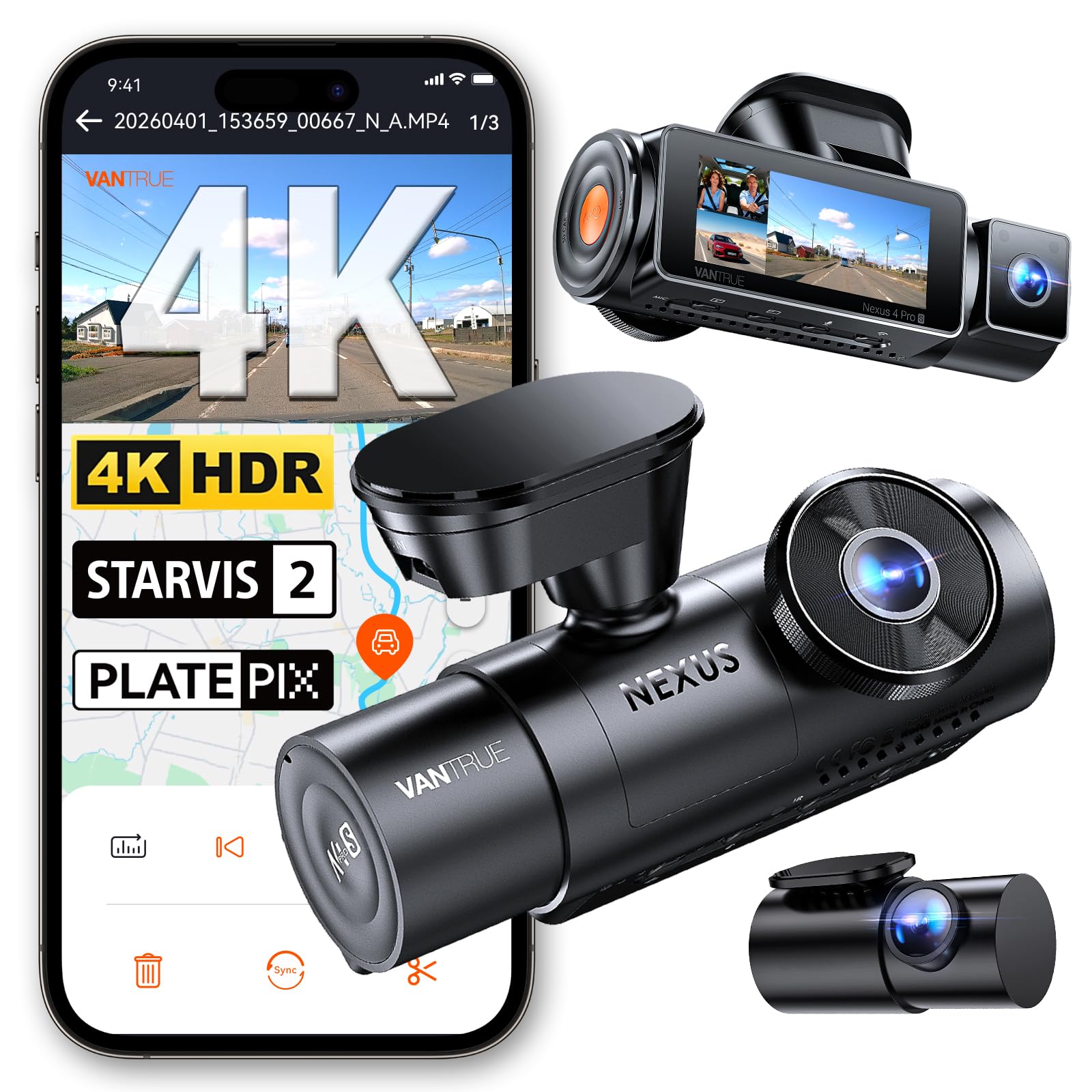
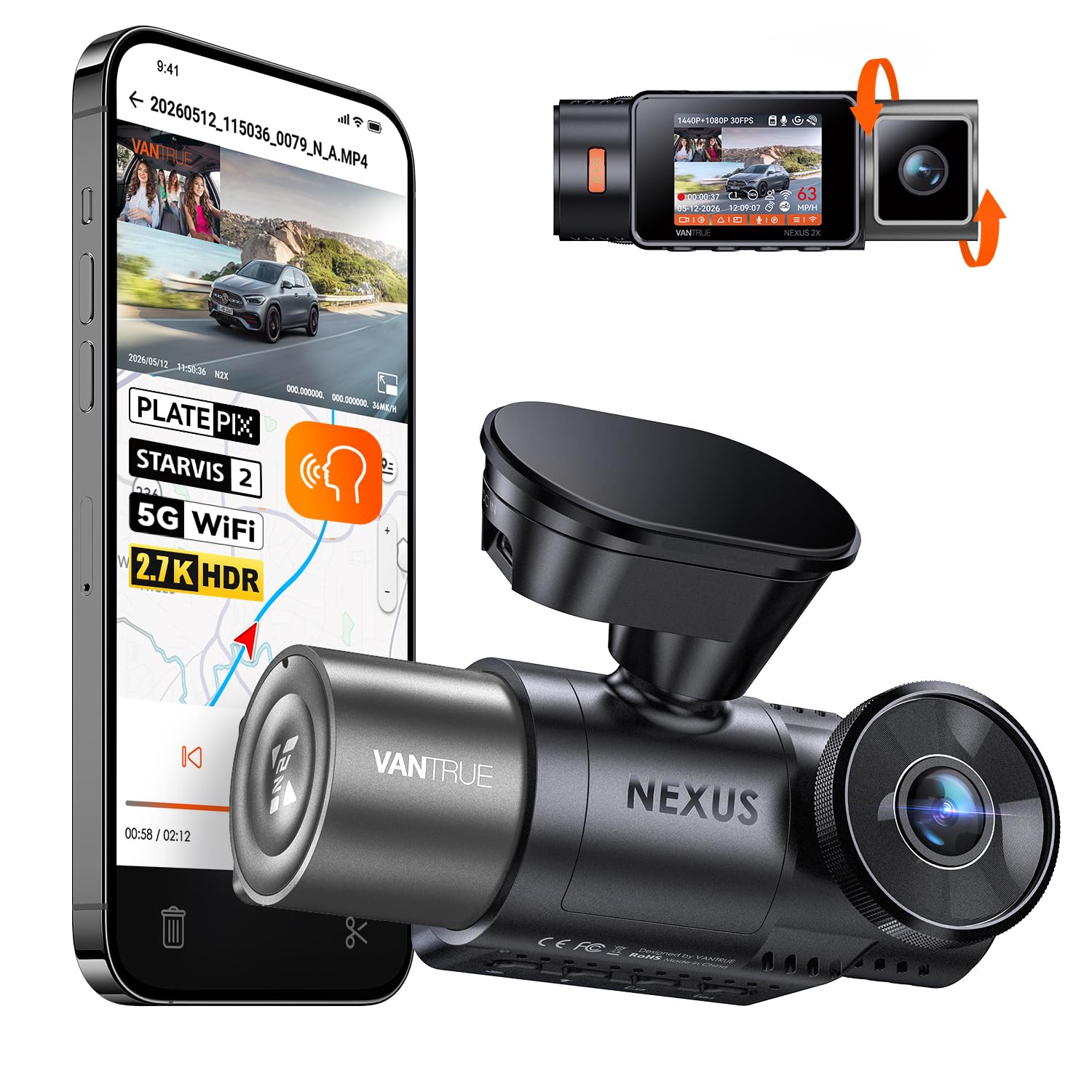
Vantrue N4 Pro S

Vantrue N4 Pro S

Night Shift Drivers

Our Score 8.6/10
Check Price

Worth Noting

Wi-Fi
5GHz
Night Vision
HDR IR, STARVIS 2
Parking Mode
Buffered, pre-record (hardwire)
Rear Resolution
1440p 2.5K

While budget 3-channel dash cams cut corners on night performance, the N4 Pro S uses a triple STARVIS 2 sensor setup — a 4K IMX678 front, 2.5K rear, and 1080p interior — to extract crisp license plates even when streetlights are sparse. Its buffered parking mode stores 10 seconds of pre-impact video, giving context to motion or impact events that simple trigger recordings miss. A supercapacitor and sturdy metal-like housing contribute to glitch-free daily operation, earning its reputation as a set-it-and-forget-it recorder. Even when recording three streams simultaneously, frame rates remain steady and bitrates keep fine details legible.

Rideshare drivers, taxi operators, and parents who need interior surveillance will appreciate the cabin camera’s IR night vision and the buffered parking that triggers before impact. 5GHz Wi-Fi transfers clips quickly, and built-in GPS stamps speed and route without a phone tether. The price is premium, and no memory card is bundled — you must budget for a high-endurance card up to 1TB. Personal vehicle owners who only want front and rear coverage may find the extra camera and cost unnecessary; a simpler dual-channel kit will save money without sacrificing exterior evidence quality. The 18-month warranty and consistent owner satisfaction make this a solid long-term guardian.

Tip: Choose a U3/V30-rated high-endurance microSD card to handle continuous 4K front and 2.5K rear writes, preventing file corruption.

Bottom line: The Vantrue N4 Pro S is a surveillance-first 3-channel system that excels at night and parking security — just accept that you’re paying for interior coverage you likely only need if you carry passengers.

5

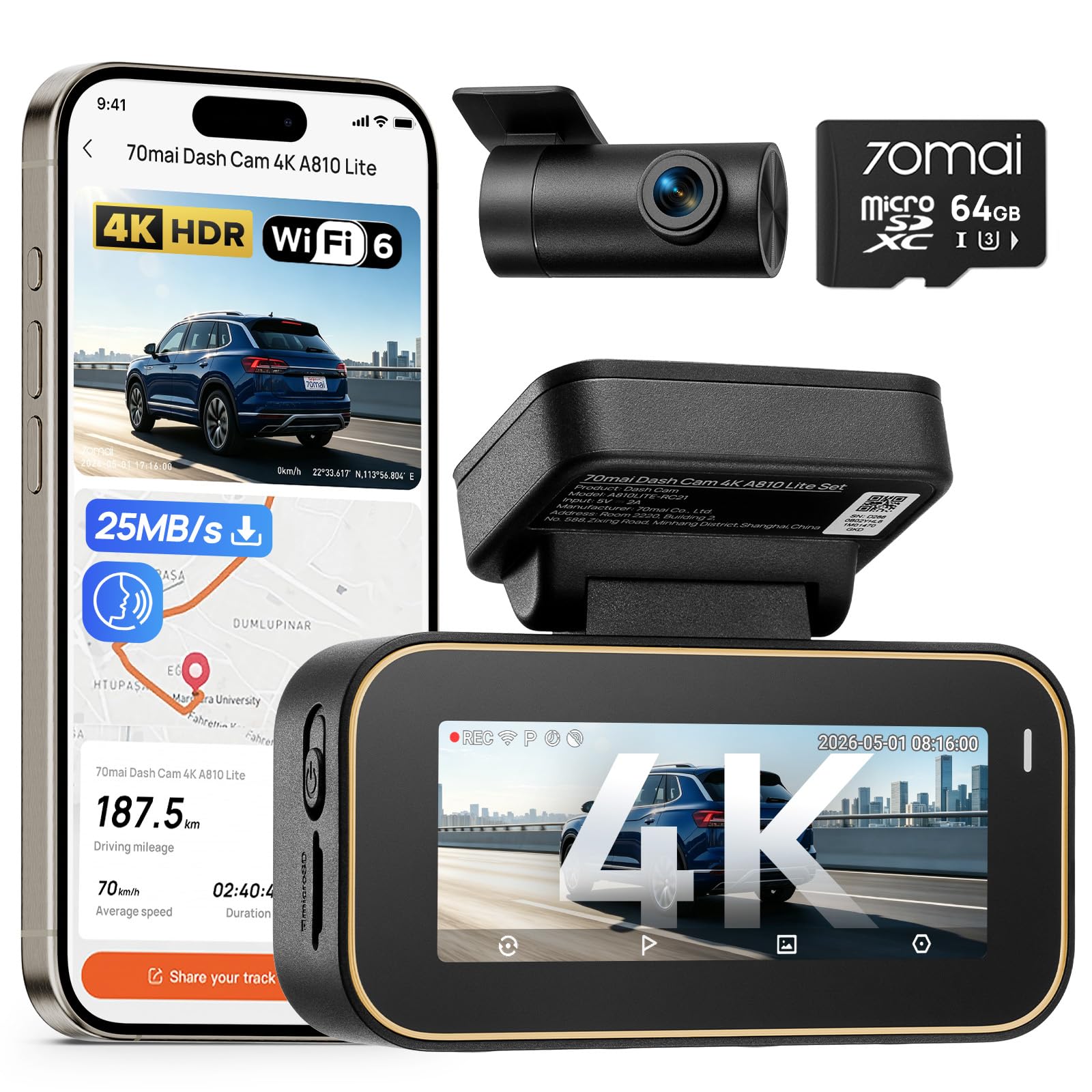
70mai A810 Lite

70mai A810 Lite

Tech-Forward Drivers

Our Score 9.0/10
Check Price

Worth Noting

  • 4G LTE remote monitoring requires the separate UP05 hardwire kit and a permanent power connection
  • The 3.18-inch display makes on-camera playback and menu navigation tedious without the smartphone app.
Wi-Fi
Wi-Fi 6, 25MB/s
Night Vision
HDR, F1.55
Parking Mode
24H time-lapse (hardwire)
Rear Resolution
1080p

Unlike most dash cams that only record while you drive, the 70mai A810 Lite transforms into a remote surveillance hub when paired with the optional UP05 hardwire kit — giving you live camera views, GPS-based location tracking, and instant collision alerts sent to your phone over 4G LTE. Built-in Wi-Fi 6 pushes 4K clips to your device at up to 25MB/s, leaving older 2.4GHz systems behind. The credit-card-sized body tucks behind the rearview mirror, and the 140° front lens captures a wide, distortion-controlled view.

Daytime 4K footage from the F1.55 aperture sensor is sharp, pulling legible license plates and road signs without struggle. The supercapacitor power design tolerates parked interior heat without the swelling risk of lithium batteries, and HDR night video balances headlight glare against shadowed road shoulders. Rear 1080p video is functional for context but won't match the front resolution, and the 3.18-inch screen makes on-camera playback a cramped experience best reserved for quick checks.

This setup clicks with urban commuters who want to check their parked car remotely, rideshare drivers needing live interior oversight (with an optional cabin cam), and anyone who wants fast wireless downloads. The trade-off is that long-term multi-year durability has not yet been observed across a wide owner base, so buyers who prioritize a well-worn, time-tested reliability track record may find more comfort in the top pick. If you plan to rely on the display or physical buttons for daily control, the small screen and app-centric design will feel limiting.

Tip: The 4G LTE remote functions require the UP05 hardwire kit and a compatible data SIM; factor that cost and installation into your budget from the start.

Bottom line: For drivers who want a dash cam that can grow into a connected security sentinel, the A810 Lite delivers an uncommon feature set at a reasonable price — just plan on the extra hardware for the full remote experience.

6

VIOFO A229 Plus

VIOFO A229 Plus

Evidence Purists

Our Score 8.8/10
Check Price

Worth Noting

  • Front power cable may be too short for larger SUVs or trucks.
  • Wi-Fi pairing can be intermittent; some owners need to reconnect periodically.
  • Rear camera can stop functioning or the unit may power off unexpectedly, requiring a reset.
Wi-Fi
5GHz
Night Vision
Dual HDR, F1.5
Parking Mode
Buffered, time-lapse (hardwire)
Rear Resolution
1440p

Dual STARVIS 2 sensors with HDR on both channels deliver reference-grade 1440p detail in a compact, stealthy design. The front unit's matte finish tucks behind the rearview mirror, and the 2.4-inch screen can be set to turn off while driving, keeping the setup discreet. Setup is aided by multiple mount options and a well-organized cable kit, though the rear camera cable routing requires patience. 5GHz Wi-Fi transfers clips fast, and the menu system is logical enough that firmware updates feel routine.

This camera appeals to drivers who treat footage as evidence first and are willing to invest a little time in setup and maintenance. Wi-Fi may need an occasional re-pair, and checking the rear camera feed after a bumpy road is a smart habit. Shoppers who want a zero-interaction, set-and-forget dash cam will find the VIOFO A229 Plus too hands-on, but purists who value dual-channel HDR clarity accept the tradeoff happily.

Parking mode offers three configurations—buffered auto event detection, time-lapse, and low-bitrate continuous recording—all requiring the VIOFO HK4 hardwire kit, sold separately. The supercapacitor withstands hot summer interiors without degradation better than a battery, and the quad-mode GPS tags video with speed and location accurately.

Tip: Measure the cable path from front to rear before installation; longer aftermarket USB-C cables are available for larger vehicles.

Bottom line: For the detail-obsessed driver who sees a dash cam as a forensic tool, the VIOFO A229 Plus delivers unmatched clarity in its class—just plan to keep firmware current and accept that rear camera connectivity may occasionally need attention.

7

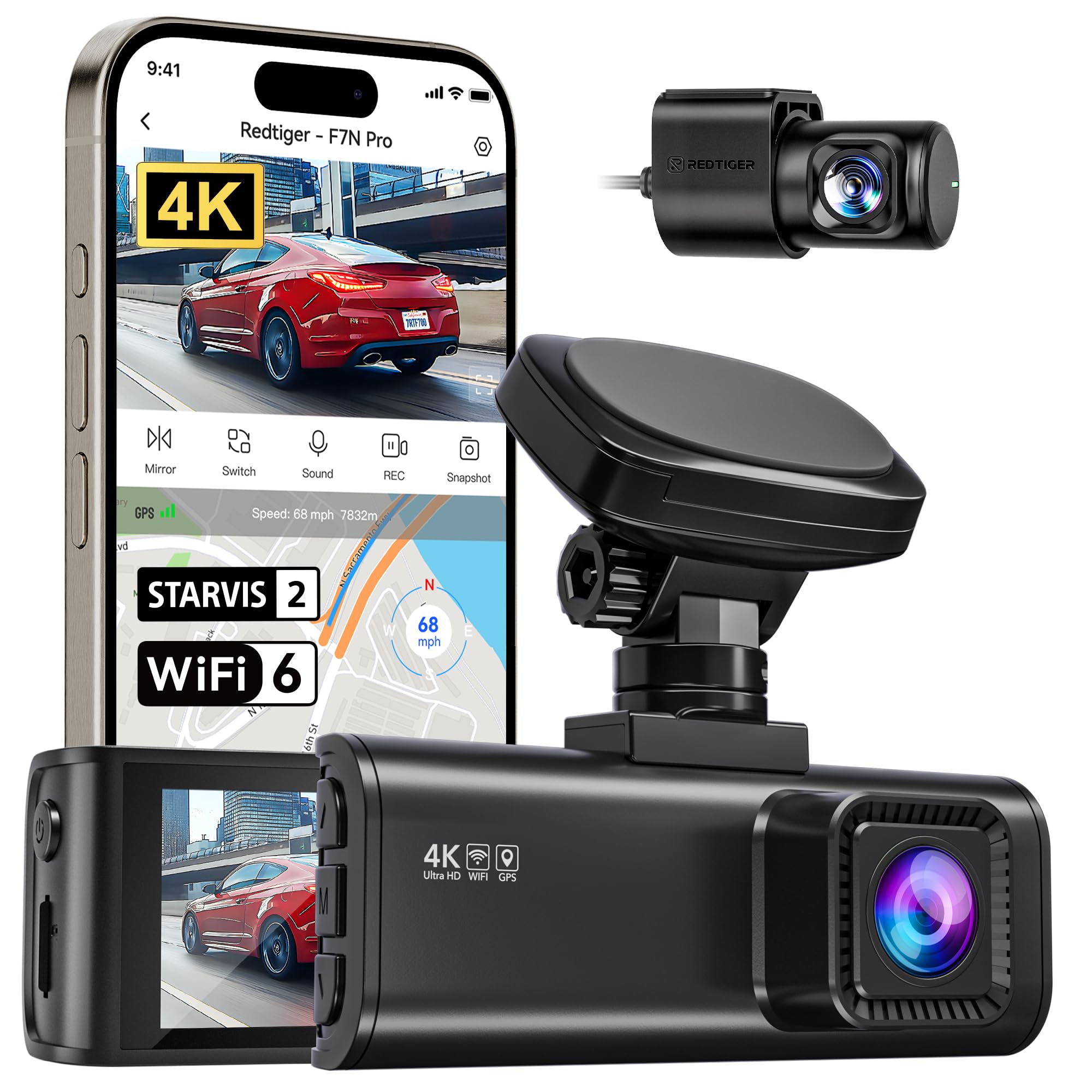
REDTIGER F7N Pro

REDTIGER F7N Pro

Budget Seekers

Our Score 9.0/10
Check Price

Worth Noting

  • No memory card included; you must buy one separately before recording
  • Parking mode requires a separate hardwiring kit and installation, so 24-hour protection isn’t plug-and-play
Wi-Fi
Wi-Fi 6
Night Vision
F1.5, STARVIS 2
Parking Mode
24H time-lapse (hardwire)
Rear Resolution
1080p

The REDTIGER F7N Pro captures sharp 4K front and 1080p rear footage using a STARVIS 2 sensor, delivering clear daytime and decent night clips at a budget-friendly price. Installation is easy, with a discreet form that tucks cables away nicely. The built-in Wi-Fi can be unreliable for phone transfers, making direct access via the microSD card a more consistent method — a workable trade-off if you already intended to pull the card. Just remember, no memory card comes in the box.

Bottom line: The F7N Pro is a sensible entry point for a first-time dash cam buyer who already owns a microSD card and doesn’t mind skipping app-based downloads — it delivers solid core performance for very little money, but look elsewhere if you want an all-inclusive kit or seamless Wi-Fi.

8

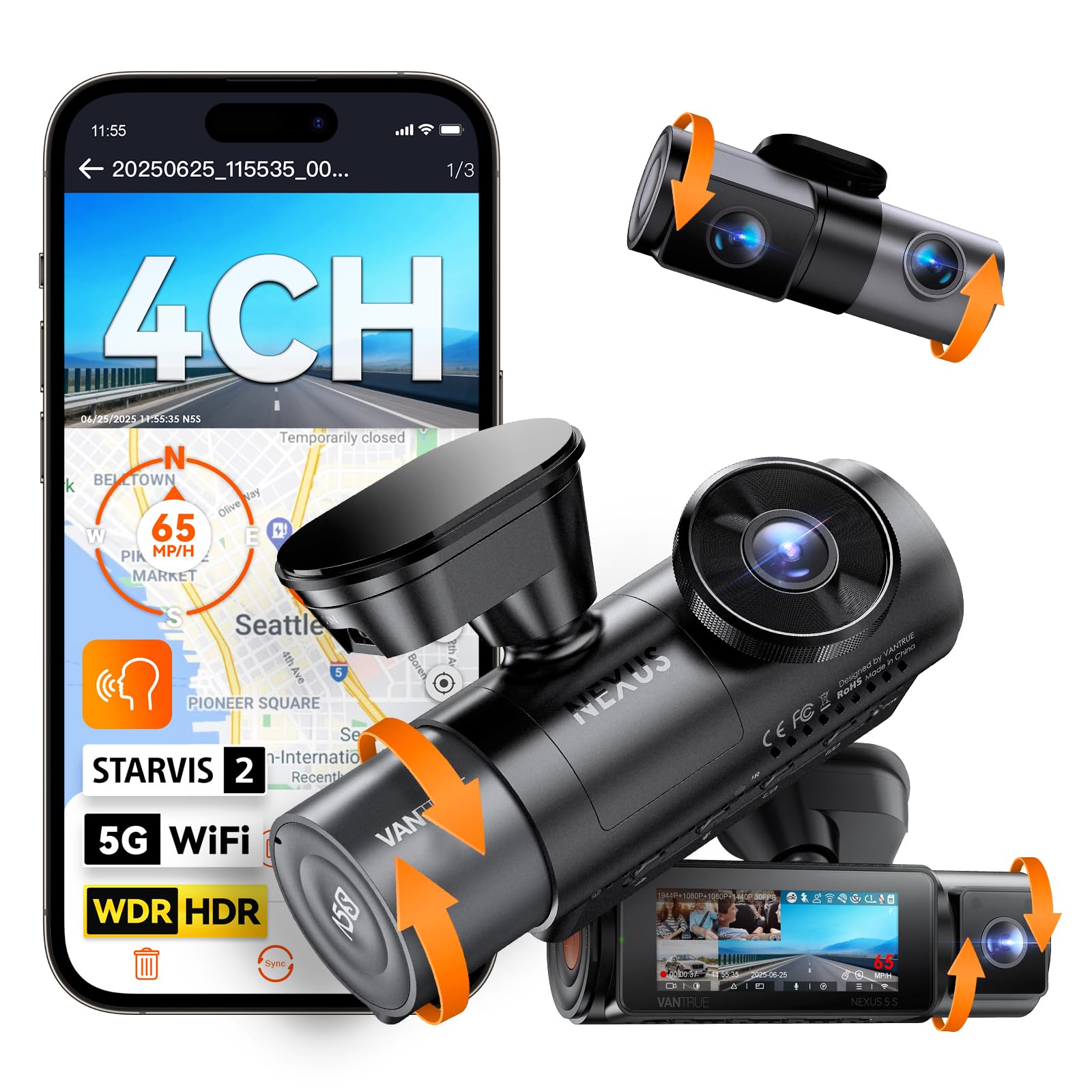
Vantrue N5S

Vantrue N5S

Full-Coverage 360°

Our Score 8.4/10
Check Price

Worth Noting

  • Some units may experience rear camera dropouts or full system resets after weeks of use.
Wi-Fi
5GHz
Night Vision
IR, STARVIS 2
Parking Mode
Buffered, time-lapse (hardwire)
Rear Resolution
1440p

The Vantrue N5S is the only consumer dash cam offering four synchronized cameras — 2.7K front, dual 1080p interior, and 1440p rear — powered by STARVIS 2 sensors and dual GPS for true 360° surveillance that leaves no blind spots entirely. The installation, though complex, results in a tidy cable run, and voice control plus a responsive app make daily operation simple. At this premium price, reliability variance can be disappointing: some units may not deliver the consistency expected for a security device. This makes the N5S a specialized tool for large vehicle owners or rideshare drivers who need complete coverage and can accept periodic attention to camera function.

Bottom line: The Vantrue N5S fits owners of vans, SUVs, or rideshare vehicles who need camera coverage on all four sides and are willing to check on the system periodically to ensure it's recording properly.

9

70mai T800E

70mai T800E

Budget 3-Channel

Our Score 9.0/10
Check Price

Worth Noting

  • Phone app may lose connection and require re-pairing, making on-the-go footage transfers frustrating.
  • Recording can unexpectedly stop, leaving potential gaps when you need evidence most.
Wi-Fi
Wi-Fi 6, 10MB/s
Night Vision
F1.55, STARVIS 2
Parking Mode
24H time-lapse (hardwire)
Rear Resolution
1080p

The 70mai T800E packs front, interior, and rear coverage into a dash cam that feels more expensive than its price tag. The 4K front camera delivers crisp daytime footage, while the interior and rear 1080p feeds provide reasonable clarity. Setting up is painless, and the initial app pairing guides you through basics smoothly. However, the phone app's Wi-Fi connection can be fickle, and some users have experienced random recording stoppages that leave gaps in evidence. For buyers who rely heavily on live-view or frequent phone transfers, this undermines its value. For rideshare drivers and families on a budget who primarily review footage on the SD card, the T800E offers a feature set that is hard to match at this price.

Tip: Pull footage directly from the SD card to avoid Wi-Fi frustrations, and format the card weekly to minimize recording glitches.

Bottom line: For rideshare drivers needing front, cabin, and rear views on a tight budget, the T800E offers unmatched 3-channel affordability—provided you rely on SD card retrieval and accept occasional connectivity quirks.

10

Vantrue N2X

Vantrue N2X

Rideshare Front+Interior

Our Score 8.6/10
Check Price

Worth Noting

  • Some units may eventually stop powering on after several months of use.
  • Wi-Fi connection drops can make phone-based file transfers unreliable.
Wi-Fi
5GHz
Night Vision
HDR IR
Parking Mode
24H pre-record (hardwire)
Rear Resolution

The Vantrue N2X captures detailed 2.7K footage from the front and clear infrared-lit interior video at night, both backed by STARVIS 2 sensors. The magnetic mount clicks into place without fuss, making it simple to detach the cam for security or file transfers. For the rideshare or fleet driver who needs cabin monitoring to document passenger interactions, the combination works well and undercuts many pricier 3-channel systems.

This is not a dual front+rear dash cam—it records the cabin, not the road behind you. For personal vehicle owners searching for comprehensive front and rear accident coverage, that missing rear view is a dealbreaker. Additionally, some units have exhibited an eventual inability to power on, which can undercut confidence in a witness device. If your priority is interior footage above all else, the N2X fills that role without the complexity of an extra rear cable.

Tip: When Wi-Fi struggles to maintain a stable connection, pop out the microSD card and transfer files directly to a computer for faster, stable access.

Bottom line: If you drive for a rideshare service or need to record cabin audio and video without requiring a rear-facing camera, the N2X is an affordable, easy-to-mount solution. For everyone else hunting a traditional front/rear dash cam, this is the wrong tool.

11

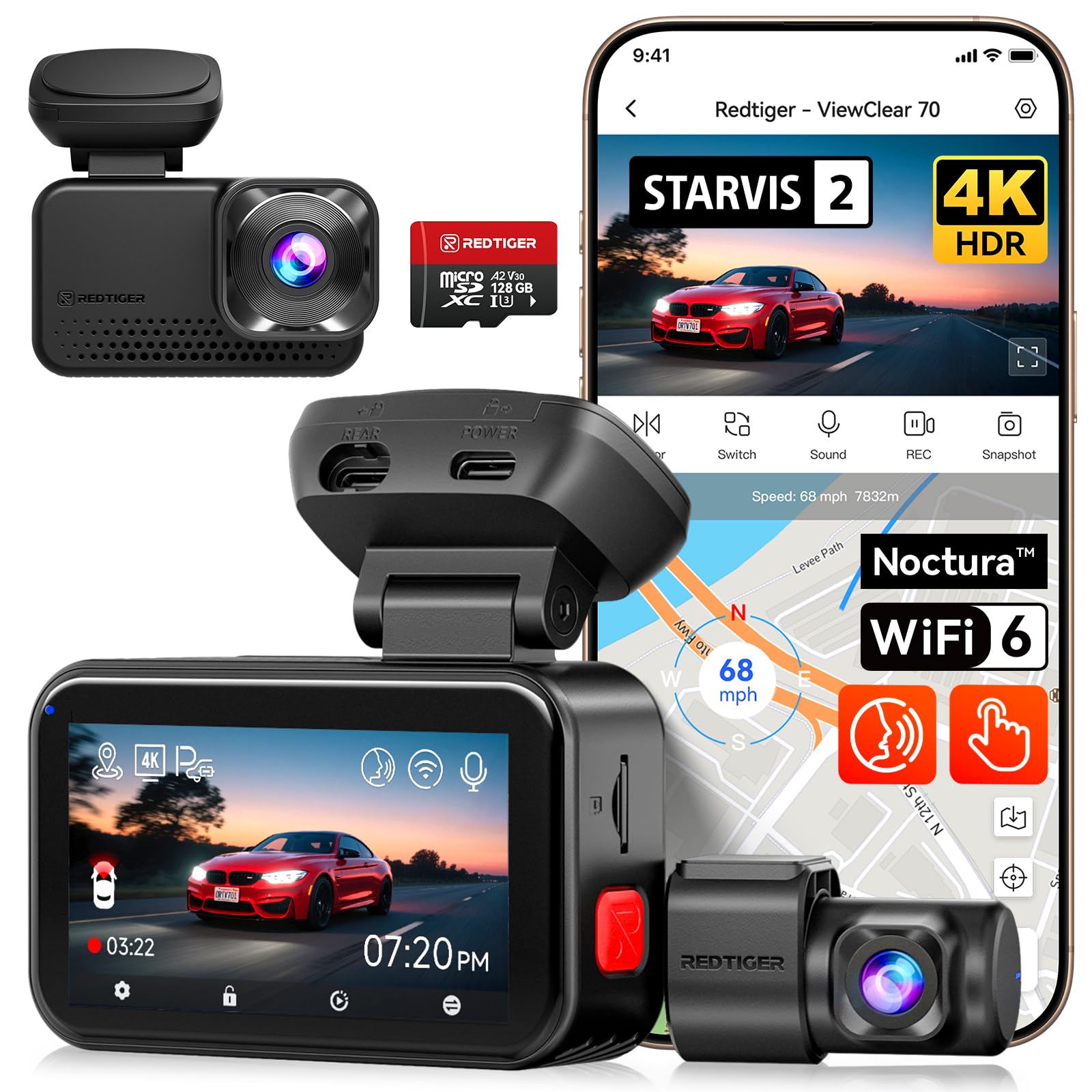
REDTIGER VC70

REDTIGER VC70

Early Adopters

Our Score 8.6/10
Check Price

Worth Noting

  • The rear camera is designed for interior mounting and may not withstand exterior elements, limiting placement for pickups or open-bed vehicles.
Wi-Fi
Wi-Fi 6, 30MB/s
Night Vision
Dual HDR
Parking Mode
24H time-lapse (hardwire)
Rear Resolution
1440p 2.5K

The REDTIGER VC70 pairs an uncommon IMX678 and OS04J10 dual-HDR sensor combination with Wi-Fi 6 transfers, delivering sharp 4K front and 2.5K rear footage straight from the box with a generous 128GB card. Dual HDR helps preserve detail in high-contrast scenes, and the touchscreen interface keeps settings accessible. Long-term durability and firmware maturity are still emerging, so choosing this means accepting some early-adopter unknowns rather than a known, battle-tested recorder. For those wanting cutting-edge night clarity specs and fast phone downloads, the VC70 makes sense as a calculated experiment, not a conservative pick.

Tip: Mount the rear camera inside the cabin; it isn't rated for direct weather exposure, so pickup bed installations aren't supported.

Bottom line: For sedan and SUV owners comfortable with early-adopter risk, the VC70 offers a dual-HDR sensor kit and Wi-Fi 6 speed that rivals more expensive setups, but those needing a weatherproof rear camera or a long-proven track record should look elsewhere.

12

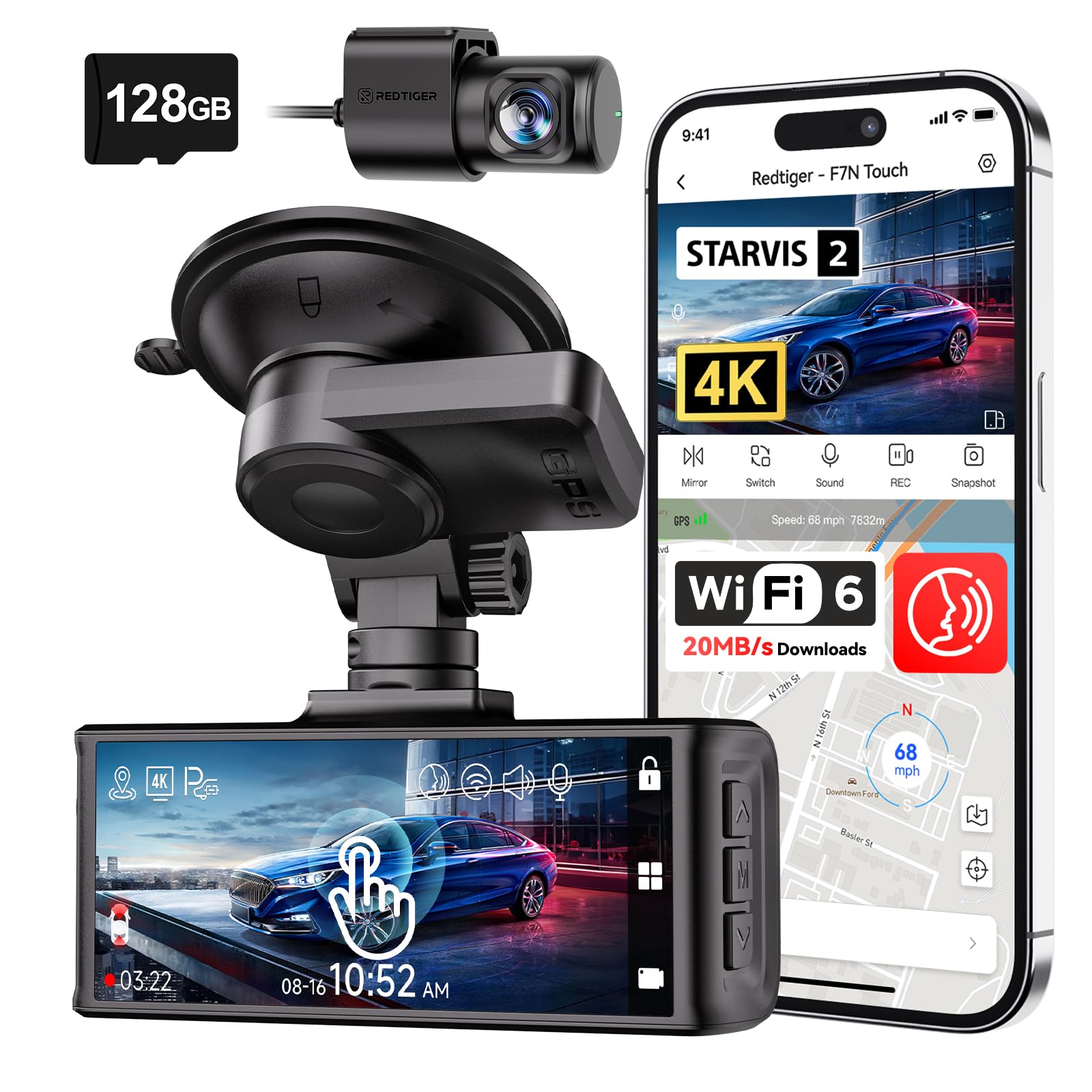
REDTIGER F7N Touch

REDTIGER F7N Touch

Touchscreen Fans

Our Score 8.8/10
Check Price

Worth Noting

  • Wi-Fi connectivity may prove difficult
  • In high-temperature conditions, the camera has been known to shut down or lose rear camera feed, casting doubt on long-term heat resilience.
Wi-Fi
5GHz, 20MB/s
Night Vision
Parking Mode
24H 2 modes (hardwire)
Rear Resolution
1080p

The F7N Touch puts its best foot forward with a sharp 3.18-inch touchscreen that responds quickly and supports voice commands for hands-free control. The 4K front camera captures detailed daytime video, and the included 128GB card lets you record out of the box. Installation is quick and frustration-free, especially in sedans and crossovers.

The camera's connectivity side is less steady — Wi-Fi pairing can be difficult to establish and maintain, making on-the-go clip retrieval more of a chore than it should be. In high heat, some units have shut down or lost the rear camera feed, which raises durability concerns for summer use. A confusing spec sheet lists maximum card support as 64GB despite the included 128GB card, sometimes requiring a manual override to use the full capacity.

Bottom line: For sedan and small-SUV owners who prioritize a responsive touchscreen and voice control and are prepared to tolerate occasional Wi-Fi hiccups and some heat-related durability risk, the F7N Touch delivers strong daytime 4K video and a polished in-cabin experience.

How to Choose

Front Resolution and Sensor

A 4K label doesn't guarantee sharp evidence. The sensor behind the lens determines how much detail survives compression, especially in low light. Look for Sony STARVIS 2 sensors (IMX675 or IMX678) paired with a wide f/1.5–f/1.8 aperture—this combination pulls clean, legible frames even when headlight glare is brutal, while cheaper sensors smear details into noise.

Beware of dash cams that overload a weak processor with 4K at high frame rates; they often overheat or drop frames. A well-tuned 1440p HDR setup can actually deliver more usable evidence than a poorly executed 4K.

Rear Resolution

Many dual-channel kits cut the rear camera to 1080p, which is fine for capturing a following car's color and general movements but often misses license plates. If you want rear identification that holds up in court, a true 1440p rear sensor makes a measurable difference—but it requires more processing power and generates larger files that stress the memory card.

Night Vision

Night performance hinges on the sensor's light sensitivity and HDR processing. STARVIS 2 sensors with HDR can equalize headlight bloom and reveal shadowed plate details, but only if the lens aperture is wide enough. An f/1.5 lens lets in roughly twice as much light as an f/2.0 lens, drastically improving nighttime legibility.

Full-color night promises often look great in marketing but rely on strong ambient lighting; in true darkness, infrared-assisted cameras with HDR tuned for low light are more reliable for capturing fine text.

Wi-Fi Performance

Wi-Fi speed is more about download consistency than the labeled bandwidth. Real-world transfer speeds rarely hit advertised peaks because phone antennas and interference cut throughput. Look for dual-band 5GHz or Wi-Fi 6 with a stable pairing process—frequent reconnects or forced disconnection indicate weak chipset coding. If you plan to pull footage regularly, a model that supports fast SD-card reader access may be a smarter backup than relying solely on app transfers.

Parking Mode

Parking mode almost always requires a separate hardwire kit that taps into the vehicle's fuse box—this is not a trivial install. Without it, the camera draws zero power when the ignition is off. Choose a model with at least two modes (time-lapse and impact-detection) and, if possible, a buffered pre-record that captures the seconds before a trigger, so you don't miss the moment a door ding happens.

Included Storage

A bundled memory card saves an immediate extra purchase, but pay attention to the card's quality class and the camera's maximum supported capacity. Some brands ship generic cards that can't sustain 4K writes, leading to corrupted files. A high-endurance card rated for continuous recording (U3 V30 minimum) is essential; if the included card is unbranded, budget for a replacement.

Build and Heat Tolerance

Dashboards regularly exceed 150°F in summer sun. Lithium-polymer batteries swell and fail under that heat, so always choose a supercapacitor-based camera. Supercapacitors discharge quickly but tolerate temperature extremes. Even with a supercapacitor, poor internal heat dissipation can still cause shutdowns, so models with proven thermal track records in owner reviews are the safest bet.

Frequently Asked Questions