Car & GPS

13 Best Car Battery Maintainer of 2026: Models That Actually Last

Find a reliable battery maintainer that won't die within months. This guide helps you pick based on battery size, chemistry, and proven longevity.

A battery maintainer that stops working after a few months isn't much of a value, no matter how cheap it was. Across the category, early failure is the most common complaint, even from well-known brands.

The real trade-off is between advanced features like lithium compatibility and high amperage versus proven long-term reliability. Some packs deliver impressive specs on paper but fail to hold up through a single off-season.

This guide cuts through the noise by focusing on the models that combine the right amperage for your battery with a track record of actually staying alive. The recommendations are built around what matters: keeping your battery ready when you are.

1

Battery Tender 3A 6V/12V

Top Pick
Battery Tender 3A 6V/12V

Cars & trucks

Our Score 9.6/10
Check Price

Worth Noting

  • Slightly larger than lower-amperage maintainers; verify clearance in tight spaces
  • Single-bank output; cannot maintain two batteries at once
Banks
1
Amperage
3A
Warranty
5 years
Chemistry
Lead-acid, lithium

This 3A maintainer handles both 6V and 12V batteries, supports lead-acid and lithium chemistries, and uses adaptive charging to prevent overcharging. The spark-proof design and five-year warranty reflect the build quality that makes this the most reliable option in Battery Tender's lineup.

For most car and truck owners, the 3A output is sufficient to maintain a standard battery without being overkill. It also works on motorcycles and powersports equipment thanks to the voltage selector. The unit is slightly bulkier than 0.75A or 1.25A maintainers, so it may not fit in ultra-compact storage spots. If you need to maintain two batteries simultaneously, look at a dual-bank model instead.

Tip: The ring terminals and clamps are included; the slightly larger housing is a fair trade for the extra power and chemistry support.

Bottom line: For anyone who wants one maintainer for multiple vehicles – cars, motorcycles, or ATVs – this is the most capable and reliable single-bank option.

2

Battery Tender Jr 750mA

Battery Tender Jr 750mA

Motorcycles & ATVs

Our Score 9.6/10
Check Price

Worth Noting

  • 750mA output is too slow to charge a deeply discharged car battery.
Banks
1
Amperage
0.75A
Warranty
5 years
Chemistry
Lead-acid only

For motorcycles, ATVs, and seasonal equipment, the Junior provides consistent charging with automatic float mode to prevent overcharging. Its 0.75A output is too weak for any car battery – that's where the 3A model in this guide is more appropriate. This unit handles only lead-acid batteries, not lithium.

Tip: Connect to a fully charged battery for maintenance; it cannot recover a dead car battery.

Bottom line: The Battery Tender Junior is the top choice for maintaining small lead-acid batteries – just not for cars.

3

BT Plus 2 Bank 2.5A

BT Plus 2 Bank 2.5A

Dual batteries

Our Score 9.6/10
Check Price

Worth Noting

Banks
2
Amperage
1.25A per bank
Warranty
2 years
Chemistry
Lead-acid, lithium

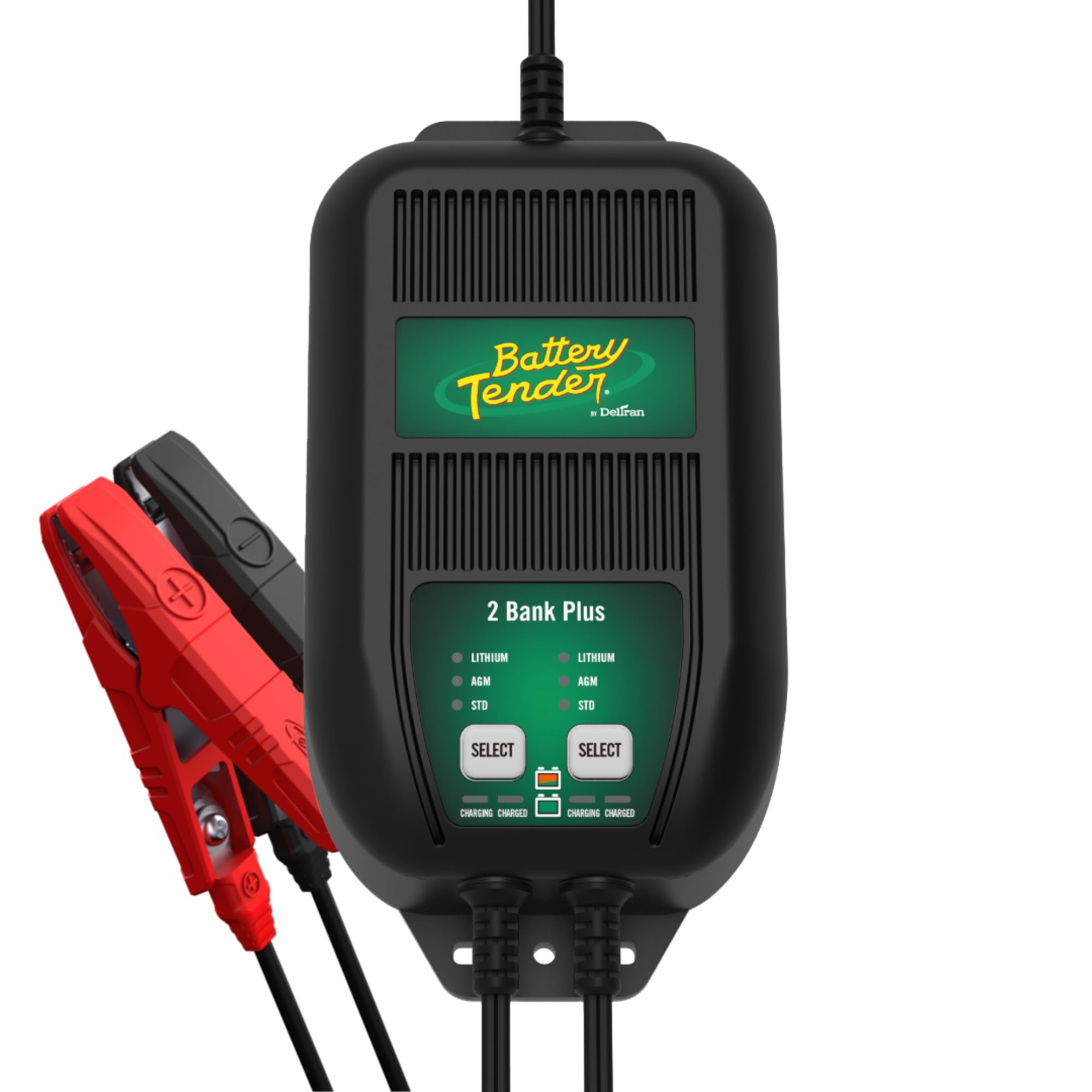
The Battery Tender Plus 2 Bank charges two independent batteries simultaneously at 1.25A per channel, supporting both lead-acid and LiFePO4 chemistries. This dual-bank approach suits owners of two powersports vehicles or boats with separate start and house batteries. The low per-bank amperage means it's best for small to medium batteries — not for large deep-cycle banks.

Bottom line: For dual-battery setups where each battery is small to medium, this is the most practical maintainer — just don't expect it to revive deeply discharged large batteries.

4

NOCO GENIUS10 10A

NOCO GENIUS10 10A

Large vehicles

Our Score 9.2/10
Check Price

Worth Noting

  • Proprietary X-Connect adapters limit accessory flexibility for some setups.
  • A number of units may stop charging properly within the first few years of use.
Banks
1
Amperage
10A
Warranty
3 years
Chemistry
Lead-acid, lithium

The NOCO GENIUS10 delivers 10A of charging current, enough to quickly bring a large SUV or truck battery back from deep discharge. It handles both lead-acid and lithium chemistries, with a compact body that fits easily in a glovebox or garage drawer. The force mode lets you manually start charging on batteries below 1V, a useful trick for neglected vehicles.

For drivers who park a big rig or store a boat with dual batteries, this is the obvious pick over the top pick’s 3A – the extra amperage cuts recovery time significantly. The tradeoff comes in the form of occasional connector issues with the X-Connect adapters, and long-term reliability is less settled than the Battery Tender alternative. That makes the GENIUS10 best suited for buyers who want raw charging speed and are comfortable with a slightly higher degree of unit variation over the years.

Tip: Use the included eyelet ring terminals for a permanent connection and avoid repeated plug/unplug strain on the X-Connect connectors.

Bottom line: If you need 10A for a large battery and can accept occasional connector quirks, the GENIUS10 is the fastest charger here – just be aware that long-term dependability is less certain than the top pick.

5

CTEK MXS 5.0 4.3A

CTEK MXS 5.0 4.3A

Classic cars

Our Score 9.4/10
Check Price

Worth Noting

  • No lithium battery support - limited to lead-acid and AGM only.
  • Premium price compared to other 4.3A maintainers may not be worthwhile for basic upkeep.
Banks
1
Amperage
4.3A
Warranty
5 years
Chemistry
Lead-acid, AGM

The MXS 5.0 uses an eight-step charging process with a reconditioning stage that can reverse sulfation in some lead-acid batteries - a feature rarely seen in this price range. Build quality is substantial, and the unit holds up well over years of garage storage. However, it does not support lithium chemistry, and the premium price may not be justified if you only need basic maintenance. This charger is best suited for owners of AGM batteries, classic cars, or other garaged vehicles that benefit from precise charging control.

Tip: Confirm your battery is lead-acid or AGM before purchasing.

Bottom line: Best for classic car owners and AGM battery users who value charging precision and a reconditioning feature.

6

BT Jr 800mA Li

BT Jr 800mA Li

Lithium motorcycles

Our Score 9.6/10
Check Price

Worth Noting

  • 800mA output restricts use to small batteries under 20Ah
Banks
1
Amperage
0.8A
Warranty
5 years
Chemistry
Lead-acid, lithium

Sub-$40 maintainer with a separate lithium mode, a feature rare at this price. It pairs consistent performance with simple plug-and-play operation. However, the 800mA output is strictly for small batteries like those in motorcycles or lawn mowers; it won't handle car batteries or significant parasitic drain. This is a focused tool for lithium battery owners who need a dedicated maintainer without paying for higher amperage they don't need.

Tip: Use only on batteries with capacity under 20Ah; higher drain or larger batteries require a higher amperage model.

Bottom line: Best suited for owners of lithium motorcycle or powersports batteries who want a simple, low-cost maintainer and don't need to charge car-sized batteries.

7

Battery Tender Plus 1.25A

Battery Tender Plus 1.25A

Compact cars

Our Score 9.4/10
Check Price

Worth Noting

  • A small number of units may lose charging capability after a few years of use.
Banks
1
Amperage
1.25A
Warranty
10 years
Chemistry
Lead-acid only

With 1.25A output and a 10-year warranty, the Battery Tender Plus improves on the Junior for compact car and powersports batteries. A small number of units may lose charging capability after a few years, but for occasional use the price is attractive. Still, the 3A model costs only $11 more and offers better dependability, so this unit is best when budget is tight.

Bottom line: Best for budget-conscious buyers maintaining small lead-acid batteries for seasonal storage, where the 1.25A rate and 10-year warranty add value despite occasional long-term variability.

8

NOCO GENIUS5 5A

NOCO GENIUS5 5A

Mid-size vehicles

Our Score 9.2/10
Check Price

Worth Noting

  • Some units may stop working within months, making long-term unattended maintenance a risk
Banks
1
Amperage
5A
Warranty
3 years
Chemistry
Lead-acid, lithium

The 5A output handles mid-size cars, SUVs, and motorcycles with lithium batteries, and desulfation helps revive deeply discharged units. Reliability, however, lags behind the Battery Tender 3A — some units have stopped working within months, so it suits occasional or non-critical use where early replacement is acceptable.

Bottom line: A capable mid-range charger if you need lithium support at 5A and accept a higher failure rate than the most reliable options.

9

Schumacher SC1280 15A

Schumacher SC1280 15A

Large trucks

Our Score 9.2/10
Check Price

Worth Noting

  • Battery indicator can be inaccurate, showing false battery faults
Banks
1
Amperage
15A
Warranty
1 year
Chemistry
Lead-acid, AGM, gel

The Schumacher SC1280 offers 15A charging speed for faster top-ups on large batteries and a digital display showing voltage and percent charge. However, its battery indicator can occasionally misdiagnose a healthy battery as faulty, it lacks lithium support, and the warranty is only one year — best suited for lead-acid systems where quick charging matters more than diagnostic precision.

Bottom line: A good fit for owners of large trucks or boats with lead-acid batteries who want a quick charger with a status display, provided the diagnostic inaccuracy is an acceptable tradeoff.

10

NOCO GENIUS2D Onboard

NOCO GENIUS2D Onboard

Permanent install

Our Score 9.2/10
Check Price

Worth Noting

  • Short AC power cord often requires an extension cord for placement.
Banks
1
Amperage
2A
Warranty
3 years
Chemistry
Lead-acid only

The NOCO GENIUS2D mounts directly on your RV or boat, maintaining the battery without garage clutter. It's compact enough for tight spaces. The 2A output may be too low for larger batteries, and the short AC cord typically needs an extension. Some units can have issues maintaining charge, and a permanent install is hard to swap if problems develop.

Bottom line: Best suited for boat or RV owners who want a set-and-forget solution and are comfortable using an extension cord. Not ideal for larger vehicles where 2A may be underpowered.

11

NOCO GENIUS2X2 Dual

NOCO GENIUS2X2 Dual

Dual batteries

Our Score 9.4/10
Check Price

Worth Noting

  • Proprietary X-Connect connectors require adapters for standard SAE accessories
Banks
2
Amperage
2A per bank
Warranty
3 years
Chemistry
Lead-acid, lithium

The NOCO GENIUS2X2 can charge two batteries at once, each with its own chemistry. However, proprietary X-Connect connectors limit accessory compatibility, and occasional durability concerns make the Battery Tender 2 Bank the safer choice for most.

Bottom line: Suits dual-battery setups where independent chemistry charging is a priority, but single-battery users and those with SAE accessories should consider the Battery Tender 2 Bank.

12

NOCO GENIUS2 2A

NOCO GENIUS2 2A

Small batteries

Our Score 9.2/10
Check Price

Worth Noting

  • 2A output limits use to small batteries; not for cars or high-drain vehicles
Banks
1
Amperage
2A
Warranty
3 years
Chemistry
Lead-acid, lithium

This NOCO delivers a full suite of features including lithium compatibility and desulfation at an entry price, but its 2A output means it is only effective for small batteries like those in motorcycles and ATVs. The compact build and easy controls add convenience for seasonal use.

Bottom line: Best for powersports and seasonal battery maintenance where amperage demand is low, but not a car battery maintainer.

13

Foval 1A Trickle

Foval 1A Trickle

Occasional use

Our Score 9.2/10
Check Price

Worth Noting

  • Some units may stop charging after a few months of use
Banks
1
Amperage
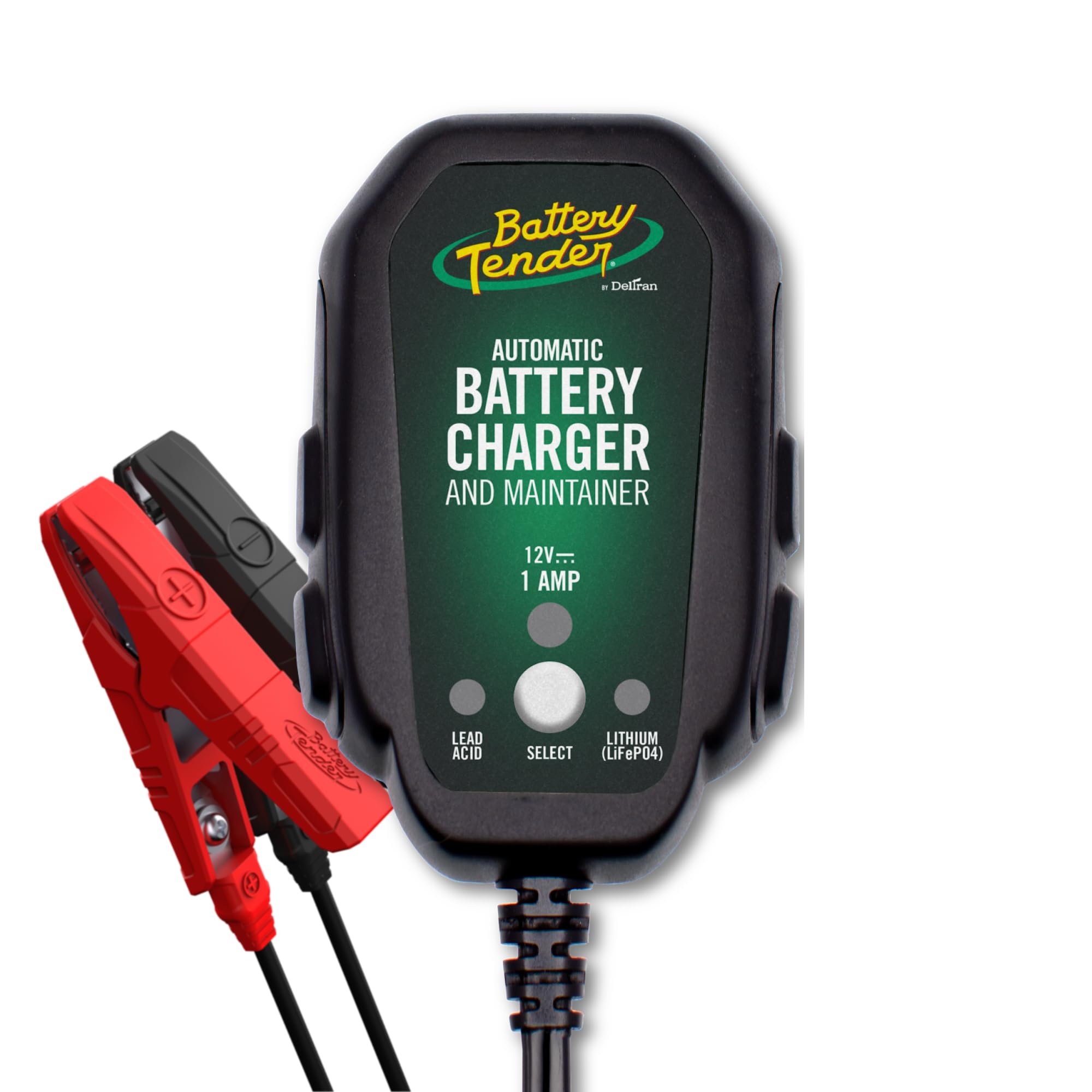
1A
Warranty
18 months
Chemistry
Lead-acid only

Extremely affordable and compact, the Foval trickle charger keeps small batteries topped up for occasional use. The 1A output handles powersports and lawn equipment batteries, but it is not intended for larger car batteries or long-term storage. Some units may stop charging after a few months, making this a disposable option for budget-conscious buyers who accept a short service life.

Bottom line: Suitable only for occasional maintenance on small batteries where a short lifespan is acceptable.

How to Choose

Amperage

Amperage determines how quickly the maintainer can replenish a battery and whether it can overcome parasitic drain from electronics in modern vehicles. A 1A unit may keep a motorcycle battery topped off, but the same unit on a sedan with alarms and computers can lose ground over weeks, especially in cold weather.

For powersports and lawn mowers, 0.75A to 1.25A is sufficient. For most cars and small SUVs, 2A to 5A is a safer bet. Large trucks or vehicles with high parasitic drain benefit from 5A or more to avoid gradual discharge.

Chemistry Support

If you own a lithium (LiFePO4) battery, the maintainer must have a dedicated lithium mode. Charging a lithium battery with a standard lead-acid profile can damage the battery or reduce its lifespan. Most budget maintainers are lead-acid only; mid-range and premium models often add lithium compatibility.

AGM and gel batteries fall under lead-acid profiles but may require specific voltage limits. Check the maintainer's compatibility list if you have a high-end AGM battery, as some chargers are optimized for flooded cells.

Number of Banks

Single-bank maintainers are the norm and work for one battery at a time. Dual-bank models allow independent charging of two batteries (e.g., a boat's start and house battery, or two motorcycles) from one AC outlet. This saves on wall space and extension cord clutter.

Each bank typically delivers lower amperage than a single-bank unit of the same total output. Ensure the per-bank amperage is adequate for each battery's needs.

Warranty Length

Warranty length often reflects the manufacturer's confidence in its product. A 5-year or 10-year warranty suggests durable components and robust design, while a 1-year or 18-month warranty may indicate lower build quality or a shorter expected lifespan.

However, a long warranty is only valuable if the company honors it. Check user reports on warranty claim experiences before relying on it as a primary buying signal.

Desulfation and Reconditioning

Desulfation uses high-frequency pulses to break down lead sulfate crystals that form on battery plates over time. This can extend the life of a sulfated battery, but it is not a miracle cure: batteries that have been deeply discharged for months or have physical damage are unlikely to recover fully.

Reconditioning modes (like CTEK's) take this further by applying a controlled overcharge cycle. Use these features sparingly and only on lead-acid batteries, as they can overheat and damage lithium or AGM batteries.

Frequently Asked Questions