Car & GPS

13 Best Car Amplifier of 2026: Real RMS Power for Your System

Find a car amplifier that delivers advertised power without overheating or failing early. From budget to premium, see which ones actually perform.

Shopping for a car amplifier often means sifting through inflated power ratings and hoping the unit doesn't overheat or die after a few weeks. Many budget-friendly amps promise huge wattage but deliver far less, while premium options cost more without always guaranteeing reliability.

The real difference comes down to how well an amplifier manages heat, delivers consistent RMS power, and holds up over time. This guide cuts through the marketing to identify amps that actually perform as advertised, across different budgets and use cases.

Whether you're building a full-range speaker system or a dedicated subwoofer setup, the right amp balances power, efficiency, and dependability — and that balance changes at every price point.

1

Rockford R2-1200X1

Top Pick
Rockford R2-1200X1

High-power subwoofer

Our Score 9.4/10
Check Price

Worth Noting

  • Single-channel output restricts it to subwoofer duty only
Class
Class D
Channels
Monoblock
RMS Power
1200W RMS
Min Impedance
1 ohm

This monoblock amplifier outputs its rated power without strain, maintaining stable performance even during extended listening sessions. The Class D design runs efficiently, generating minimal heat while delivering clean bass down to low frequencies. Build quality is solid, with components that hold up to daily use and road vibration.

The C.L.E.A.N. setup system simplifies gain adjustment by clipping detection via a clip light, removing guesswork. Punch EQ adds a 12dB boost at specific frequencies for extra impact when needed. The variable infrasonic filter helps protect subwoofers from over-excursion, and the wired remote level control lets you adjust bass from the driver seat without accessing the amp.

This amplifier is designed for enthusiasts building a dedicated subwoofer system, especially those pairing it with Rockford Fosgate subwoofers for seamless integration. The mono-only output means it cannot power full-range speakers – you will need a separate 4-channel amplifier for door speakers. It is not intended for budget-conscious shoppers or anyone looking for a single-amp solution for a complete speaker system.

Tip: Use the C.L.E.A.N. system to set gain accurately without distortion – it takes the guesswork out of amplifier setup.

Bottom line: This amp is the right choice for anyone building a dedicated subwoofer system who values genuine power and long-term reliability over budget pricing.

2

Rockford R2-500X4

Rockford R2-500X4

Full-range speaker system

Our Score 9.2/10
Check Price

Worth Noting

  • Some units may arrive non-functional or develop issues shortly after installation.
  • Bridged output is limited for subwoofer use
Class
Class D
Channels
4-Channel
RMS Power
75W x4 RMS
Min Impedance
2 ohms

The Rockford Fosgate R2-500X4 centers its appeal on the C.L.E.A.N. setup and Punch EQ, giving you tools to dial in distortion-free output and tailor the sound to your vehicle’s acoustics. Paired with a well-constructed chassis, this amp delivers clean, clear audio that makes factory speaker upgrades genuinely noticeable – the focus is on fidelity, not peak wattage.

This amplifier fits buyers who value sound quality over sheer loudness and are building a front and rear speaker system, not a subwoofer-heavy setup. The four-channel design provides 75W RMS per channel at 4 ohms, enough for crisp highs and mids, but bridged power (250W x2) is modest for deep bass – you’ll want a separate mono amp for sub duty. A small number of units have arrived non-functional or developed issues shortly after install, so immediate testing is wise.

Tip: Test the amplifier immediately after installation – a small number of units have shown early failure.

Bottom line: Best suited for listeners upgrading factory speakers who want clean sound and tuning flexibility; pair with a dedicated subwoofer amp for low end.

3

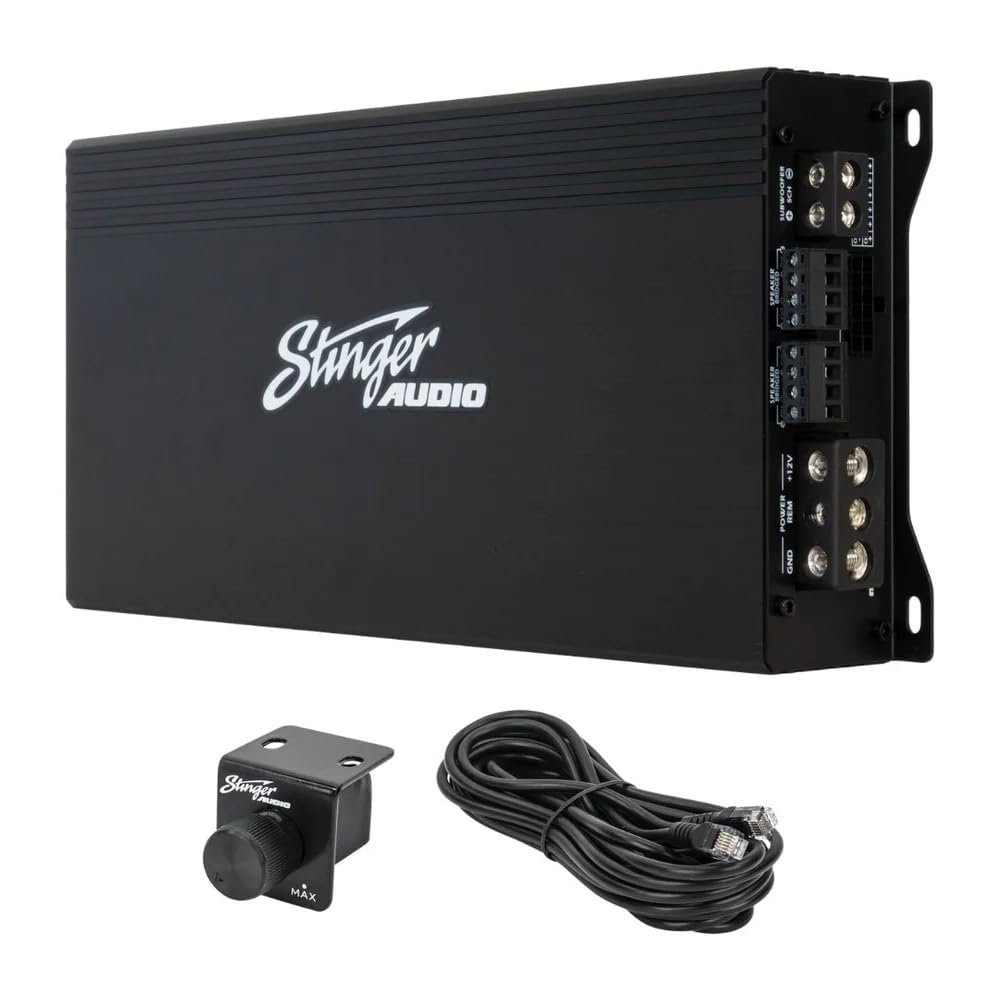
Stinger MT-1000.5

Stinger MT-1000.5

Single-amp system

Our Score 8.8/10
Check Price

Worth Noting

  • Some units may lose output after several months of use.
  • Small terminals complicate wiring with thicker gauge cable.
Class
Class D
Channels
5-Channel
RMS Power
75W x4 + 300W sub RMS
Min Impedance
1 ohm

The Stinger MT-1000.5 delivers 75W x4 plus 300W sub (700W at 1 ohm) from one compact Class D amp — simplifying wiring and saving space. Compared to premium-priced 5-channel amplifiers, this mid-range option offers similar channel count at a more approachable price.

This amp suits builders who want a straightforward all-in-one system for front and rear speakers with a moderate subwoofer in a compact car. The sub channel provides modest output, and the small speaker terminals work best with thinner power wire. Occasional early loss of output is a possibility to consider if long-term consistency is a priority.

Sound quality remains clean and distortion-free across all channels under typical loads, and the included bass knob adds convenient sub level adjustment. For the price, it covers the basics of a complete system without requiring a second amplifier.

Tip: Use 8 AWG or thinner power wire, or trim insulation carefully when connecting to the speaker terminals.

Bottom line: A practical all-in-one amp for compact builds — fits best with moderate subwoofers and standard speaker wire gauges.

4

CT Sounds CT-1500.1D

CT Sounds CT-1500.1D

Budget subwoofer power

Our Score 9.0/10
Check Price

Worth Noting

  • Some units may underperform or stop working prematurely.
  • Audiophile listeners will find the sound lacks detail and subtlety.
Class
Class D
Channels
Monoblock
RMS Power
1500W RMS
Min Impedance
1 ohm

The CT Sounds CT-1500.1D offers genuine 1500 watts RMS at 1 ohm for under $200, outpacing many competitors at similar price points. While the Rockford Fosgate R2-1200X1 provides more consistent build quality, this CT Sounds amp matches it in raw output for less. It runs cooler than expected under load, and the bass is punchy without distortion.

This amp is best suited for budget-focused builds where maximum wattage is the priority. The occasional unit may underperform or stop working prematurely, so buyers who need unwavering dependability should look elsewhere. It also lacks the refinement for audiophile-grade systems; its strength is sheer power, not subtlety.

For those who accept the QC variance, the CT-1500.1D delivers impressive output for the money. The cooling design means it won't shut down during extended listening sessions, and the Class D efficiency keeps current draw manageable. The included bass knob adds convenience for adjusting subwoofer level from the driver seat.

Tip: Test the amp immediately upon arrival and during the return window to verify performance.

Bottom line: For budget-focused builds where maximum power per dollar is the goal, the CT-1500.1D delivers — just factor in the QC variance.

5

Kenwood KAC-M3001

Kenwood KAC-M3001

Compact marine install

Our Score 9.0/10
Check Price

Worth Noting

  • Rated at 300W RMS
  • Rated only down to 2 ohms
Class
Class D
Channels
Monoblock
RMS Power
300W RMS
Min Impedance
2 ohms

The Kenwood KAC-M3001 packs 300W RMS into a chassis just 3.9 inches wide — small enough to fit under a seat or inside a glovebox. Its marine certification means it shrugs off moisture and vibration where a standard amp would fail, making it the obvious choice for boats, ATVs, and motorcycles.

Class D efficiency keeps the unit running cool even during extended play, and the PWM MOSFET power supply delivers consistent output. Owners note that it outperforms expectation given its size — a 10-inch sub in a sealed enclosure sounds punchy and controlled, not anemic.

This amp targets anyone working with extreme space constraints or harsh environments. If you need to power a small subwoofer in a Jeep, a marine audio system, or a custom compact enclosure, the KAC-M3001 fits. The tradeoff is clear: 300W RMS means it cannot drive large subwoofers or compete with full-size mono blocks like the Rockford Fosgate R2-1200X1.

Tip: Pair with a 2-ohm subwoofer to access the full 300W RMS output.

Bottom line: For marine, ATV, or ultra-compact car builds where every inch counts, the KAC-M3001 delivers surprisingly clean power in a weather-resistant shell.

6

Pioneer GM-A6704

Pioneer GM-A6704

Entry-level speaker upgrade

Our Score 8.8/10
Check Price

Worth Noting

  • Occasional channel static or dropout reported in some units
  • Runs warm under sustained high-volume use, limiting placement options
Class
Class A/B
Channels
4-Channel
RMS Power
60W x4 RMS
Min Impedance
4 ohms

The Pioneer GM-A6704 stands out among budget four-channel amps for its ability to reproduce vocals and instruments with clarity that belies its cost. The 60W RMS per channel at 4 ohms is modest, but the amplifier focuses its resources on sound quality rather than peak power numbers — a tradeoff that pays off for speaker upgrades.

Heat buildup is a real consideration: under extended high-volume use the chassis can become quite warm, making this a better fit for shorter listening sessions or vehicles with good airflow. A small number of units have also exhibited intermittent static or channel dropouts — these appear to be unit-specific rather than a design flaw, but verifying operation shortly after installation is sensible.

This amp suits beginners who want to power a set of coaxial or component speakers without breaking the bank, and who value Pioneer’s track record for consistent performance. It is not intended for driving a subwoofer (the bridged output is 190W x2, adequate for shallow subs but far from heavy bass), nor for installations where the amp will be tucked into a tight, unventilated space.

Tip: Mount the amp in a location with passive airflow and avoid tucking it under carpet or behind panels where heat can build up.

Bottom line: A cost-effective choice for listeners who prioritize vocal clarity over bass output; skip it if you need an amp for subwoofers or extended high-power sessions.

7

Skar RP-1200.1D

Skar RP-1200.1D

Budget subwoofer power

Our Score 9.2/10
Check Price

Worth Noting

  • Amplifier may run warm in some setups; adequate ventilation is important.
  • Some units cease functioning within weeks of purchase.
Class
Class D
Channels
Monoblock
RMS Power
1200W RMS
Min Impedance
1 ohm

The Skar RP-1200.1D delivers genuine 1200W RMS at 1 ohm for a budget-friendly price, offering clean bass output that satisfies subwoofer-focused builds. However, some units may stop working within weeks, and the amplifier can run hot in certain installations — especially without adequate airflow. It matches the top pick's power output but carries more durability concerns, and its slight price advantage isn't enough to outweigh that risk. This amp suits bass enthusiasts on a tight budget who are willing to accept possible early replacement and can provide proper ventilation.

Tip: Leave at least 2 inches of clearance around the amp and avoid under-seat mounting to reduce heat buildup.

Bottom line: Best for budget-conscious bass enthusiasts who can provide cooling and accept the possibility of early unit replacement.

8

Rockford P1000X5

Rockford P1000X5

Premium all-in-one

Our Score 9.2/10
Check Price

Worth Noting

  • Can run warm in tight spaces, requiring extra ventilation.
  • Premium price limits its appeal to those seeking high power-per-dollar.
Class
A/B + BD
Channels
5-Channel
RMS Power
75W x4 + 150W sub RMS
Min Impedance
1 ohm

This five-channel amp provides clear, noise-free audio for a full system of four speakers and a subwoofer, with the C.L.E.A.N. tuning system simplifying gain adjustment. Build quality and sound separation are above what most multi-channel amps offer at this price tier. However, the nearly $700 cost places it firmly in audiophile territory, and the amp can generate noticeable heat in tight installs - adding ventilation space is necessary. For buyers seeking raw power per dollar or a more budget-friendly setup, alternatives exist that better match those priorities.

Tip: Allow at least 2 inches of clearance around the heatsinks to manage heat output during extended operation.

Bottom line: Best for audiophiles building a single-amp system who prioritize sound quality over power-per-dollar and have room to ventilate - not a fit for budget builds or high-SPL goals.

9

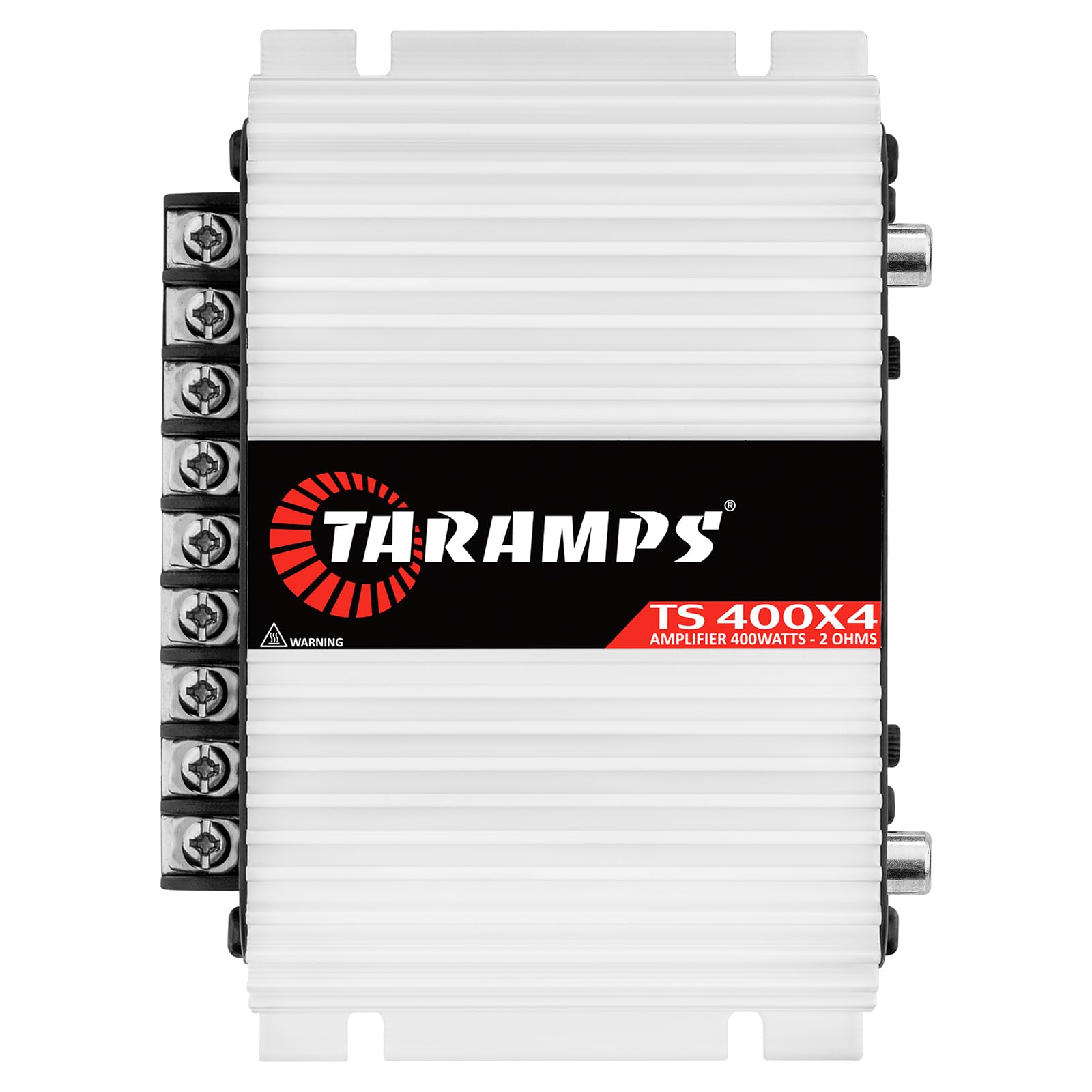
Taramps TS 400x4

Taramps TS 400x4

Ultra-compact budget

Our Score 8.8/10
Check Price

Worth Noting

  • In quiet listening environments, a persistent hum or hiss can intrude on the audio.
  • Early amp failure has been noted in some units, making it a gamble for daily-driver installations.
Class
Class D
Channels
4-Channel
RMS Power
100W x4 RMS
Min Impedance
2 ohms

The TS 400x4 squeezes 400 watts RMS into a chassis roughly the size of a deck of cards, making it one of the most space-efficient 4-channel amps available. At a very low price, it offers surprising output for full-range speakers. However, some units introduce a background hum or hiss into the audio signal, and a portion of buyers have encountered early failure. This amp works well for temporary upgrades or installations where the smallest footprint is mandatory, but the potential for noise and durability issues excludes it from daily-driver systems seeking clean, long-term performance.

Tip: Properly grounding the amplifier and isolating the RCA cables from power wires can reduce the chance of audible noise.

Bottom line: Best suited for temporary builds, budget upgrades in noisy vehicles, or installations where physical size is the absolute priority — not for clean, long-term systems.

10

CT Sounds CT-1000.1D

CT Sounds CT-1000.1D

Compact 1000W mono

Our Score 9.2/10
Check Price

Worth Noting

  • In some installations, the amplifier may emit smoke or catch fire
Class
Class D
Channels
Monoblock
RMS Power
1000W RMS
Min Impedance
1 ohm

This amplifier delivers true 1000W RMS from a footprint small enough for tight vehicle installations, making it a strong option for budget buyers who need serious bass without a large amp. Sound quality is clean and distortion-free, and the price is hard to beat for the power output. However, some units have been reported to emit smoke or catch fire, so this is not the choice for those prioritizing long-term durability or safety. It remains a viable pick for enthusiasts willing to accept the risk in exchange for high power density at a low cost.

Bottom line: Best for budget-minded buyers with limited space who accept the known safety tradeoff for high power density.

11

Kenwood KAC-9106D

Kenwood KAC-9106D

2-ohm subwoofer systems

Our Score 8.6/10
Check Price

Worth Noting

  • Only rated for a minimum 2-ohm load, so it cannot drive 1-ohm subwoofer configurations.
  • In extended use, the amplifier may become hot
Class
Class D
Channels
Monoblock
RMS Power
1000W RMS
Min Impedance
2 ohms

Kenwood's KAC-9106D delivers 1000 watts RMS into a 2-ohm load with the brand's characteristic build consistency. The amplifier produces punchy bass and clear sound, making it a strong option for powering a single subwoofer in a 2-ohm configuration. However, it is not stable below 2 ohms, limiting wiring flexibility for those wanting to run subwoofers at 1 ohm. Additionally, the amp can run hot during prolonged use, which may require careful placement for airflow. This amp suits buyers who prioritize consistent performance over maximum power output or multi-ohm compatibility, but it lacks the versatility of the top pick.

Bottom line: Best for those building a 2-ohm subwoofer system who value consistent performance and Kenwood's build quality over 1-ohm capability.

12

Orion CBA2500.4

Orion CBA2500.4

Low-cost 4-channel

Our Score 8.0/10
Check Price

Worth Noting

  • Actual power output may be lower than the 2500W max rating suggests
  • Some units may experience channels that stop working
Class
Class A/B
Channels
4-Channel
RMS Power
100W x4 RMS
Min Impedance
2 ohms

The Orion CBA2500.4 delivers clean mids and highs that make it a low-cost option for powering component speakers or coaxials. Its adjustable high-pass and low-pass filters plus bass boost add flexibility for fine-tuning. However, the 2500W max power claim is optimistic; real-world output is lower, and some units may develop channel issues over time. This amp suits temporary installations or systems where sound quality matters more than raw power.

Bottom line: Best reserved for undemanding setups where crisp mids and highs are the priority and lower power output is acceptable.

13

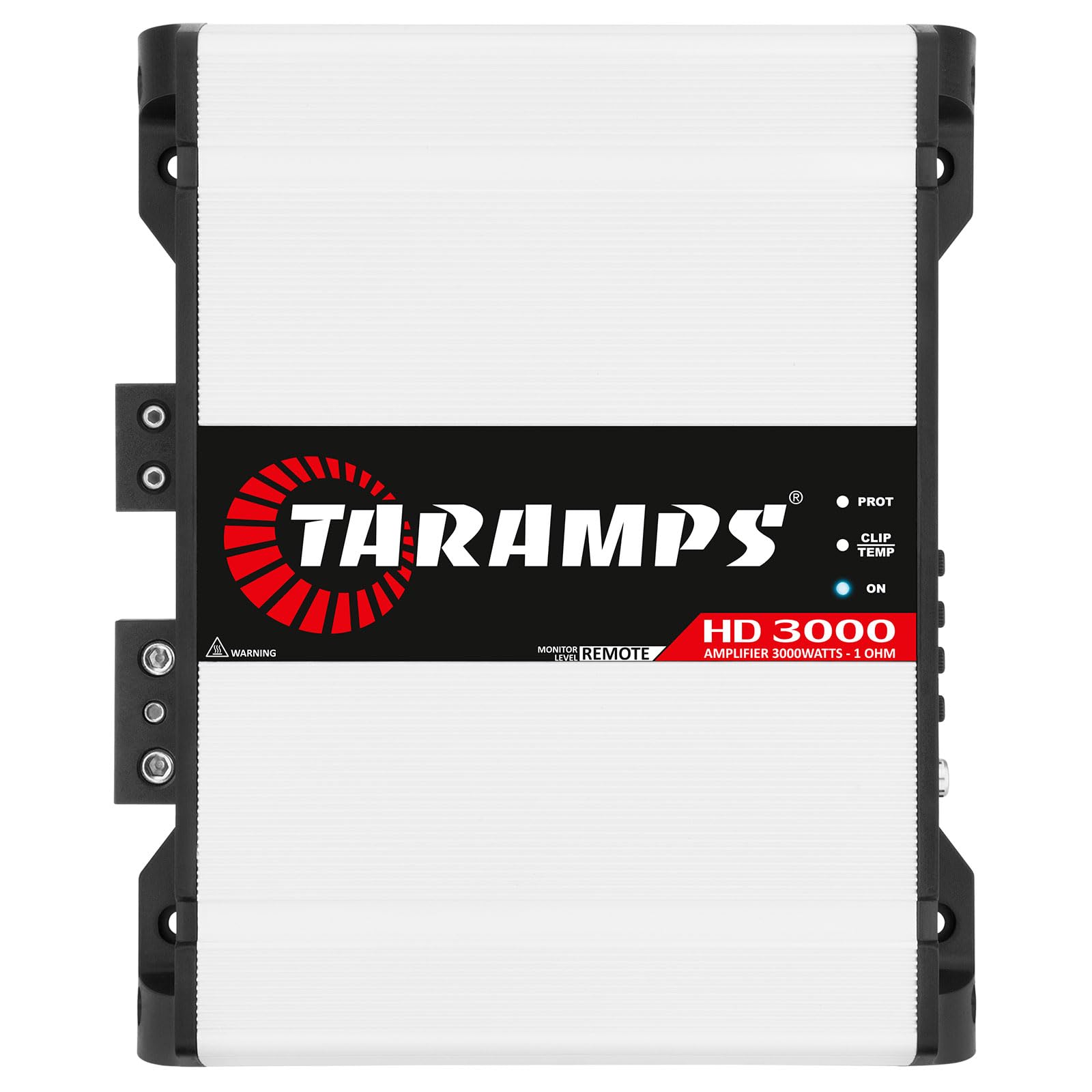
Taramps HD 3000

Taramps HD 3000

Extreme power budget

Our Score 8.8/10
Check Price

Worth Noting

  • Protection mode can engage unexpectedly, cutting output
  • Audio may be absent in some units despite power light being on
Class
Class D
Channels
Monoblock
RMS Power
3000W RMS
Min Impedance
1 ohm

The Taramps HD 3000 delivers a genuine 3000 watts RMS into 1 ohm in a compact, well-built chassis — impressive output per dollar. Build quality feels substantial, and the included LED monitor and crossover add tuning flexibility. However, protection mode can engage without warning, cutting audio, and some units may produce no sound despite having power. These quirks make this amp a fit for experienced users building budget SPL systems, not for daily-driver dependability.

Bottom line: A powerful, budget-friendly mono amp for SPL builds where occasional interruptions are acceptable — not for daily driver reliability.

How to Choose

RMS Power: The Real Rating

RMS power measures continuous output, unlike peak power which is a momentary burst. A 500W RMS amp will consistently outperform a '1200W max' amp that only hits that peak for a split second. When comparing amps, always look at RMS at your target impedance (e.g., 1 ohm for subwoofers).

Number of Channels

Mono amplifiers are dedicated to subwoofers and offer high power at low impedance. Multi-channel amps (4-channel or 5-channel) power full-range speakers and can be bridged to run a sub. A 5-channel amp simplifies installation but typically limits subwoofer power compared to a separate mono amp.

Minimum Impedance Stability

Impedance (ohms) determines how much current the amp can draw. A 1-ohm stable amp can handle more power from subwoofers wired in parallel, but it runs hotter and requires a more robust power supply. If your speakers are 4 ohms only, a 2-ohm stable amp is sufficient and often more reliable.

Amplifier Class

Class D amps are highly efficient, producing less heat and drawing less current from your car's electrical system — ideal for subwoofers. Class A/B amps deliver a warmer, more natural sound for full-range speakers but generate more heat and require better ventilation. Choose based on your priority: efficiency or sound character.

Protection and Cooling Features

Look for amplifiers with built-in protection circuitry (thermal, short circuit, and over-voltage) to prevent damage. Adequate cooling is critical: larger heatsinks or built-in fans allow the amp to run longer without overheating. In tight installations, consider adding a small external fan for airflow.

Frequently Asked Questions