Audio & Headphones

7 Best Bone Conduction Headphones of 2026: Match Your Fit and Activity

Find bone conduction headphones that stay put, deliver honest battery life, and survive your workouts without exaggerated claims.

Bone conduction headphones keep your ears open to traffic and conversation, but that open-ear design comes with compromises many buyers discover only after purchase. Battery life often falls short of claims, and comfort varies wildly depending on head shape and glasses. This guide cuts through the marketing to match you with the model that fits your actual routine, whether that is daily runs, pool laps, or all-day calls.

The category has evolved quickly. Premium models from established makers deliver reliable comfort and long battery, but newer budget options now pack IPX8 waterproofing and MP3 storage at half the price. The real challenge is knowing which trade-offs matter for your specific activity.

The picks below prioritize models that stay put, last through workouts, and deliver honest battery life. Understanding these trade-offs is the key to picking a headphone that actually fits your lifestyle.

1

SHOKZ OpenRun Pro

Top Pick
SHOKZ OpenRun Pro

Best Overall

Our Score 9.0/10
Check Price

Worth Noting

  • Left speaker or microphone issues may develop in some units within the first year - worth checking the warranty and return policy.
  • The premium price reflects comfort and battery life, but the audio clarity and bass response can feel underwhelming compared to similarly priced traditional headphones.
Weight
29g
Review Count
26,904
Water Rating
IP55
Claimed Battery
10 hrs

The OpenRun Pro's lightweight titanium frame wraps around the head with minimal pressure, making it comfortable for back-to-back training sessions. The bone conduction drivers sit on the cheekbones, leaving ear canals unobstructed - crucial for runners who need to stay aware of traffic or trail conditions.

Battery life consistently reaches the advertised 10 hours in real use, covering a week of daily workouts or a marathon training cycle. The quick-charge feature adds 90 minutes of playback from a 10-minute plug-in, handy for last-minute sessions. The wraparound band stays locked in place during sprints, bike descents, and gym workouts, and the IP55 rating shrugs off sweat and light rain.

In daily use, controls are intuitive: a multifunction button handles playback and calls, and volume buttons are easy to locate mid-run. Call quality is clear for the wearer, though background noise can be picked up on the other end - acceptable for quick check-ins but not quiet conference calls.

This headphone fits serious runners and cyclists who prioritize comfort, battery life, and secure fit over audiophile sound. The audio profile emphasizes clarity for spoken content and ambient awareness over bass depth - deep bass enthusiasts should look elsewhere. As noted, a minority of units may develop issues with the left speaker or microphone over time, a risk that Shokz's warranty helps manage. The premium price also means it is an investment, but for the right user the experience is refined and distraction-free.

Tip: Register your purchase with Shokz and keep the receipt; the 2-year warranty covers defects like speaker or microphone failure.

Bottom line: For athletes who want a comfortable, secure, and long-lasting bone conduction headphone, the OpenRun Pro is the most established option - its occasional hardware variance is the main tradeoff to weigh.

2

SHOKZ OpenComm2

SHOKZ OpenComm2

Calls & Work

Our Score 8.6/10
Check Price

Worth Noting

  • Fit can be loose for smaller head sizes, causing slippage
  • Battery life under real talk use may be half the advertised 16 hours
Weight
35g
Review Count
1,039
Water Rating
IP55
Claimed Battery
16h talk, 8h listen

The OpenComm2 stands apart from sport-focused bone conduction models by prioritizing call clarity above all else. Its noise-canceling boom mic captures speech with minimal background noise, making it a strong alternative to dedicated office headsets for professionals who need to hear their surroundings.

This headset suits remote workers, call center agents, or truck drivers who spend hours on calls and want an open-ear form factor. However, real-world talk time often runs closer to 8 hours than the advertised 16, and the fit may slip on smaller heads — issues that matter less for stationary desk use than for commuting or active work.

The lightweight 35-gram frame and padded headband make it easy to forget you are wearing it, even through back-to-back meetings. The open-ear design keeps you aware of ambient sounds — a safety bonus for office walkways or when taking calls while driving.

Tip: Charge between meetings to ensure full availability — the battery supports a solid workday but not the claimed 16-hour talk time.

Bottom line: For remote workers and call-heavy professionals who value clear voice pickup and all-day comfort, the OpenComm2 is a solid call-focused tool — just plan around the actual battery life and check the fit.

3

PSIER X23

PSIER X23

Budget workouts

Our Score 8.6/10
Check Price

Worth Noting

  • Occasional beeping or unwanted button presses may interrupt quiet environments
Weight
23g
Review Count
2,739
Water Rating
IPX5
Claimed Battery
10 hrs

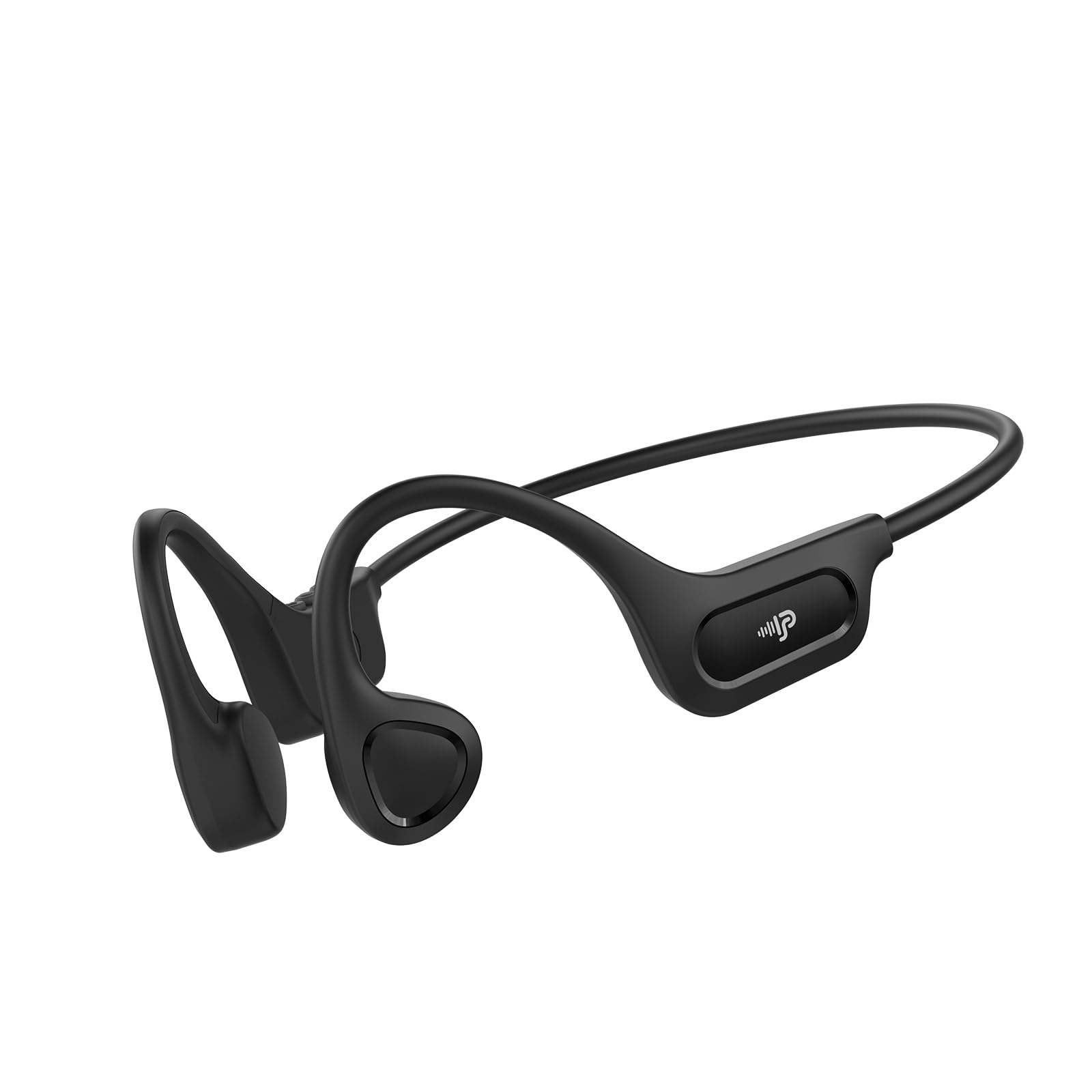
The PSIER X23 stands out for its exceptional comfort and secure fit, rivalling headphones costing three times as much. The 23-gram frame and flexible ear hooks keep the headset in place during runs and gym sessions without causing pressure points.

Sound quality is surprisingly clear for the price point, with adequate volume for outdoor use. The 10-hour battery handles daily workouts and commute, though it lacks the endurance of pricier competitors. Bluetooth 6.0 provides stable connectivity within typical exercise range.

This headset is ideal for budget-focused runners and gym-goers who prioritize situational awareness and all-day comfort. However, some units have experienced intermittent beeping or accidental button presses, and the IPX5 rating means it cannot be submerged ' swimming is off the table.

Tip: To minimize accidental button presses, adjust the headset so the button panel sits behind your ear rather than on the temple.

Bottom line: For runners and gym-goers on a budget, the PSIER X23 offers a comfortable, secure open-ear experience that outperforms its price tag ' just be aware of the occasional beeping quirk.

4

CXK X17

CXK X17

Swimming & budget

Our Score 9.2/10
Check Price

Worth Noting

  • Above-water sound quality is adequate for spoken audio but lacks the richness needed for music enjoyment
  • Long-term durability under regular pool use has not been confirmed over extended periods
Weight
34g
Review Count
93
Water Rating
IPX8
Claimed Battery
12 hrs

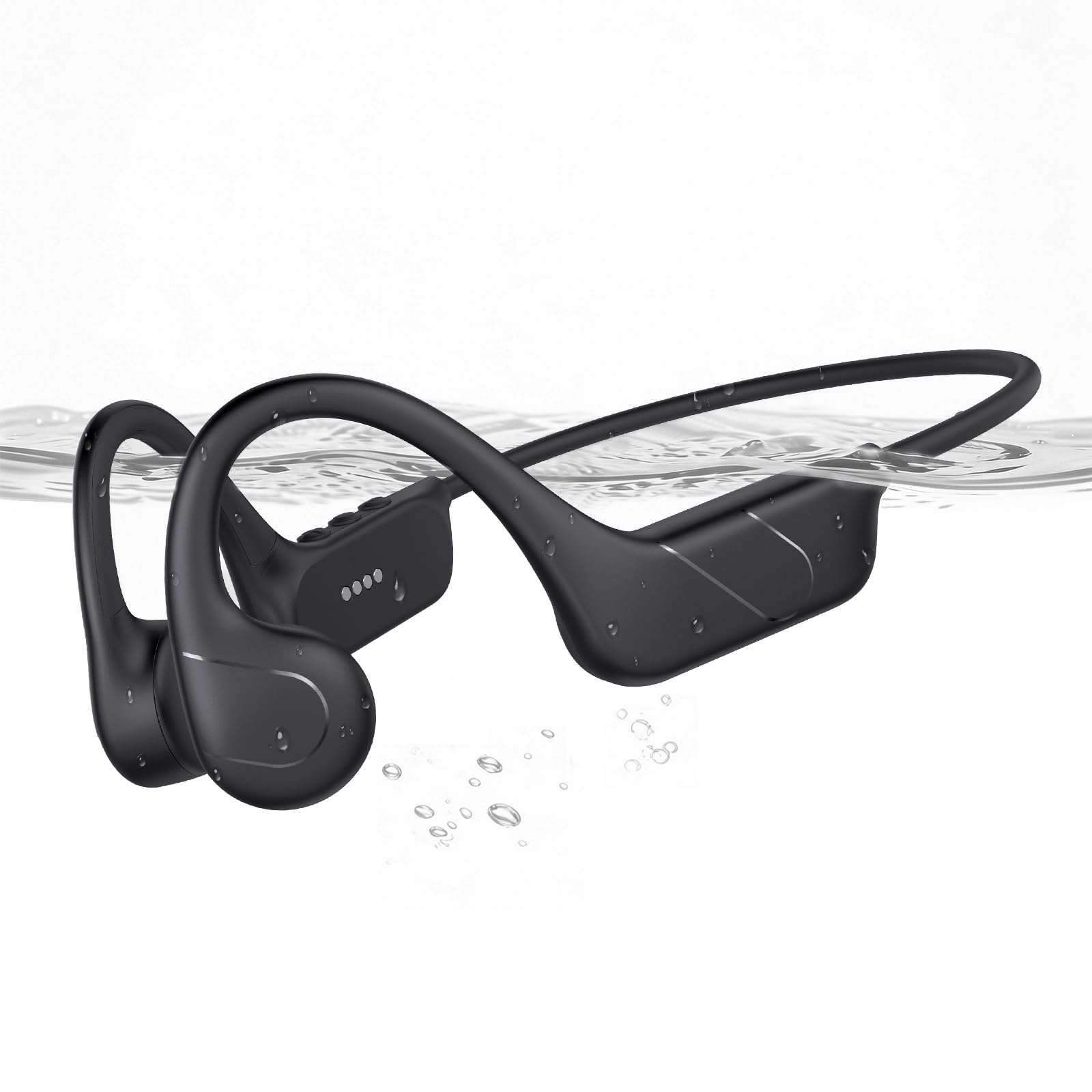
The CXK X17 delivers true IPX8 waterproofing — submersible to 2 meters for two hours — paired with 32GB of onboard MP3 storage for underwater listening. While above-water sound quality is adequate for podcasts and audiobooks, it lacks the clarity and bass of land-focused models. The 12-hour battery life and quick-charging support keep it ready for pool sessions and gym runs alike.

Swimmers and triathletes who want music without a phone or waterproof case will find the X17 a practical choice. The ear hooks keep it secure during laps, and the 34-gram weight is barely noticeable. For land workouts, Bluetooth 6.0 connectivity is stable within 10 meters, and the open-ear design maintains situational awareness. Long-term durability under regular pool use has not been confirmed over extended periods — this is a newer model with a smaller user base.

Bottom line: For swimmers and triathletes on a budget, the X17 offers a rare combination of waterproofing and standalone music playback that the top sport-focused bone conduction headphones lack.

5

Vonlaxi JY-B1

Vonlaxi JY-B1

Lightweight runs

Our Score 9.8/10
Check Price

Worth Noting

Weight
25g
Review Count
63
Water Rating
IP65
Claimed Battery
10 hrs

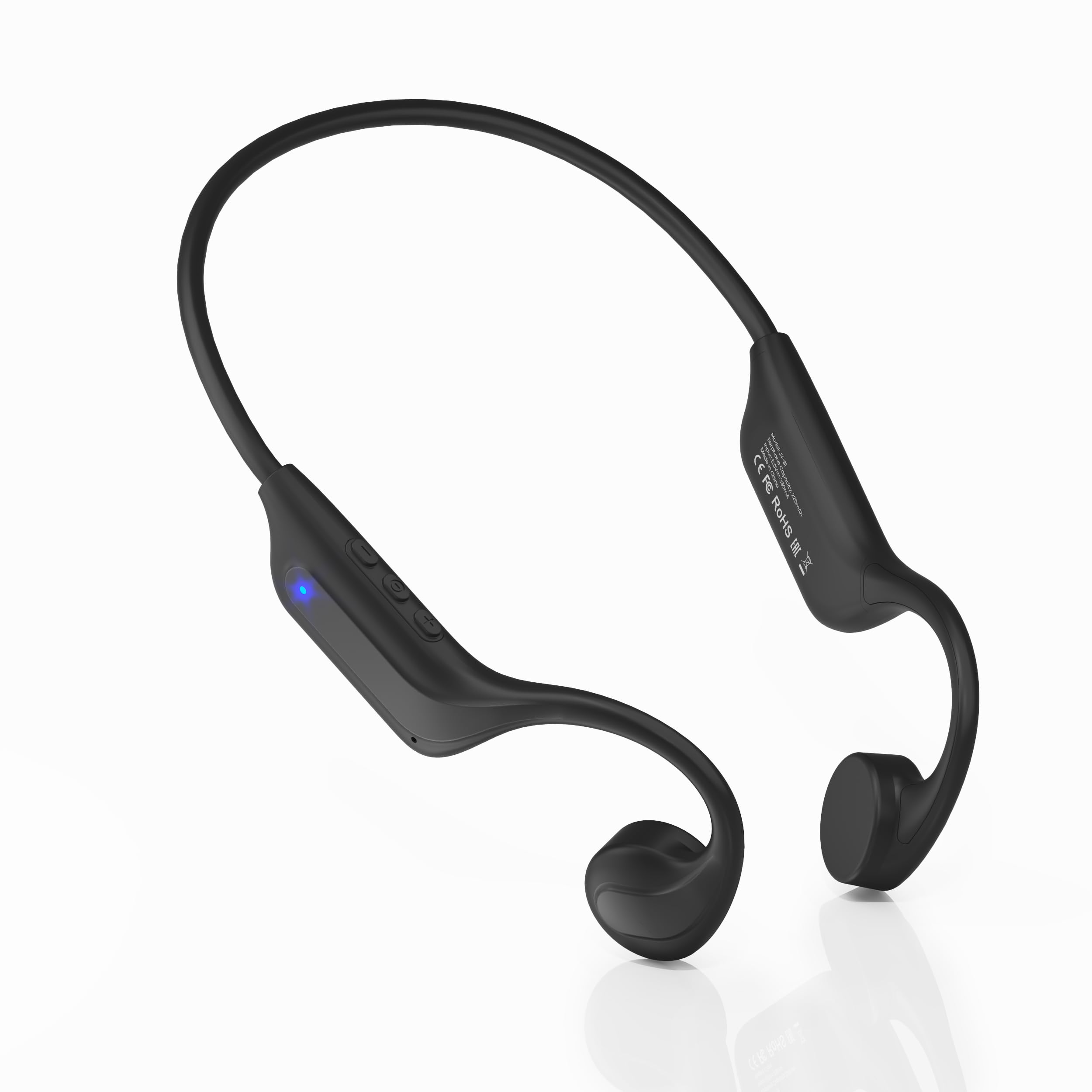
Weighing just 25 grams, the Vonlaxi JY-B1 is the lightest bone conduction headphone in this roundup. That low mass translates to a genuinely forgettable fit during long runs or all-day wear, and the three EQ modes (Vocal, Bass, Balanced) let you fine-tune the audio for podcast clarity or a bit of low-end punch during workouts. Bluetooth 6.0 provides a stable connection with dual pairing, and the IP65 rating handles sweat and light rain without issue.

Battery life is a genuine plus here: the claimed 10 hours holds up in real-world use, easily covering a week of daily exercise sessions. The open-ear design keeps you aware of traffic and surroundings, and the earhook shape stays put even during sprints or quick head movements. Sound won't match the richness of in-ear models, but for situational awareness these deliver clear mids and vocals without the tinny artifacts some budget bone conduction units suffer from.

This headset suits runners who prioritize minimal weight and are comfortable with a newer brand. Long-term durability under heavy daily use is still being established, so it's best for those who don't need years of verified track record. If you're after a proven all-rounder for mixed sports, the top pick offers more user history, but the Vonlaxi JY-B1 is an appealing fit for weight-sensitive athletes working within a tight budget.

Tip: Switch between EQ modes to match your activity — Vocal mode for podcasts and Bass mode for high-energy workouts.

Bottom line: For runners who want to shed every gram without sacrificing features, the Vonlaxi JY-B1 delivers a comfortable, adjustable sound experience at a budget-friendly price.

6

PSIER S18

PSIER S18

Swimming & MP3

Our Score 8.8/10
Check Price

Worth Noting

  • Bluetooth connection can drop in some units
  • Warranty support period is shorter than leading competitors
Weight
Review Count
2,643
Water Rating
IPX8
Claimed Battery
8 hrs

The PSIER S18 brings genuine IPX8 protection and 32GB of onboard MP3 storage to the sub-$50 price bracket, letting swimmers and water sports enthusiasts listen to music underwater without a phone. Sound quality is clear for workouts, and the silicone ear cushions keep it comfortable during extended wear. The trade-off comes in reliability: some units have shown Bluetooth disconnection issues, and the 8-hour battery life is adequate but not exceptional for land use. Against a similarly featured competitor like the CXK X17, the S18 offers a higher volume of user feedback and serves as a practical backup if that model is unavailable.

Bottom line: This is the right pick for swimmers on a tight budget who need IPX8 and onboard storage, provided you are comfortable with occasional Bluetooth hiccups and a shorter warranty window.

7

ZOVIMAX X500

ZOVIMAX X500

Night safety

Our Score 10.0/10
Check Price

Worth Noting

  • At 130g, the headset is noticeably heavier than most bone conduction models, which can cause fatigue during longer sessions.
Weight
130g
Review Count
57
Water Rating
IP67
Claimed Battery
12 hrs

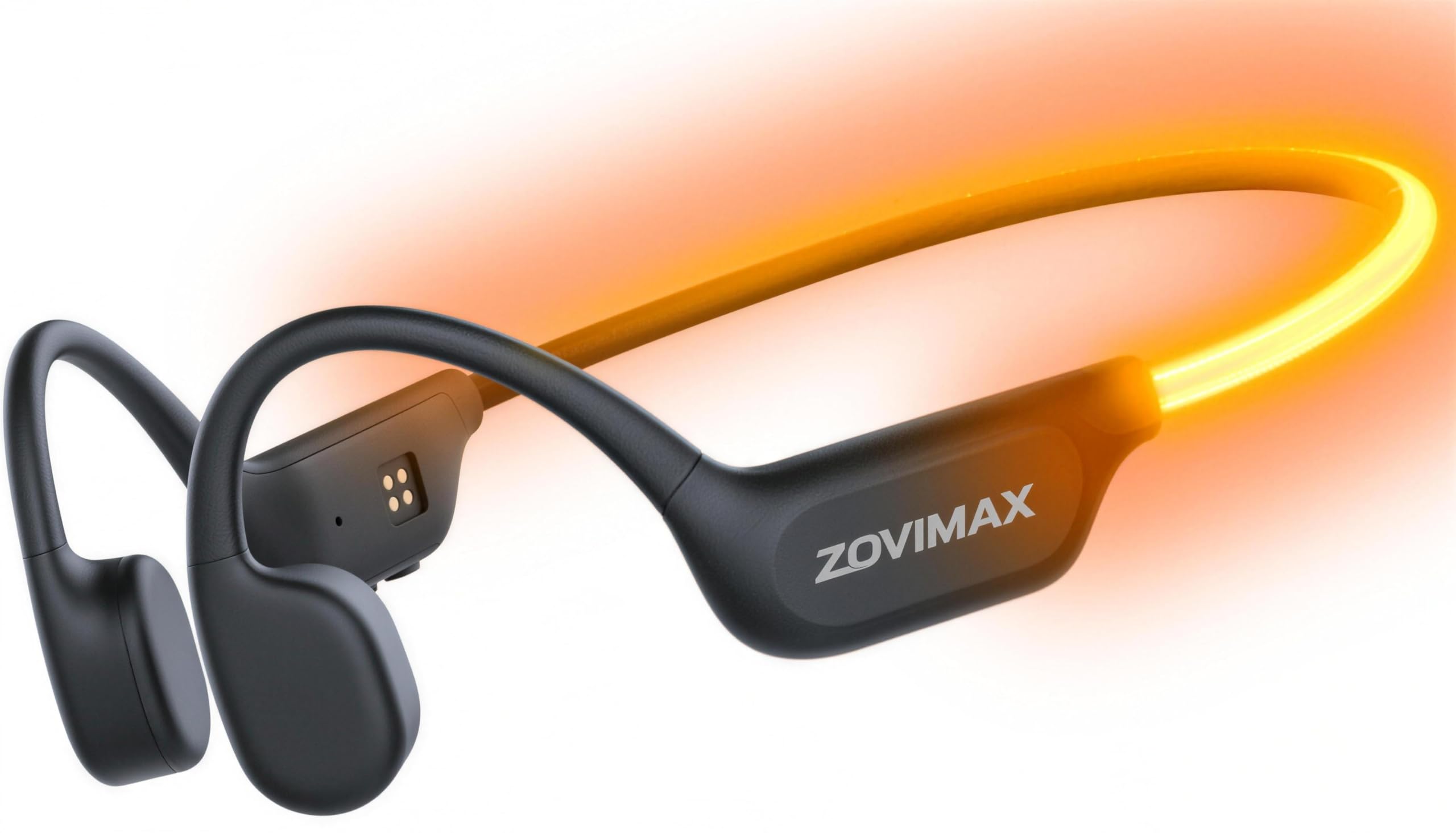
With an integrated rear LED and IP67 dust/water resistance, the X500 stands out as a safety-focused option for evening runs. Audio clarity from the bone conduction drivers is sufficient for podcasts and ambient music, though bass presence is modest. The 130g weight is noticeable compared to lighter models, making it less suited for all-day wear or minimalist runners. Its unique light feature justifies the compromise for those who prioritize visibility over weight.

Bottom line: Best suited for budget-focused runners who run in low-light conditions and don't mind the extra weight.

How to Choose

Battery Life vs. Real-World Use

Manufacturers often advertise battery life under ideal lab conditions with moderate volume and no background noise. Outdoors with wind, higher volume, or continuous Bluetooth streaming, real-world runtime can drop by 20-30%. A model claiming 10 hours may deliver only 7 in a sunny park.

Battery chemistry also matters: lithium-ion cells lose capacity after 300-500 full charge cycles. A headphone that starts with 10 hours may drop to 6 after a year of daily use. Choosing a model with quick-charge (e.g., 10 minutes for 1 hour of play) can offset this gradual decline.

Water Resistance Ratings

IP ratings are not all equal: IPX5 withstands sweat and light rain, IPX7 survives submersion up to 1m for 30 minutes, and IPX8 can go deeper longer but the depth and duration are specified by the manufacturer. A headphone labeled IPX8 may be rated for 2m for 2 hours, but not for repeated dives.

For swimmers, look for explicit IPX8 with depth and time specs, plus a dedicated MP3 mode so you don't rely on Bluetooth underwater. For runners, IPX5 or IP55 is sufficient as long as the charging port is sealed.

Fit and Weight

The wraparound frame must apply gentle pressure on your cheekbones without slipping. Heavier models (over 30g) can cause soreness during long runs, while ultra-light models (under 25g) may feel less secure for aggressive head movement. Ear hooks or adjustable bands help smaller heads.

Glasses users should try a model with a low-profile frame that doesn't press against temple arms. Some headsets like the Vonlaxi JY-B1 at 25g are barely noticeable, but the trade-off is a less robust battery.

Audio Driver Technology

Bone conduction drivers rely on a piezoelectric transducer that vibrates against the cheekbone. Newer generations (8th, 9th) use improved suspension to reduce sound leakage and enhance bass, but no bone conduction headphone can match traditional earbuds for low-end punch.

Some models now combine a bone conduction driver with a small air conduction speaker for fuller sound (like the OpenRun Pro 2). This dual-driver approach improves music playback but increases weight and price. For calls and podcasts, even a basic driver is sufficient.

Reliability and Long-Term Durability

The most common failure points are battery degradation, left/right speaker imbalance, and charging port wear. Brands with large review counts (e.g., Shokz with 26,000+ reviews) provide a statistical picture: a 4.5-star average means many units are reliable, but a persistent minority (around 5-10%) report early failure within 6 months.

Budget brands often have lower review counts, making it harder to gauge long-term reliability. Look for warranties of at least 1 year and responsive customer service. Avoid models with widespread reports of left speaker failure or charging issues.

Frequently Asked Questions