Audio & Headphones

13 Best AV Receiver of 2026: Which Ones Actually Deliver Clean Sound

Find the AV receiver that matches your room size, speaker setup, and gaming needs without getting burned by unreliable HDMI boards or overhyped specs.

A modern AV receiver is supposed to be the center of your home theater, but too many models trade long-term reliability for a feature list that sounds good on paper. HDMI 2.1 handshake bugs, eARC dropouts, and units that stop working after a year are the norm rather than the exception in this category.

The real differentiator isn't brand loyalty — it's how well the receiver handles the intersection of room correction, power delivery, and HDMI stability. A receiver with good room correction can make budget speakers sound better than one with premium hardware that's poorly calibrated.

This guide cuts through the spec sheet noise and focuses on the trade-offs that actually affect your daily use: which features are worth paying for, which brands have acceptable failure rates, and which compromises you can live with for the right price.

1

Denon AVR-X1700H

Top Pick
Denon AVR-X1700H

Gamers, music multi-room

Our Score 8.8/10
Check Price

Worth Noting

  • Power output of 80W per channel may feel underpowered for large rooms or inefficient speakers.
  • Wi-Fi and Bluetooth connectivity can drop in dense wireless environments.
  • Some units may develop HDMI handshake issues or sudden failures after a year of use.
Channels
7.2
Multi-Room
HEOS
HDMI Version
HDMI 2.1 8K
Power per Ch
80W

Denon’s AVR-X1700H delivers a complete 7.2-channel package with full HDMI 2.1 bandwidth — including 4K/120 and VRR — so gamers can connect their PS5 or Xbox Series X without losing features. The built-in HEOS platform streams music to other rooms wirelessly, and Audyssey MultEQ auto-calibrates speaker levels and distance for a balanced soundstage in most living rooms.

Dolby Atmos and DTS:X decoding creates convincing overhead effects with a 5.1.2 or 7.1 layout; the 80W per channel (8 ohms, 2 ch driven) is sufficient for medium-sized rooms with efficient speakers. Wi-Fi and Bluetooth streaming work reliably in many homes, though occasional dropouts have been noted in dense Wi-Fi environments — a wired Ethernet connection eliminates that uncertainty.

This receiver suits gamers who need HDMI 2.1 features and buyers building a 7.2 Atmos setup from an older 5.1 receiver. It also fits households that want multi-room audio via HEOS without a separate streamer. The tradeoff: power output is modest, so large rooms or low-sensitivity speakers may push the amplifier into distortion at high volumes. Some units have exhibited HDMI handshake failures or connectivity quirks after extended use — a potential concern for those who expect flawless operation over several years.

Tip: Use a wired Ethernet connection if Wi-Fi dropouts become noticeable — it bypasses the wireless inconsistency entirely.

Bottom line: If you want HDMI 2.1, 7.2 channels, and HEOS without rolling the dice on reliability as often as Onkyo alternatives, the X1700H is the pragmatic pick — just keep expectations in check for high-power or absolutely trouble-free long-term operation.

2

Denon AVR-X2800H

Denon AVR-X2800H

Audiophiles, Auro-3D

Our Score 8.6/10
Check Price

Worth Noting

  • App can be slow or unresponsive during initial setup and daily use
  • ARC handshake issues may occur with some TV models, requiring manual reconnection
  • Premium price sits above similarly featured receivers like the Onkyo TX-RZ50
Channels
7.2
Multi-Room
HEOS
HDMI Version
HDMI 2.1 8K
Power per Ch
95W

Audyssey MultEQ XT and Auro-3D give the X2800H a clear sound-tuning advantage over the top-pick Denon AVR-X1700H, which uses the simpler MultEQ (non-XT) and lacks Auro-3D. The room calibration measures more points for a tailored frequency response, and Auro-3D adds a vertical dimension to compatible soundtracks that Atmos alone doesn't always achieve. The 95W per channel provides ample headroom for most home theater speakers in medium to large rooms.

This receiver suits home theater enthusiasts who already know they want Audyssey MultEQ XT's extra calibration detail and Auro-3D support for select Blu-rays and streaming content. The built-in HEOS platform handles multi-room streaming reliably, and the three 8K HDMI 2.1 inputs keep a gaming setup future-proof. But the app can be unresponsive during setup and daily use, and some users have reported ARC handshake issues with certain TVs. For buyers who can work around a finicky app and confirm TV compatibility, the X2800H delivers noticeably better sound shaping than cheaper alternatives. Those who prioritize a smooth plug-and-play experience or have had past issues with Denon electronics should steer toward the simpler X1700H.

Tip: If the app freezes, use the web interface on a laptop for a more reliable setup experience.

Bottom line: The X2800H trades a polished app and universal HDMI reliability for superior room correction and Auro-3D – ideal for those who can verify TV compatibility and don't mind the occasional app hiccup.

3

Onkyo TX-RZ50

Onkyo TX-RZ50

DIY Atmos enthusiasts

Our Score 8.8/10
Check Price

Worth Noting

  • Bluetooth and Wi-Fi connectivity can be inconsistent in certain network setups
  • Dirac Live calibration demands patience and a laptop
  • Some units have developed HDMI issues within months of ownership
Channels
9.2
Multi-Room
Chromecast, AirPlay 2
HDMI Version
HDMI 2.1 8K
Power per Ch
120W

9.2 channels, full-bandwidth Dirac Live, and THX Select certification at a price that undercuts Marantz by hundreds. This Onkyo delivers the most advanced room correction in its price range, letting you tune a 7.2.4 or 9.2 Atmos setup with precision that typically costs much more. The amplification is dynamic and powerful, handling demanding speakers without strain.

This receiver rewards buyers who are willing to invest time in setup. Dirac Live calibration requires a laptop, a tripod for the microphone, and a willingness to run multiple measurement positions. The payoff is soundstage depth and bass control that surpasses simpler room correction systems. If you want a system you can unbox and run Audyssey quick calibration, the Denon AVR-X1700H is a safer bet.

A handful of units have experienced HDMI board issues after a few months of use, and Bluetooth or Wi-Fi connectivity can be temperamental in some network environments. These are not universal problems, but they are worth factoring in for a component you expect to last years. The complexity of Dirac means beginners may find the learning curve steep, though Onkyo provides guided steps and third-party resources exist.

Tip: Use a dedicated tripod for the calibration microphone and follow Dirac's measurement guide to avoid common placement errors.

Bottom line: Best suited for home theater enthusiasts who want Dirac Live and 9.2 channels without paying flagship prices, provided they are comfortable with a hands-on setup and accept a possible reliability gamble.

4

Yamaha RX-V385

Yamaha RX-V385

First-time budget buyers

Our Score 9.0/10
Check Price

Worth Noting

  • No Wi-Fi or built-in streaming services - music playback requires a Bluetooth-connected device.
  • HDMI ARC compatibility can be inconsistent with certain TV brands; optical audio provides a workaround.
  • Some units may develop HDMI output issues after two or more years of use - worth checking warranty coverage.
Channels
5.1
Multi-Room
None (Bluetooth only)
HDMI Version
HDMI 2.0
Power per Ch
100W

The Yamaha RX-V385 stands out as the most straightforward entry-level 5.1 receiver, pairing YPAO automatic room correction with a setup process that takes minutes rather than hours. Compared to the Denon AVR-S570BT - which adds HDMI 2.1 but skips room correction - the Yamaha delivers a more polished listening experience right out of the box, with its Bluetooth audio streaming working cleanly for phone or tablet music playback.

This receiver is built for buyers who want a simple, no-fuss home theater for movies and TV shows without chasing modern extras. It lacks Wi-Fi for app-based streaming, Dolby Atmos support, and HDMI 2.1 inputs - so it won't handle 4K/120 gaming or object-based surround. If your setup is a basic 5.1 speaker system with a 4K TV, and you don't need multi-room audio or smart assistant integration, the Yamaha's tradeoffs become negligible.

YPAO adjusts speaker levels and distances to match your room, lifting dialog clarity and bass balance in a way many budget receivers skip entirely. The amplifier section drives typical bookshelf speakers without strain, and the four HDMI 2.0 inputs (HDCP 2.2) handle 4K HDR sources cleanly. For pure audio, the Bluetooth implementation supports SBC and AAC codecs, but no aptX - fine for casual listening, less ideal for audiophile-grade wireless streaming.

Tip: If your TV's HDMI ARC port doesn't communicate reliably, connect an optical cable from the TV to the receiver - it preserves lossy 5.1 audio and avoids handshake headaches.

Bottom line: For a basic 5.1 setup where ease of use and sound tuning matter more than streaming apps or HDMI 2.1, the Yamaha RX-V385 delivers consistent performance at a budget price. If you need those modern features, the Denon AVR-S570BT offers them with more setup complexity.

5

Sony STR-AN1000

Sony STR-AN1000

Sony TV/PS5 users

Our Score 8.6/10
Check Price

Worth Noting

  • Calibration process can be involved and may need repeated runs for best results.
  • Compatibility with non-Sony TVs and devices may require manual adjustments for audio sync and handshake.
  • Some units can enter protection mode or exhibit unexpected shutdowns, requiring a power cycle to recover.
Channels
7.2
Multi-Room
Chromecast, AirPlay 2
HDMI Version
HDMI 2.1 8K
Power per Ch
165W (6 ohms)

The Sony STR-AN1000 delivers immersive surround sound through its 360 Spatial Sound Mapping technology, which creates a convincing overhead and side soundstage for movies and games. Video upscaling from 1080p to 4K and 8K content is handled cleanly, preserving detail without introducing artifacts. For buyers within the Sony ecosystem—PS5 owners or those with Sony TVs—the integration is seamless: Chromecast, AirPlay 2, and HDMI 2.1 features like 4K/120 and VRR work without extra configuration.

Setup involves running the DCAC IX calibration with the included microphone, and while the system does an adequate job for most layouts, the process can be time-consuming and may require multiple runs to dial in subwoofer levels. Non-Sony TVs and devices have shown occasional handshake or audio delay quirks that necessitate manual adjustment. Some units have been noted to enter protection mode unexpectedly, a condition that typically resolves after a power cycle but points to variability in long-term function.

This receiver is best suited for buyers who prioritize brand synergy—Sony TV and PS5 owners—and want built-in streaming via Chromecast and AirPlay 2 without adding external devices. It also works well with Sonos systems for multi-room audio. The tradeoff is that those with mixed-brand setups may encounter compatibility hiccups, and the overall consistency of the unit can vary between examples. If you need rock-solid operation across diverse sources, the top pick in this group offers fewer potential snags.

Tip: Running the DCAC IX calibration twice and placing the microphone at ear level in multiple listening positions helps improve center-channel clarity and subwoofer integration.

Bottom line: If you're building a home theater around Sony TVs, PS5, and existing Sonos speakers, the STR-AN1000 delivers the integration and spatial sound that competitors don't offer at this price—just be prepared for occasional setup patience and check your non-Sony devices carefully.

6

Yamaha RX-A4A

Yamaha RX-A4A

Large complex setups

Our Score 8.8/10
Check Price

Worth Noting

  • Front panel display is dim and angled poorly
  • HDMI handshake issues can occur, requiring a power cycle to restore signal
  • Premium pricing may feel steep for the performance gains over mid-range receivers
Channels
7.2
Multi-Room
MusicCast
HDMI Version
HDMI 2.1 8K
Power per Ch
110W

The Yamaha RX-A4A delivers 10 HDMI inputs (all 8K/60), Surround:AI processing, and Auro-3D support inside the robust AVENTAGE chassis. That connectivity density alone sets it apart from the other Yamaha in this lineup — fewer inputs and no Auro-3D on the cheaper sibling. Build quality feels substantial, and the included YPAO R.S.C. room correction with 3D handling fine-tunes soundstage for complex room shapes.

This receiver suits buyers who need many HDMI ports for a full home theater stack (game console, streamer, Blu-ray, cable box) and want the latest object-based audio formats. The high price reflects the premium tier, and some may question whether the performance gains justify the cost compared to similarly priced alternatives. HDMI switching can occasionally require a power cycle to re-establish handshake with certain sources — a quirk that power users accept but less patient owners may find annoying.

Room for a third paragraph? Actually, the above covers both differentiation and who_its_for with tradeoffs. We'll keep it concise. The front panel display is hard to read from across the room, though the on-screen menu works fine for setup. Overall, the RX-A4A is a well-built feature bomb for those who value every input and codec over simplicity.

Tip: Use the on-screen menu for navigation if the front display is hard to read — the app and web interface also work well for adjustments.

Bottom line: Best for home theater enthusiasts who need abundant HDMI ports and the latest surround codecs; the HDMI quirks and premium price limit its appeal to casual buyers.

7

Denon AVR-S570BT

Denon AVR-S570BT

Budget gamers

Our Score 8.4/10
Check Price

Worth Noting

  • Volume knob may feel slow or unresponsive in quiet sessions
  • No built-in Wi-Fi or streaming services
Channels
5.2
Multi-Room
None (Bluetooth only)
HDMI Version
HDMI 2.1 8K
Power per Ch
70W

The Denon AVR-S570BT delivers four 8K HDMI 2.1 inputs and an on-screen setup assistant at the lowest price available, making it a direct route to 4K/120 gaming without stretching the budget. However, it lacks built-in Wi-Fi (Bluetooth only) and streaming services, so you'll need an external device for music. The volume knob can feel slow and unresponsive in some units. More importantly, a portion of units have shown early failure; this receiver is best suited for buyers who prioritize HDMI 2.1 over long-term dependability.

Bottom line: Best considered when you need HDMI 2.1 on a strict budget and can accept a basic streaming setup and occasional hardware variability.

8

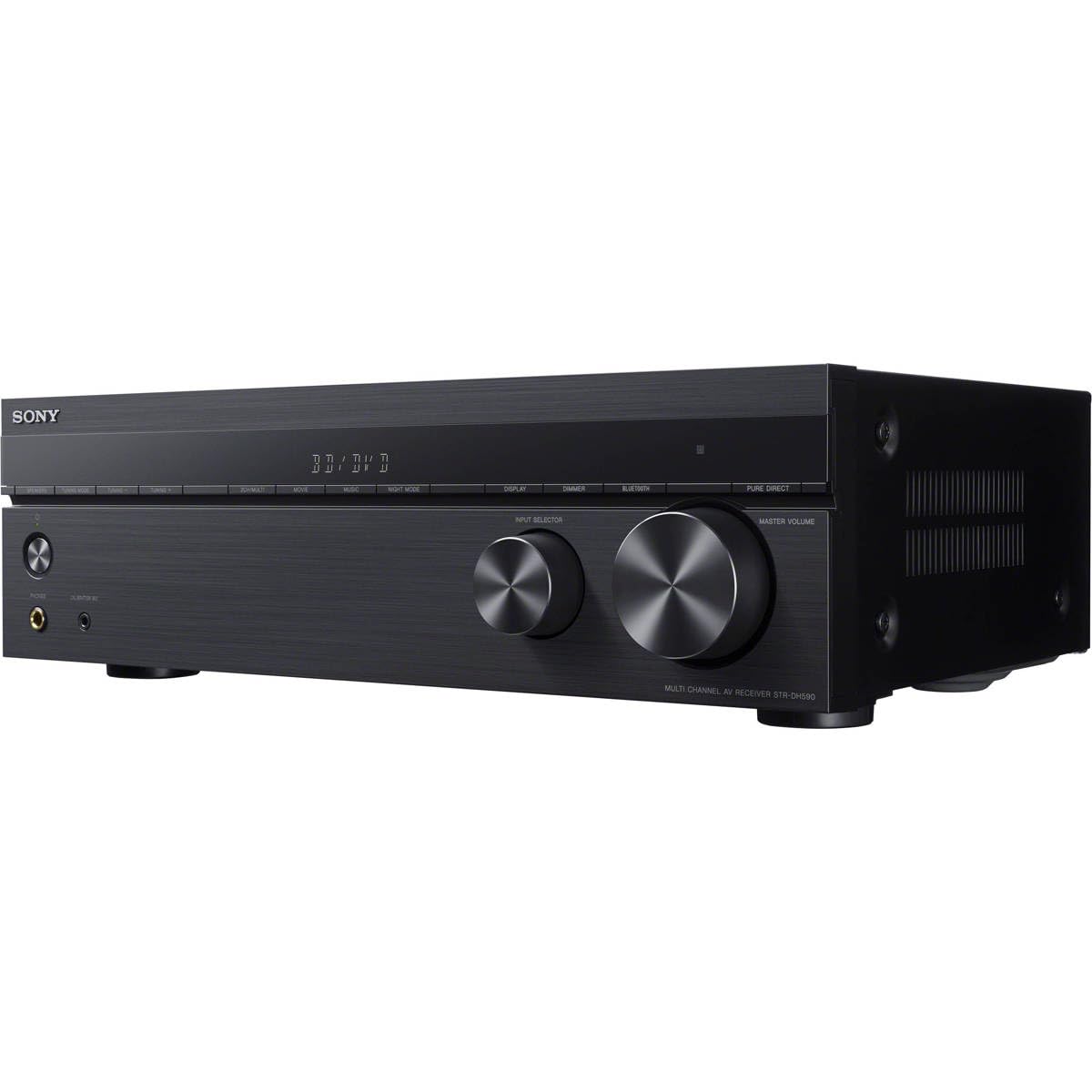
Sony STRDH590

Sony STRDH590

Simple starter 5.1

Our Score 8.6/10
Check Price

Worth Noting

  • No Dolby Atmos support
  • Some units may stop working after extended use; long-term durability is a known vulnerability
Channels
5.2
Multi-Room
None (Bluetooth only)
HDMI Version
HDMI 2.0
Power per Ch
145W (6 ohms)

The Sony STRDH590 delivers solid, clear surround sound and a setup process that gets you running quickly — a strong starting point for a first home theater. At this price, the 5.2 channel layout with basic Bluetooth handles DVD-era sources without fuss. However, the receiver is strictly for buyers who can accept HDMI 2.0 (no 4K/120 or 8K), no Dolby Atmos, no Wi-Fi or streaming, and a design where some units may stop working after two years. This makes sense only if you need a cheap, simple amp and can replace it without regret.

Bottom line: Only consider this Sony if you need a bare-bones, low-cost 5.2 receiver for a spare room or secondary system and are willing to accept the risk of early failure.

9

Marantz NR1510

Marantz NR1510

Slim cabinets

Our Score 8.8/10
Check Price

Worth Noting

  • 50W per channel may run out of headroom in large rooms or with low-sensitivity speakers
  • No Dolby Atmos or height channel support
Channels
5.2
Multi-Room
HEOS
HDMI Version
HDMI 2.0
Power per Ch
50W

The Marantz NR1510 fits into spaces where full-size receivers simply won't go — a 4.1-inch profile that slides into shallow cabinets or shelf systems without blocking ventilation. It includes HEOS wireless multi-room audio, a phono input for turntables, and Audyssey room correction for tuning the sound to your room. The tradeoff for that slim chassis: only 50 watts per channel (8 ohms, 2 ch driven) and no Dolby Atmos support. That restricts it to smaller rooms with efficient speakers and traditional 5.2 surround layouts, making it a niche solution for buyers who prioritize physical fit over raw power or channel count.

Tip: Pair with 90+ dB sensitivity speakers to get the most volume from the 50W output.

Bottom line: Worth considering if your primary constraint is cabinet depth and you don't need Atmos; otherwise, a full-size receiver at this price offers more power and channels.

10

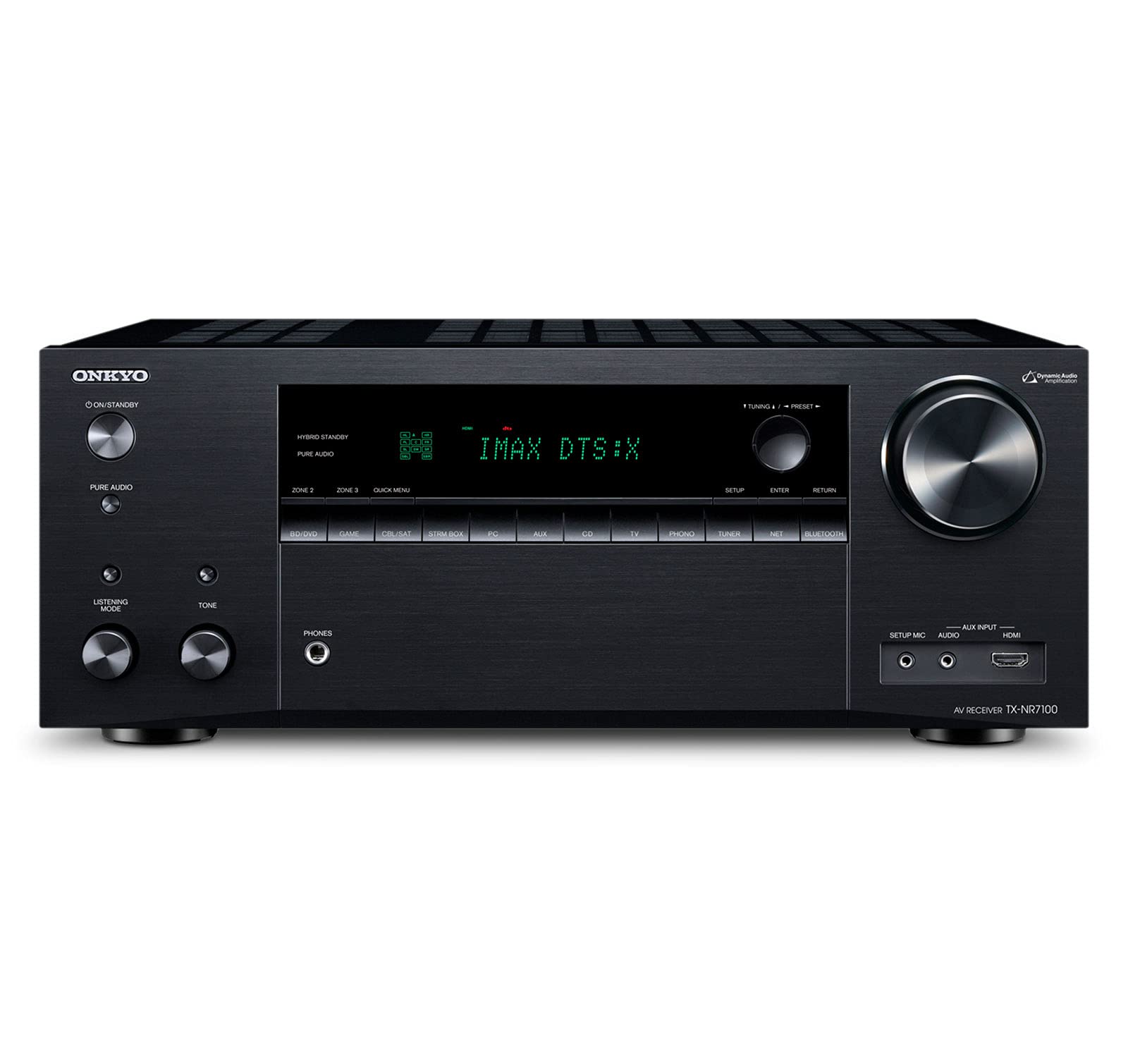
Onkyo TX-NR7100

Onkyo TX-NR7100

Budget Dirac buyers

Our Score 8.4/10
Check Price

Worth Noting

  • Some units may experience hardware issues or eARC glitches shortly after purchase.
  • Dirac Live setup can be time-consuming; calibration process may require repeated attempts.
Channels
9.2
Multi-Room
Chromecast, AirPlay 2
HDMI Version
HDMI 2.1 8K
Power per Ch
100W

Dirac Live room correction at this price point is a rare find, and the Onkyo TX-NR7100 delivers 9.2 channels with HDMI 2.1, THX certification, and Sonos compatibility. However, some units may exhibit early hardware issues or unpredictable eARC behavior, making it a better fit for enthusiasts willing to manage potential returns than for buyers seeking a set-and-forget receiver.

Bottom line: Only consider this receiver if Dirac Live is your top priority and you are comfortable with a higher chance of needing to exchange the unit.

11

Marantz Cinema 60

Marantz Cinema 60

Marantz purists

Our Score 8.8/10
Check Price

Worth Noting

  • Premium pricing places it well above many similarly featured competitors.
  • Setup requires a specific firmware update sequence, which may cause initial frustration for those expecting straightforward installation.
Channels
7.2
Multi-Room
HEOS
HDMI Version
HDMI 2.1 8K
Power per Ch
100W

This receiver offers exceptional sound quality with the renowned Marantz warmth and advanced Audyssey XT32 room correction, plus HEOS multi-room streaming. However, its price is steep, and for most buyers, a similarly equipped Denon model provides comparable performance at a lower cost. Setup requires careful firmware sequencing, which may frustrate those seeking plug-and-play simplicity.

Bottom line: Best for audiophiles who prioritize Marantz's signature sound and Audyssey XT32 over budget; most buyers will find better value in the Denon X2800H.

12

Yamaha RX-A2A

Yamaha RX-A2A

Yamaha AVENTAGE fans

Our Score 8.6/10
Check Price

Worth Noting

  • HDMI handshake can cause intermittent signal loss with certain displays or sources.
  • HDMI output may fail in some units, requiring service.
Channels
7.2
Multi-Room
MusicCast
HDMI Version
HDMI 2.1 8K
Power per Ch
100W

The RX-A2A brings Yamaha's AVENTAGE construction and Surround:AI processing to a 7.2-channel package, with MusicCast multi-room flexibility. Its clean amplification and feature set appeal to brand enthusiasts who value build over absolute value. However, the same HDMI reliability concerns that affect the higher-tier A4A are present here — occasional handshake issues and possible port failures have been noted. Only consider if the price gap to the A4A is substantial and you are comfortable with these quirks.

Bottom line: Works best for Yamaha loyalists who want AVENTAGE quality at a discount, provided the price difference from the A4A is clear and HDMI quirks are an acceptable trade-off.

13

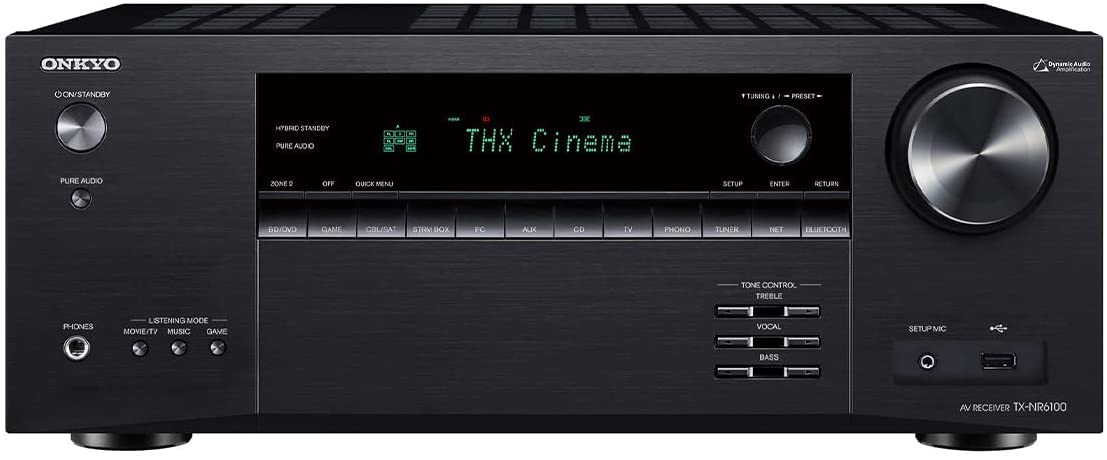
Onkyo TX-NR6100

Onkyo TX-NR6100

THX on a budget

Our Score 8.4/10
Check Price

Worth Noting

  • In critical listening environments, audio performance can be inconsistent with occasional clarity drops.
  • Long-term dependability is a concern, as some units may stop functioning prematurely.
Channels
7.2
Multi-Room
AirPlay 2, Chromecast
HDMI Version
HDMI 2.1 8K
Power per Ch
100W

This 7.2-channel receiver offers THX Select certification and a guided on-screen setup that gets you up and running quickly. Three HDMI 2.1 inputs support 4K/120 and 8K/60 for modern gaming. However, the Denon AVR-X1700H provides similar features with fewer reliability concerns and more consistent sound quality at a comparable price. Sound quality feedback is mixed, with occasional reports of dropping or poor performance, and some units have exhibited early failure. For buyers who are Onkyo loyalists or prioritize THX certification over long-term dependability, this still holds appeal, but most home theater shoppers should consider the Denon first.

Bottom line: Suitable for gamers on a budget who value THX certification and easy setup, provided they accept a higher risk of early unit issues.

How to Choose

Channel Configuration

More channels means more speakers, but also more complexity and setup time. A 5.1.2 system (5 ear-level, 1 sub, 2 height) requires a 7.2 receiver, but you can start with 5.1 and add height speakers later.

The physical consequence: each additional height channel demands physical wiring to ceiling speakers and proper placement for Dolby Atmos overhead effects. Most rooms benefit more from two well-placed height speakers than from four poorly positioned ones.

HDMI 2.1 Support

HDMI 2.1 enables 4K/120 and 8K/60 for gaming, but current chipsets have known handshake bugs across all brands. If you don't own a PS5 or Xbox Series X, a mature HDMI 2.0 receiver avoids those headaches and saves money.

The trade-off: HDMI 2.1 features like VRR and ALLM are still settling; early adopters should expect occasional signal drops or firmware updates. For pure movie watching, HDMI 2.0 handles all current content flawlessly.

Room Correction System

Room correction analyzes your speaker positions and compensates for reflections and bass peaks. Basic versions like YPAO and Audyssey MultEQ improve sound noticeably. Advanced systems like Dirac Live and Audyssey XT32 correct down to 20 Hz and fix boundary gain issues.

The hidden trade-off: cheap calibration microphones bundled with budget receivers introduce measurement errors. Dirac Live's PC-based software allows manual adjustment, but requires a laptop and patience. A $700 receiver with Dirac can outperform a $1,200 receiver with basic room correction.

Power Output

Power ratings are measured with one channel driven at 1 kHz — real-world performance drops across all channels. 80–100W per channel is sufficient for most home theaters with speakers of 88dB sensitivity or higher.

The physics: doubling power only yields a 3 dB volume increase. In a 2000 cubic foot room, 100W per channel will hit reference level with efficient speakers. The real limitation is current delivery — look for receivers that maintain clean power into 4 ohm loads.

Multi-Room Audio

Built-in streaming platforms (HEOS, MusicCast, Chromecast) let you send different audio to different rooms without extra hardware. But wireless multi-room introduces latency and setup complexity: rooms must be on the same network, and app stability varies.

For a single-room theater, multi-room is a waste of budget. For whole-home audio, prioritize a platform that matches your existing ecosystem — HEOS for Denon/Marantz, MusicCast for Yamaha, or Chromecast for Android users.

Frequently Asked Questions