TVs & Video

10 Best 55-Inch TV of 2026: Mini-LED, OLED & Budget Picks That Deliver

Find the perfect 55-inch TV for your room, budget, and needs – from blazing bright Mini-LED to value-priced entry-level 4K.

The 55-inch TV market is packed with options, but the real challenge isn't finding a TV that works – it's finding one that works for your specific setup. Smart TV performance, panel technology, and refresh rates vary wildly even at similar prices.

Mini-LED has become the sweet spot, delivering deep blacks and high brightness without the burn-in risk of OLED. But not every Mini-LED is created equal, and budget models often sacrifice processing power to hit a low price.

This guide cuts through the specs to show you where your money matters most: panel type for your room's lighting, refresh rate for gaming, and smart platform for daily use. The right choice depends on how you watch, not just what you watch.

1

TCL QM6K Mini-LED 55"

Top Pick
TCL QM6K Mini-LED 55"

All-round performance

Our Score 8.8/10
Check Price

Worth Noting

  • A small number of units may not power on or freeze during startup
HDR Support
Dolby Vision, HDR10+, HLG
Refresh Rate
144 Hz
Operating System
Google TV
Display Technology
Mini-LED QLED

The TCL QM6K brings Mini-LED backlighting, a 144Hz refresh rate, and Google TV into a package that competes well above its price point. Picture clarity and contrast stand out immediately, with bright, vibrant colors that hold up in mixed lighting. The Onkyo speakers provide clean, full sound that reduces the immediate need for a separate audio system.

Motion handling is smooth enough for fast sports and gaming, and the HDMI 2.1 inputs support 4K at 144Hz for compatible consoles and PCs. Setup takes minutes thanks to straightforward on-screen guidance. Dolby Vision and HDR10+ content looks punchy, and the Google TV interface keeps streaming apps organized without lag.

This TV suits gamers who want high frame rates without jumping to OLED pricing, as well as sports fans who value fluid motion. It also fits buyers looking for a premium-feeling TV that doesn't demand a premium budget. The occasional report of units that fail to power on is worth checking at purchase, but the majority of users experience trouble-free operation.

Bottom line: If you want Mini-LED performance, high refresh rates, and solid built-in sound without stretching your budget, this TCL delivers — just be aware that a tiny fraction of units arrive with power issues.
2

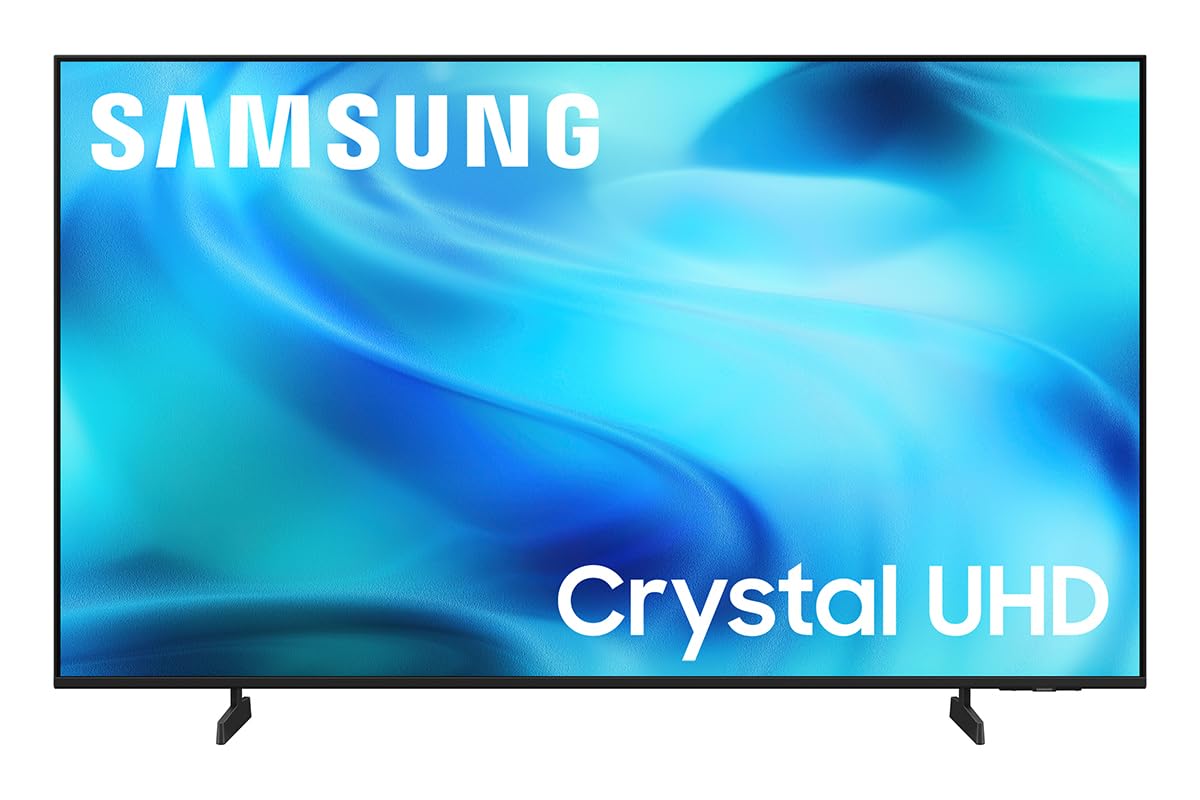
Samsung U8000H 55"

Samsung U8000H 55"

Budget-friendly 4K

Our Score 9.0/10
Check Price

Worth Noting

  • 60Hz panel shows 120Hz content at half the frame rate
  • Built-in speakers produce thin audio lacking bass
HDR Support
HDR10+
Refresh Rate
60 Hz
Operating System
Tizen
Display Technology
LED

The Samsung U8000H stands apart from Samsung's other budget 55-inch option (the one with limited user feedback) by offering a well-documented picture that delivers vibrant colors and good contrast for the price. Its Tizen operating system provides a smooth smart TV experience with access to free channels via Samsung TV Plus. However, the 60Hz refresh rate and basic built-in sound mean this TV is best suited for casual viewing rather than gaming or home theater setups.

This TV fits budget-conscious buyers who want a dependable Samsung 4K display for everyday entertainment like streaming shows, news, and network TV. The free Samsung TV Plus content adds value for cord-cutters. If you need higher frame rates for gaming or richer audio without a soundbar, look at the top pick with Mini-LED and 144Hz support.

Bottom line: The Samsung U8000H delivers good 4K picture and Tizen smart features at a low price – ideal for casual streaming and budget-minded viewers who don't need 120Hz or premium audio.

3

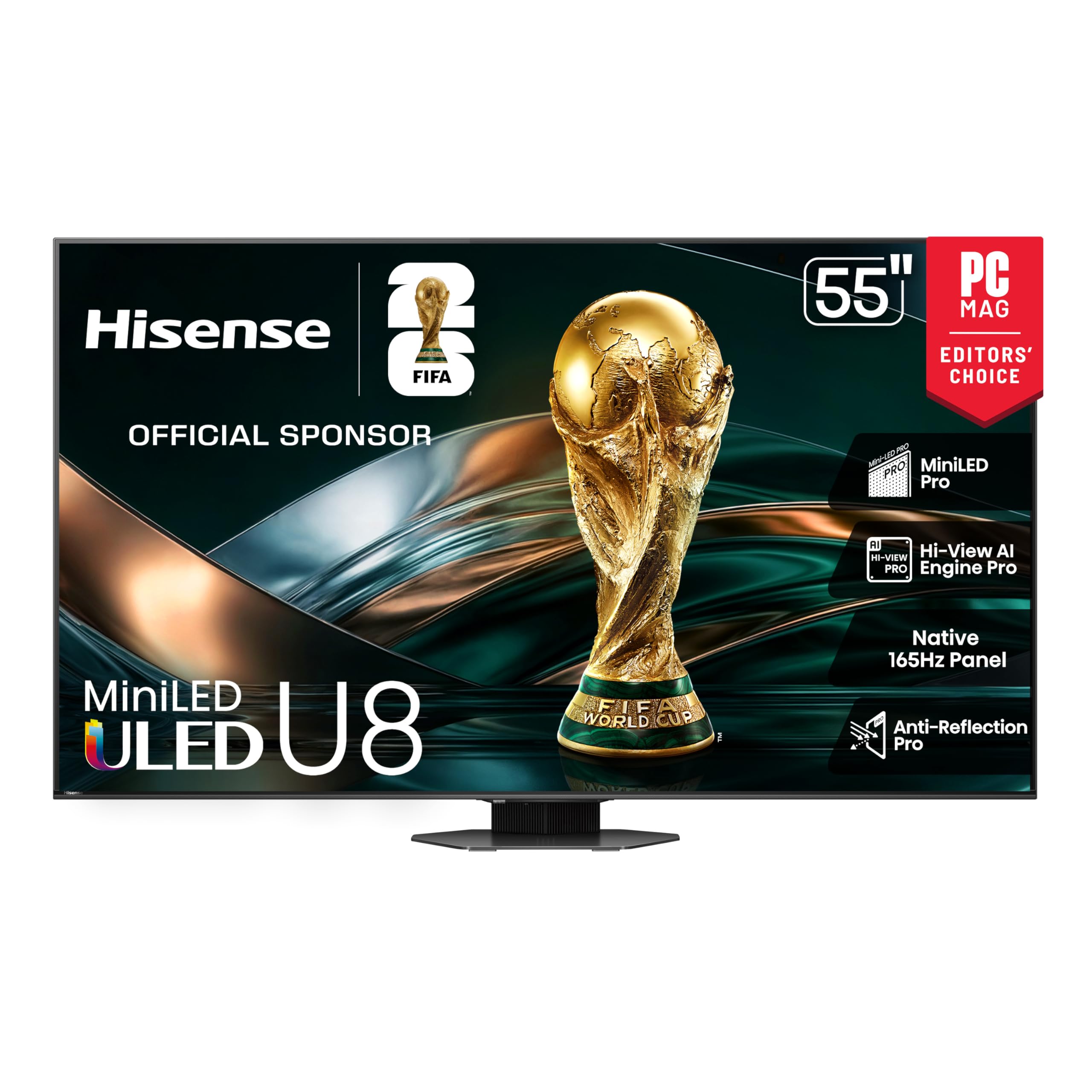
Hisense U8 Mini-LED 55"

Hisense U8 Mini-LED 55"

Bright rooms & gaming

Our Score 8.8/10
Check Price

Worth Noting

  • Software can crash or lose WiFi connection in some cases
HDR Support
Dolby Vision IQ, HDR10+, HLG
Refresh Rate
165 Hz
Operating System
Google TV
Display Technology
Mini-LED QLED

The Hisense U8 outshines most 55-inch TVs in its price bracket with measured peak brightness that handles direct sunlight reflections and HDR highlights without bloom. The 165Hz panel gives competitive gamers a smoother motion advantage over the 144Hz QM6K, and the built-in 4.1.2 channel audio delivers fuller sound than many soundbars in this range.

This TV suits buyers who watch in bright living rooms or want maximum HDR pop for movies and games, and who are willing to accept occasional software hiccups. Some units have experienced random crashes or WiFi drops — not a dealbreaker for most, but worth factoring in if you need a zero-fuss smart TV.

Bottom line: If your priority is raw brightness and high-refresh gaming over software polish, the Hisense U8 delivers more punch than its more balanced competitor.

4

LG C5 OLED 55"

LG C5 OLED 55"

Movies & HDR

Our Score 9.0/10
Check Price

Worth Noting

  • Magic Remote's motion pointer can feel imprecise in dim or bright rooms
  • A small number of units may experience software freezes or fail to load content
HDR Support
Dolby Vision, HDR10, HLG
Refresh Rate
120 Hz
Operating System
webOS
Display Technology
OLED

The LG C5 delivers the closest thing to reference-level picture quality in a consumer TV. Its OLED evo panel produces absolute blacks and vibrant, accurate colors that make both HDR movies and SDR content look richly dimensional. With Dolby Vision support and a 120Hz panel, it handles film grain and fast motion smoothly, pulling you into the scene rather than reminding you you're watching a screen.

This TV suits home theater enthusiasts who watch movies in a dim or controlled-light room, where OLED's black levels shine. The Magic Remote's motion pointer can feel imprecise in certain lighting conditions, and a small number of units may encounter software freezes or fail to load content during daily use. For buyers who prioritize contrast and color accuracy over peak brightness, these tradeoffs are manageable but worth checking before purchase.

Tip: If the Magic Remote's pointer feels jumpy, try switching to D-pad mode in the settings.

Bottom line: For viewers who prioritize black level and color accuracy over peak brightness, the C5 delivers a cinematic experience; just be aware of the remote quirks and occasional software hiccups.

5

Sony BRAVIA 2 II 55"

Sony BRAVIA 2 II 55"

PS5 enthusiasts

Our Score 8.6/10
Check Price

Worth Noting

  • Built-in speakers lack depth for immersive audio; pairing a soundbar is advisable.
  • 60Hz panel limits motion clarity for high-frame-rate content; not suited for competitive gaming.
HDR Support
HDR10, HLG
Refresh Rate
60 Hz
Operating System
Google TV
Display Technology
LED

Sony's 4K Processor X1 and PS5-specific auto HDR tone mapping give this 55-inch LED an edge in color accuracy and motion handling that few competitors match. The image processing refines lower-resolution content and keeps fast movement clear, even without a 120Hz panel.

This TV suits PlayStation 5 owners who value Sony's picture tuning above all else. The 60Hz panel means competitive gaming at 120fps is off the table, and the built-in speakers lack the depth for a cinematic experience. Occasional software instability has been noted, so a stable internet connection and periodic updates help. A soundbar is recommended to get the most out of movies and games.

Tip: A soundbar elevates the audio experience noticeably; budget for one if sound matters.

Bottom line: A strong choice for PS5 owners who prefer Sony's image processing over a high refresh rate, provided a soundbar is in the budget.

6

TCL T7 QLED 55"

TCL T7 QLED 55"

120Hz QLED value

Our Score 8.8/10
Check Price

Worth Noting

  • Software may cause unexpected shutdowns or freezes during operation
HDR Support
Dolby Vision, HDR10+, HLG
Refresh Rate
120 Hz
Operating System
Google TV
Display Technology
QLED

The TCL T7 offers a big step up from entry-level LED TVs with its QLED panel and 120Hz refresh rate, delivering vibrant colors and fluid motion for sports and gaming at a competitive price. Google TV keeps the interface clean and app selection current. Where it falls short is peak brightness and black depth compared to Mini-LED models like the QM6K, and some units may shut off or freeze unexpectedly during use — a quirk worth factoring into your decision if uptime is critical.

Bottom line: If you want 120Hz QLED and Google TV without paying for Mini-LED, the T7 is a solid value — just keep in mind occasional software hiccups that may interrupt the experience.

7

Samsung S90F OLED 55"

Samsung S90F OLED 55"

Bright OLED

Our Score 8.8/10
Check Price

Worth Noting

  • Some units may not power on or may shut off unexpectedly during use.
HDR Support
HDR10+
Refresh Rate
144 Hz
Operating System
Tizen
Display Technology
QD-OLED

Samsung's QD-OLED delivers exceptional brightness and color volume, ideal for bright-room home theater and 144Hz gaming. Some units may not power on or may shut off unexpectedly – a concern for those who need daily dependability. Compared to the LG C5, it offers higher brightness but carries more uncertainty.

Bottom line: Best for home theater enthusiasts who prioritize brightness and color volume over long-term consistency, and who are willing to accept some uncertainty.

8

LG G5 OLED 55"

LG G5 OLED 55"

Wall-mount luxury

Our Score 9.0/10
Check Price

Worth Noting

  • No stand included
  • Some units may not power on or stop working shortly after setup
HDR Support
Dolby Vision, HDR10, HLG
Refresh Rate
120 Hz
Operating System
webOS
Display Technology
OLED

The G5 OLED evo pushes OLED brightness to new levels, with deep blacks and vivid colors that make HDR content look striking. The gapless wall-mount design creates a clean, gallery-like look. However, the lack of an included stand means this TV is for buyers committed to wall mounting. The premium price and occasional unit defects (some arrive non-functional) further limit its appeal to enthusiasts who prioritize picture quality and have the budget for a separate stand.

Bottom line: This OLED suits buyers who plan to wall-mount, want the brightest panel available, and are comfortable spending extra on a stand and accepting the possibility of unit variance.

9

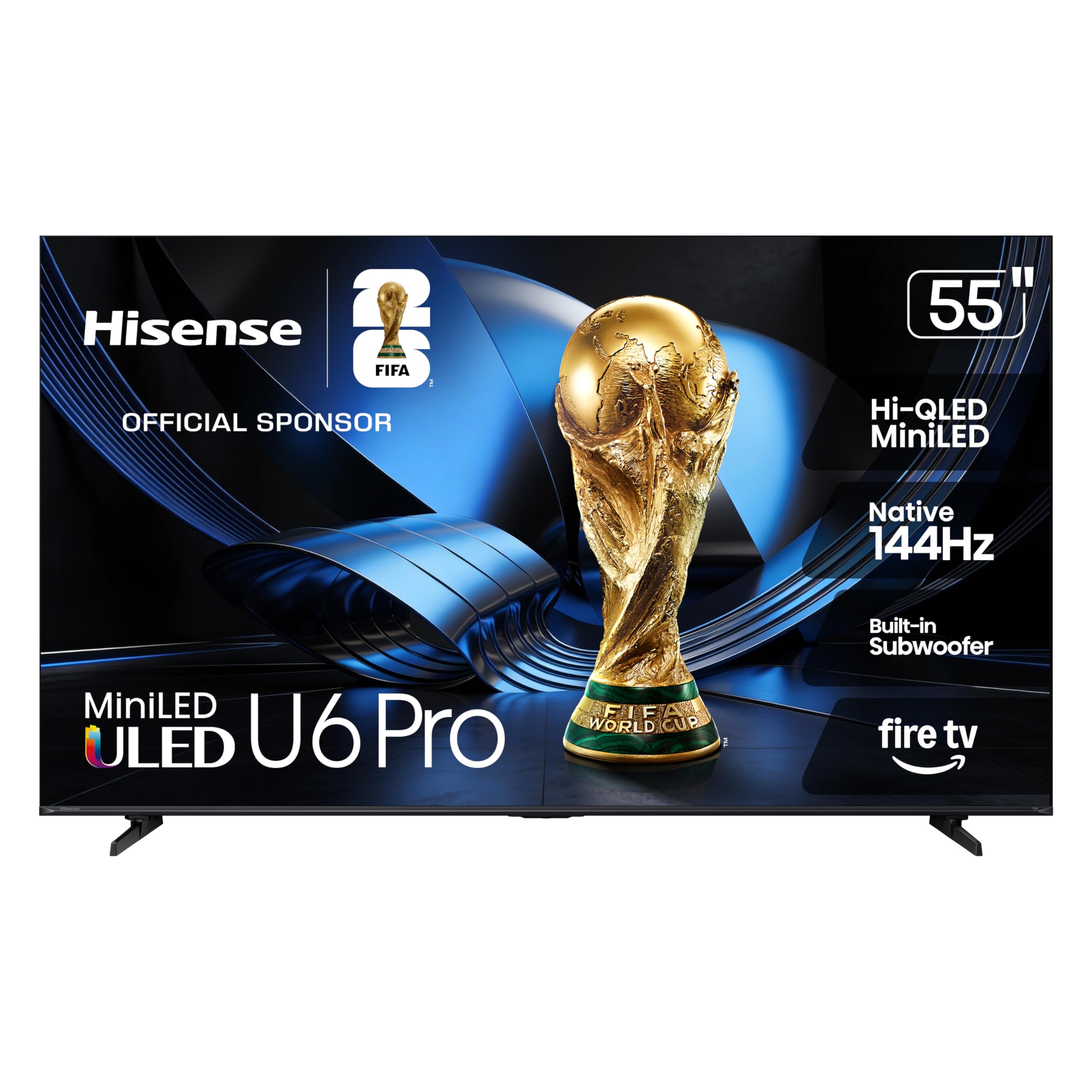
Hisense U6 Pro 55"

Hisense U6 Pro 55"

Budget Mini-LED

Our Score 9.2/10
Check Price

Worth Noting

  • Fire OS may feel restrictive compared to Google TV for users accustomed to that ecosystem
  • Long-term reliability for daily primary use remains unverified given limited real-world feedback
HDR Support
Dolby Vision IQ, HDR10+ Adaptive
Refresh Rate
144 Hz
Operating System
FireOS
Display Technology
Mini-LED QLED

The Hisense U6 Pro delivers crisp 4K picture with Mini-LED backlighting and supports 144Hz gaming, Dolby Vision IQ, and HDR10+ at a budget-friendly price. Built-in sound with a subwoofer provides above-average audio for a TV. However, because early feedback is positive but limited, its long-term consistency for daily primary use hasn't been established. This makes it a better fit for secondary rooms, occasional viewing, or buyers comfortable with some uncertainty in exchange for the feature set.

Bottom line: A good entry-level Mini-LED for secondary rooms or occasional use, where the Fire OS and unproven long-term stability are less of a concern.

10

Toshiba Z670R 55"

Toshiba Z670R 55"

Mini-LED value

Our Score 8.8/10
Check Price

Worth Noting

  • Long-term durability under heavy use may be uncertain
HDR Support
Dolby Vision IQ, HDR10+, HLG
Refresh Rate
144 Hz
Operating System
FireOS
Display Technology
Mini-LED QLED

Toshiba's REGZA Z670R delivers a compelling Mini-LED package with Dolby Vision IQ, HDR10+, and a 144Hz panel for smooth motion. Picture quality is striking with good contrast, and build quality feels solid. However, this model suits buyers comfortable with Toshiba's TV lineup; those seeking a more widely tested option may prefer the TCL QM6K. Long-term durability under daily use has limited validation, making it a secondary pick for cautious shoppers.

Bottom line: A good fit for buyers who value Toshiba's REGZA picture processing and want Mini-LED at a mid-range price, provided they accept a shorter track record in the market.

How to Choose

Display Technology

OLED delivers perfect blacks and infinite contrast, making it ideal for dark-room movie watching. But OLED panels are less bright, so in a sunny living room the image may appear washed out compared to a Mini-LED or QLED TV.

Mini-LED uses thousands of tiny LEDs to control local dimming zones, achieving deep blacks and high brightness simultaneously. This makes it the best all-rounder for mixed lighting conditions. QLED (Quantum Dot) enhances color volume but still relies on a standard LED backlight, so black levels are weaker than Mini-LED or OLED.

Refresh Rate

A 60Hz panel is fine for TV shows, movies, and casual gaming. For competitive gamers playing shooters or racing games on PS5, Xbox, or PC, a 120Hz or higher panel reduces motion blur and input lag. The difference is noticeable in fast-paced scenes.

Higher refresh rates (144Hz, 165Hz) are only beneficial if your source content can output those frame rates. Most console games top out at 120Hz, while some PC titles can exceed that. If you don't game, your money is better spent on picture quality.

HDR Support

HDR (High Dynamic Range) improves contrast and color for compatible content. Dolby Vision is the most widely supported premium HDR format, found on Netflix and Disney+. HDR10+ is similar but used more on Amazon Prime. HLG is used for broadcast HDR.

Some TVs support Dolby Vision and HDR10+, while others only support one. If you watch a lot of streaming content, a TV with Dolby Vision gives you access to the widest library of HDR movies. Don't overpay for HDR support if you mainly watch standard dynamic range content.

Smart TV Platform

The smart platform determines how responsive your TV feels day-to-day. Google TV (on TCL, Sony) offers a clean interface and wide app support. Fire OS (on Hisense, Toshiba) deep integrates with Amazon Prime but can be sluggish on budget models.

Tizen (Samsung) and webOS (LG) are smooth and reliable but have slightly smaller app stores. If a budget TV's interface is slow, using an external streaming stick (Roku, Apple TV, Fire Stick) bypasses the built-in smart features entirely.

Gaming Features

HDMI 2.1 ports enable 4K at 120Hz, variable refresh rate (VRR), and auto low latency mode (ALLM). For next-gen consoles, at least one HDMI 2.1 port is essential. Cheaper 60Hz TVs lack these features, so competitive gamers should look for models with 120Hz+ panels and HDMI 2.1.

Beyond refresh rate, input lag matters. Most TVs in the mid-range and above have under 10ms input lag at 120Hz, which is imperceptible. VRR prevents screen tearing, but not all games support it.

Frequently Asked Questions